
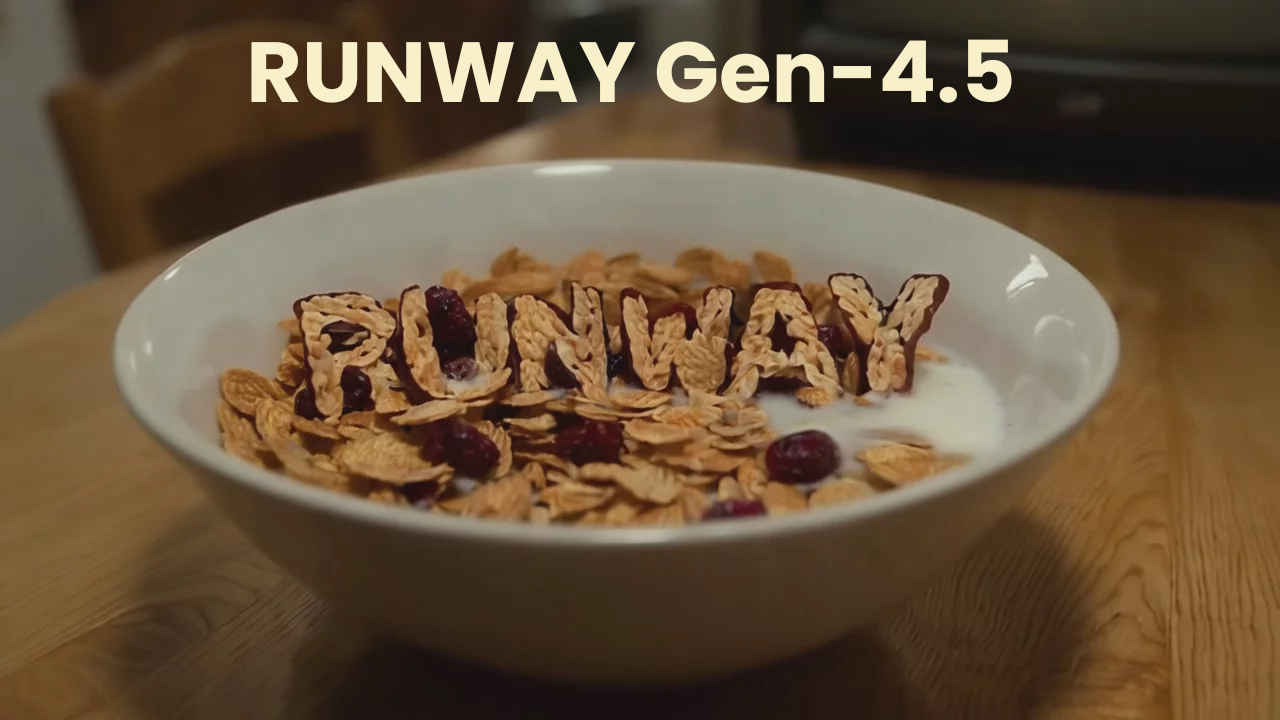
Runway Gen 4.5 arrives as the company’s most ambitious video model to date. It builds on the 4th generation foundation and focuses on the three things creators value most: motion quality, visual consistency, and overall realism. This model is designed to interpret scenes with a stronger sense of physical logic, making characters, surfaces, and environments feel more grounded. Runway also has improved temporal stability, so details remain consistent from frame to frame without flickering or distortion. The idea is to approach video output that feels controlled rather than chaotic, whether the prompt is stylized, grounded, or somewhere in between.
 investigation
✅ Thank you for participating in the survey.
In addition to text-to-video generation, Gen 4.5 supports image-to-video, video-to-video, and mixed workflows. With this, Runway focuses on flexible creative control, allowing users to use references to seed shots, change pace, and reimagine footage. These tools promise to help creators produce sequences that look intentional rather than accidental.
Also read: Is ChatGPT becoming less popular? Report says users are chatting more with Gemini and Claude
Runway 4.5 generation differences
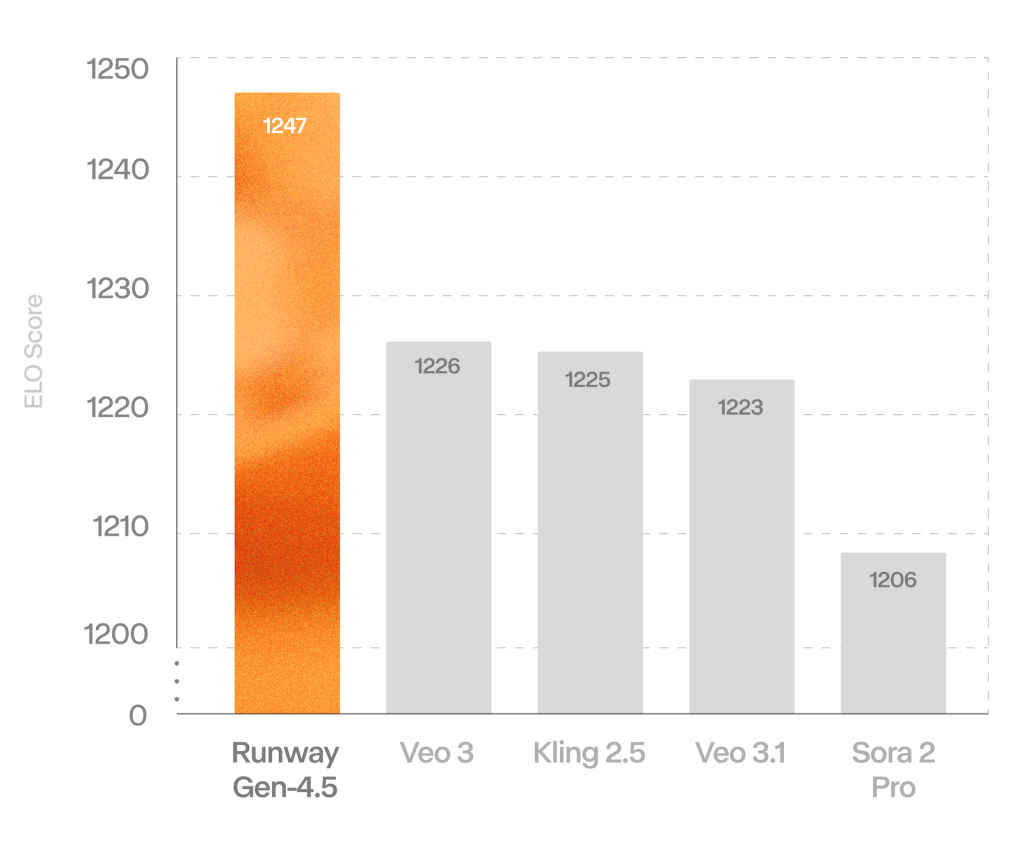
At Runway, we position Gen 4.5 as an advancement in the way AI handles movement, light, and scene composition. Many video models can produce attractive still images, but once the movement begins, it becomes difficult. Runway says it has improved the way the model understands the weight, momentum, and subtle interactions of shots. This makes camera movements smoother, gestures more believable, and reduces the weird physics that AI is known for.
Also read: Google Ironwood TPU explained: Comparison with NVIDIA’s AI chips
Another focus is texture and clarity. Hair, fabrics, reflections, and background elements retain their shape better over time. Runway also promotes rapid responsiveness, saying the model has an improved ability to interpret abstract or cinematic instructions without the need for long, highly engineered explanations. If this is true, it reduces the barrier for everyday creators looking for quick results without creating technical prompts.
These improvements position the 4.5 generation as a contender in an increasingly crowded field, while also suggesting that AI video could be used for more serious creative uses.
Why comparisons and prompts to Veo 3.1 are important
The real question for many creators is whether Gen 4.5 can outperform Google’s Veo 3.1. Based on the sample clips released by Runway, early impressions are tilted in its favor. I tested the same prompts that appear on Runway’s site within Veo to see how the output compares. Using these same lines, Runway created a clip that looks sleeker, more stable, and more emotionally expressive. While motion had a natural flow and textures were kept intact, Veo tended to be more literal, less stylish, and less emotionally expressive in its interpretation.


There is an important caveat. The prompts used in Runway are very short. High-quality AI videos typically require descriptive prompts that specify mood, framing, physics, and pacing. Runway samples don’t follow that pattern. If these are actually the live prompts driving the demo clips, then Gen 4.5 is doing a lot of the heavy lifting on its own. Veo seems to automatically populate the cinematic choices, but Veo requires more guidance to reach a similar level.
This is where uncertainty arises. The showcases are carefully selected. Without widespread user access, it is difficult to see whether Gen 4.5 can consistently provide that level of detail with minimal prompting. Video generation is sensitive to prompts, and most models require adjustment to get the desired results.


Still, within a narrow comparison of the same prompt, same idea, same intent, Runway seems stronger at this point. If its public release behaves like a highlight reel, Gen 4.5 could set a new standard for text-driven AI video. Real judgment can only be made when authors can test directly without careful curation, push more complex prompts, and see how they react.
Also read: Elon Musk talks about Google, Nvidia, AI and the danger to humanity
 follow us
Vyom Ramani
Journalist interested in technology, games, and beeps. While waiting for a late subway or rebooting his brain, you can find him solving Rubik’s cubes, munching on F1, or searching for the next tasty snack. View full profile


