


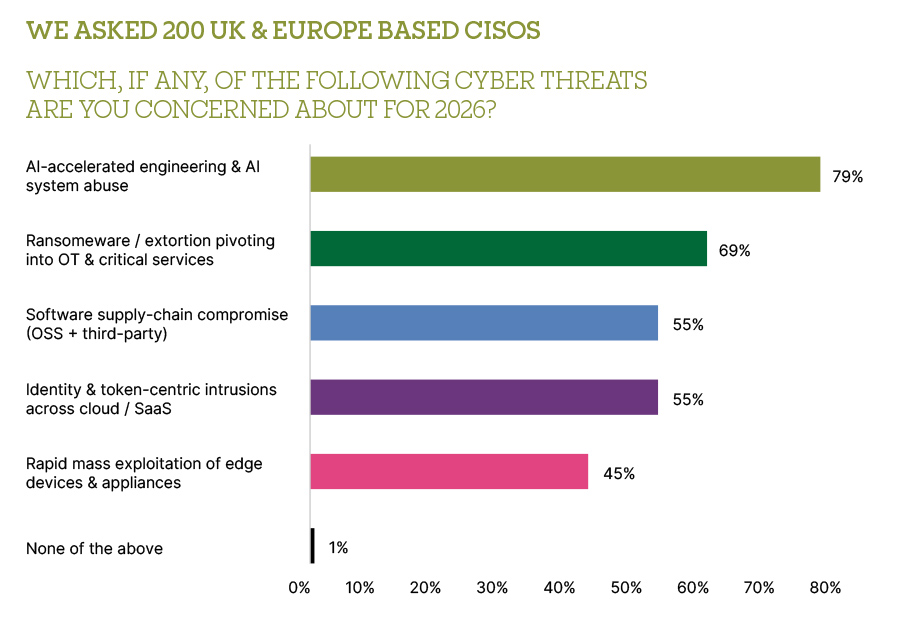
While companies are implementing artificial intelligence at all levels of their organizations, there are growing concerns that artificial intelligence could be used to enable data breaches. International consulting firm Taran has released a report highlighting business leaders’ concerns about cyber threats, showing that more than three-quarters believe AI will become central to cyber threat engineering within the next 12 months.
For decades, digital connectivity has been portrayed as inherently desirable, allowing professionals to conduct business instantly with the click of a few buttons. Among the benefits is the ability of companies to respond to global trends by being able to adapt immediately to crises. And the amount of time and energy spent on repetitive processes and administration is reduced.
But there have been major trade-offs, especially as the companies that own the infrastructure that make all of this possible have become increasingly consolidated into a small number of giant monopolies. As the AWS outage in October demonstrated, when the Amazon-owned computing platform sneezes, the world catches a cold.
Source: Taran
Built into the very fabric of cloud-based computing, the infrastructure that underpins the delivery of the IT systems that are now a part of everyday life, “significant error rates for requests” affected apps and organizations of all shapes and sizes. Snapchat, Roblox, Zoom, Coinbase, HMRC, and even banking services such as Lloyds, Bank of Scotland and Halifax have been disrupted, underscoring the seriousness of the situation.
Some experts warn against putting more eggs in fewer baskets, which they say is also becoming more common. For example, in 2021, meta properties were down for 6 hours due to a configuration error. And that same year, an unknown bug introduced by a customer of cloud service provider Fastly caused an outage that brought down Amazon, Reddit, Twitch, Spotify, and many news sites. And in July 2024, a flawed code in the CrowdStrike cybersecurity software was automatically installed on computer systems, causing the systems to malfunction and display a “blue screen of death.” Approximately 8.5 million computers were temporarily unavailable and many Internet services were taken offline.
growing threat
This last context is of increasing concern to business leaders as well. New research from Talan shows that chief information security officers see the rise of AI as increasing cybersecurity risks. And that’s especially alarming in an age when a problem with one large company can bring much of modern life and business to a halt.
Source: Taran
Taran found that 62% of 200 executives in the UK and Europe are now “very confident” they have the resources to deal with cyber and privacy threats. However, most agree that the rapidly changing threat landscape, including increased financial and geopolitical instability, could prove to be false. When asked what they are most concerned about right now, 79% cited AI-enabled engineering and system exploitation as the top cyberthreat in 2026, with ransomware coming in second at 69%.
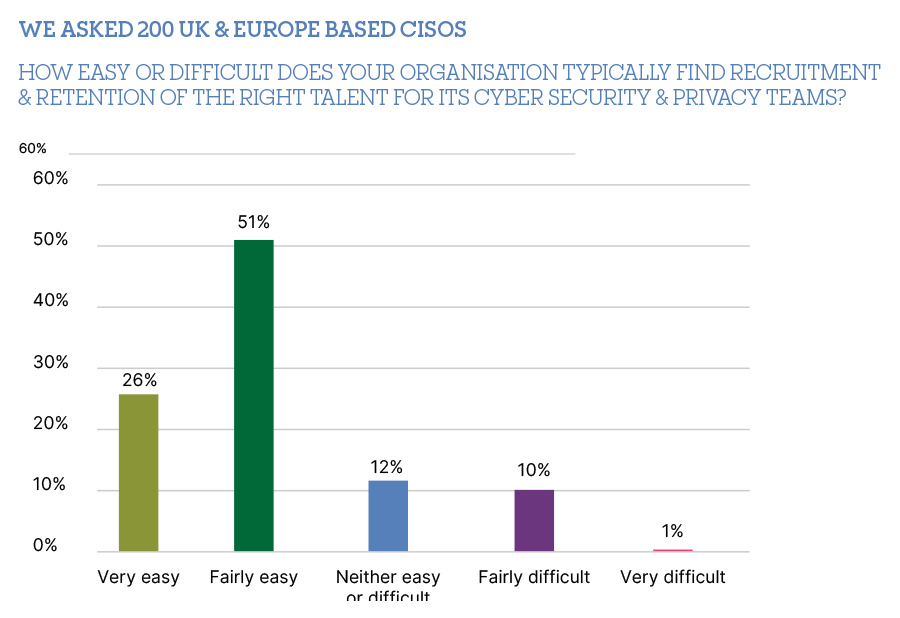
When it came to preparing for these threats, executive respondents were confident in their ability to hire the right talent. Contrary to global trends pointing to persistent skills shortages, 77% of respondents said recruiting and retaining the right cyber talent is “easy”. At the same time, 66% have already integrated AI into their services, including to help fight hackers. However, getting the most out of either requires upskilling current staff, and researchers have found significant shortcomings here. Only 44% rate their overall staff understanding of cybersecurity as excellent. This gap shows why regular training and a strong security culture remain important.
“Cyber threats are now a top business risk, no longer a technical issue but a leadership challenge,” said Mandeep Tandi, director of cyber privacy at Talan. “The next year will test how resilient organizations are as AI-powered attacks grow more sophisticated by the month. Companies that combine strong governance, engaged employees, and a responsible approach to AI will be best suited.” Adapt and grow. ”


