Dr. Ranjita Prasad
As the Artificial Intelligence (AI) Impact Summit opened, I experienced a major revelation. AI is no longer a technology in the hands of a few, but an essential tool for the masses. Summit participants ranged from villagers to city dwellers, farmers to AI developers, high school students to researchers, bringing together a diverse community united by curiosity about how AI can help advance their efforts. Globally, this change was most recently seen in the surprising 2024 Nobel Prize selection. In chemistry, Demis Hassabis and John Jumper were recognized for developing AlphaFold, an AI system that solved an open problem in protein structure prediction. David Baker was recognized for advances in computational protein design using AI.
The Nobel Prize in Physics was awarded to Jeffrey Hinton and John Hopfield for their fundamental contributions to modern machine learning through artificial neural networks (ANN). These developments make me wonder. Although AI is a tool for the masses, is it fundamental enough for Nobel Prize-level recognition? But the secret to AI’s power is deeply rooted in this famous quote. Changes in visible things are due to invisible forces. Modern AI may seem like a modern marvel, but its core ideas are drawn from the “classic texts” of mathematics, statistics, and science that predate the computers that currently run it. Let’s analyze this. Does AI really rely on the fundamental interconnected concepts of mathematics, physics, and biology? Early researchers in machine intelligence drew inspiration from nature. The idea was to emulate the principles underlying the interconnections and signals of the human brain and biological systems. In 1943, Warren McCulloch and Walter Pitts proposed a mathematical model of the nervous system that showed how networks of simple units could exhibit logical behavior. Dramatic advances in semiconductor technology and the maturation of biological thinking have led to the perfection of artificial neural networks, which now form the building blocks of a variety of advanced architectures in deep learning. Mathematics, especially statistics, linear algebra, and calculus, form the central trinity of AI and the fundamental “Brahma-Vishnu-Maheshwara” force that creates, sustains, and drives modern AI systems. The essence of AI is learning patterns from data. This is a concept with roots in statistics and probability theory dating back more than two centuries. Foundational figures such as Pierre-Simon Laplace, PC Mahalanobis, Karl Friedrich Gauss, Andrei Kolmogorov, CR Rao, Ronald A. Fisher, Harish Chandra, and SR Srinivasa Varadhan are great minds who laid the mathematical foundations across probability theory, least squares estimation, axiomatic foundations, and modern reasoning that underpins modern machine learning and AI. Techniques such as linear regression, which are now in the first stages of machine learning, were developed in the 19th century by mathematicians such as Karl Friedrich Gauss and Adrien-Marie Legendre. Scientists such as Jeffrey Hinton, David Rumelhart, Yann LeCun, Judea Pearl, and Michael I. Jordan played important roles in shaping modern neural networks and probabilistic machine learning in the 1990s. In summary, while modern narratives and media articles often emphasize computing power and algorithms, without statistics there is no AI. Beyond statistics, linear algebra forms the backbone of ANNs, from simple models to transformer architectures. Calculus, introduced to many students as early as the 11th grade, is the secret power behind gradient descent, the fundamental optimization mechanism that drives learning in ANNs. Information theory introduces concepts such as entropy and information gain, which play a central role in measuring uncertainty. The logic of discrete symbolic reasoning, a focus of early AI research, continues to influence hybrid approaches such as neurosymbolic AI today.
This symbiotic relationship in which science first powered AI has come full circle, with AI now redefining the process of scientific discovery. Researchers are now using AI to propose hypotheses, analyze vast experimental data sets, and propose new scientific laws. This change raises important questions. As AI assumes a larger role, how can we ensure that it complements human creativity and curiosity? Over-reliance on AI computational resources risks undermining the fundamental scientific rigor that underpinned the AI revolution. At this point, we need to recognize that behind every new advance there is a deep lineage of scientific thinking. Old science remains the foundation for building new AI. It is a reminder that progress is a continuum and that future innovation depends on a deeper mastery of the scientific principles that have guided generations of scientists, thinkers and philosophers. Additionally, AI safety will become inseparable from scientific rigor to ensure that powerful systems are interpretable, reliable, and consistent with human values. As AI systems grow more capable and autonomous, basic science-based development is essential for performance and long-term public trust.
For the young minds reading this article, I have a simple message. A strong foundation in mathematics and basic science is not optional, but essential. Students who want to shape the future of AI need to learn the fundamentals of statistics, linear algebra, calculus, logic, scientific reasoning, and more from textbooks. Because only concepts can build intelligent, efficient, and secure systems. These ideas extend beyond engineers and computer scientists. Students of art, sociology, and anthropology need scientific and quantitative literacy. Understanding how algorithms work allows us to critically consider bias, ethical risks, and social impact, ensuring that AI development is not only technically sound, but also socially informed, culturally sensitive, and democratically responsible. Let us all be guided by the vision of “.Sarvajan Hitai, Sarvajan Sky (Welfare for All, Happiness for All), the theme of the 2026 AI Impact Summit to be held in India.
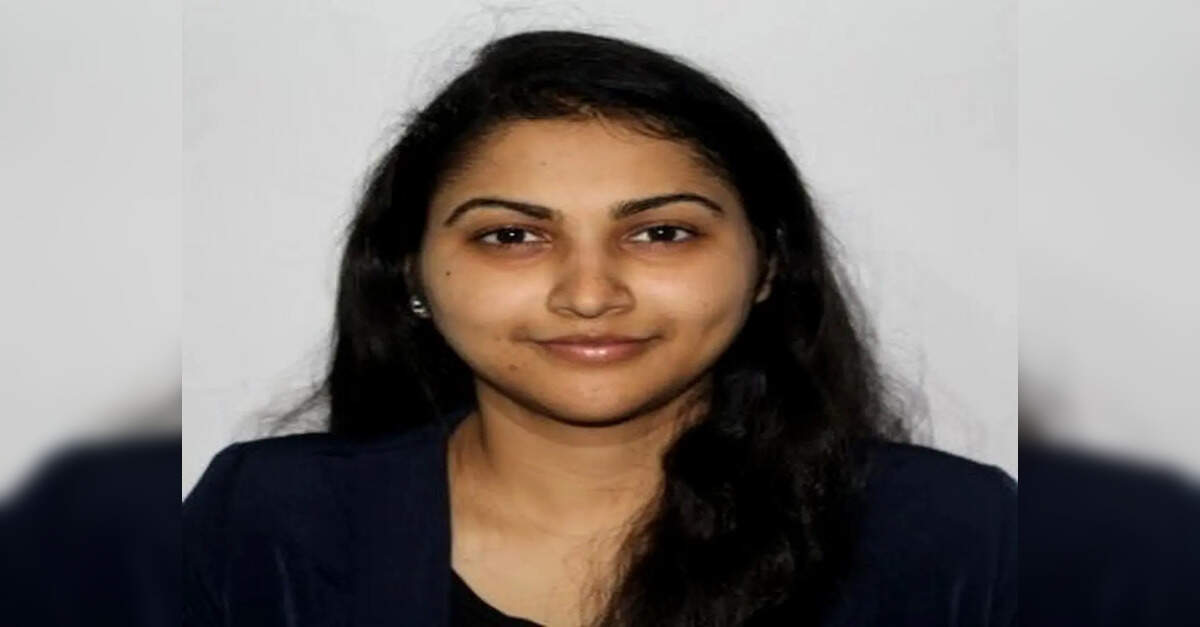
Dr. Ranjitha Prasad is an Assistant Professor at IIIT Delhi.
Disclaimer: The views expressed are solely those of the authors and ETEDUCATION does not necessarily agree with them. ETEDUCATION is not responsible for any damage caused directly or indirectly to any person or organization.