
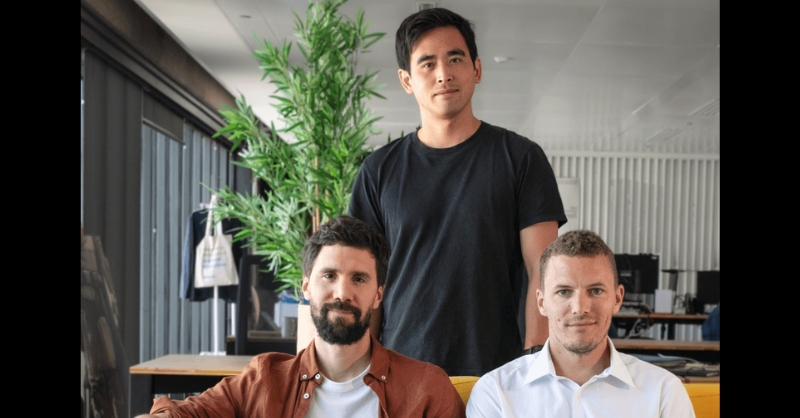
Paris-based startup Blify has secured $2.1 million in pre-seed funding to accelerate development of a learning operating system designed for the modern workplace.
The round was led by AFI Ventures with participation from Kima Ventures, Better Angle, and Fair Equity. The funding also attracted support from more than 50 business angels, including founders and executives from companies such as Maki People, Alan, Doctolib, JobTeaser, and ABB.
Blify plans to use the capital to expand its engineering team and speed up product development. We spent 2025 working closely with our early users to refine our first use case: manager training.
The company is preparing to roll out a broader platform in 2026 that will enable companies to create, distribute, and manage learning across their organizations.
Why do most corporate training programs fail?
Despite billions of dollars being spent around the world on employee development, corporate learning systems often struggle to produce meaningful results. Traditional learning management systems (LMS) and learning experience platforms typically only generate about 10% employee engagement per month.
As a result, training modules are ignored, newly acquired skills quickly fade, and HR departments continue to invest in more platforms without seeing any measurable improvement in employee performance.
The founders of Blify saw this problem over and over again while working within the HR technology sector. Their conclusion was simple, because the problem was not the content. It was about where and how learning happens.
Turn your workplace chat into a learning hub
Rather than forcing employees to access separate training portals, Blify embeds learning directly into the tools people already use every day. The platform natively integrates with communication apps like Microsoft Teams, Slack, and WhatsApp, allowing you to train within your normal work flow.
Behind the scenes, Blify’s multi-agent system analyzes contextual information about each employee, their role, responsibilities, and ongoing tasks to deliver the most relevant knowledge at the right time. Rather than scheduling training sessions, learning becomes a continuous and contextual part of daily activities.
The results so far have been amazing. Approximately 50% of employees engage with Blify’s learning content weekly, which far exceeds typical engagement rates for traditional systems.
Research shows that 95% of users say they won’t go back to an old LMS-style platform after experiencing learning integrated into their work tools.
A team of European HR technology leaders
Blify was co-founded by three operators who have spent years working at the intersection of AI, enterprise sales, and workplace learning.
- Minh-Tu Hua: Co-founder and CTO graduated from École Normale Supérieure and Imperial College London with a focus on AI and applied mathematics. He was one of the founding engineers at French health insurance unicorn Alan, and led AI initiatives such as Doctor AI (Alan’s Medical Assistant), which was announced at AI Summit 2025.
- Tristan Vié: Co-founder and co-CEO spent 10 years at JobTeaser as Chief Sales Officer, growing the sales organization of nearly 100 salespeople across multiple markets in Europe. He has deep knowledge of the HR community and brings a practitioner’s perspective to the product. He is a practicing management trainer (Yaniro and OnTrain) and author of management books. He holds an ENSAIA degree.
- Clément Lhommeau: Co-founder and Co-CEO was Chief Marketing Officer at 360Learning, one of the world leaders in LMS/LXP, driving growth across Europe and the US. He then became CMO of Santé Académie, an EdTech-focused platform, and co-founded Helloways, a sports tech startup. Clement has been writing about the future of learning since 2014, with a book on MOOCs (FYP Editions) and a research report on AI in L&D. He also works as a trainer himself. He holds degrees from CELSA and the Paris Institute of Sciences.
How did that idea come about?
Clement Romeau. Co-CEO said: TFN“It was a collision of personal frustration and clear market failure. As trainers ourselves, we always hit a wall with traditional methods. The forgetting curve is incredibly steep, and delivering hyper-personalized, one-on-one coaching to every learner simply isn’t possible to scale manually. It’s an antiquated “stop-and-go” approach that forces employees to interrupt their workflows to consume content. We knew we needed to do away with the “Learning” model. But it wasn’t just our personal experience. In the LMS and LXP space, I knew the industry’s dirty secrets. Employee engagement often results in woefully low monthly active usage rates, below 10 percent.
“Tristan and I pressure-tested this because we didn’t want to just build on our assumptions. We conducted hundreds of discovery interviews in the US and Europe, talking to CHROs, heads of L&D, VPs of sales, and CEOs.
“The consensus was unanimous: Legacy systems are broken and engagement is dead. Ultimately, the wave of generative AI has given us the technical leverage to completely rethink the architecture of training software from the ground up.” Blify represents this entirely new generation. Incorporate learning directly into the daily flow of work, rather than forcing people to move to the desired platform. ”
What about diversity?
According to diversity statistics shared by Blify; TFN“To be completely transparent, our founding trio is all male. But we knew from day one that building a monolithic team was a huge blind spot, especially when designing products for a diverse workforce around the world. Diversifying our core team was an immediate priority for us, not just a secondary ‘nice to have’ goal.” We are very proud that our founding engineer is a woman. My name is Héloïse Monnier. She is a great software engineer who joined the company. Being part of DropContact and having her help build our foundational architecture alongside Minh Tu was phenomenal for Blify. ”
Early recognition and global momentum
Since its launch in 2025, Blify has rapidly gained recognition across the European startup ecosystem. The company was selected for Station F’s Future40 program and ranked in the top 4% of startups within the renowned innovation hub. We were also named one of Europe’s 5 most promising HR startups at UNLEASH World 2025.
Blify already serves customers such as Club Med and Kaufman & Broad, who use the platform to train teams across multiple countries.
What makes Blify special?
“To combat the industry’s engagement crisis, Blify delivers a radical departure from the status quo by integrating learning directly into the tools employees already use. Powered by a sophisticated multi-agent AI infrastructure, our unique learning operating system ingests contextual data to push the right knowledge to the right people at the right time. What sets us apart is our ability to integrate native workflows and personalize at scale. ” said Blify.
“Rather than forcing users into siled platforms, we deliver hyper-personalized training directly within apps like Microsoft Teams, Slack, and WhatsApp. Our AI continuously analyzes each employee’s unique context (adapted to their role, needs, and skill level) to create a seamless learning experience that doesn’t disrupt employee momentum. Results validate this approach. 50% of Blify’s employees attend training every week and it’s 10x more effective than traditional solutions. 95% of users say they never want to go back to a traditional learning management system.”
Plans for the next 3-5 years
This recent funding round will enable us to significantly accelerate our technology development and strategically build our core product team. After spending 2025 co-designing and in-depth iterating on early use cases, we will enter a major expansion phase in 2026.
The company says, “We are currently rolling out a comprehensive, 100% AI-powered solution that enables organizations to seamlessly create, distribute, and manage training at enterprise scale. Over the next three to five years, our goal is to establish Blify as the definitive AI-native learning ecosystem for modern business. We aim to be an end-to-end platform used to orchestrate initiatives and push continuous digital learning directly into the daily work flow. Ultimately, by completely removing friction for organizations, unlike traditional platforms, our long-term vision is to embed training deeply into daily work to help each employee become a super worker.”
“When we met the Blify team, it was immediately clear to us that they truly understood our challenge to keep learning at the heart of our employees’ daily work,” said Sophie Lettiers, Chief People and Operations Officer at Kaufman & Broad. “They are the perfect team to work on skills development in a post-AI world. We have committed to a multi-year partnership with Blify.”
“As trainers, we have seen firsthand that people learn, improve, and then forget everything within a few weeks,” says Tristan Vié, co-CEO and co-founder of Blify. “Monthly engagement on LMS and LXP platforms is barely 10%. The reason is simple: no one wants to completely disconnect from their day-to-day work and log into yet another platform to take a typical one-hour course.”
“The problem is not the content, it’s the model,” adds Clément Lhommeau, co-CEO and co-founder of Blify. “In a world where skills are rapidly becoming obsolete and recruitment is more difficult than ever, continuous learning is no longer an option; survival is critical.”
“With Blify, we are exploring an ‘in-the-workflow’ approach built into Teams. After an initial pilot, we are now expanding its use,” said Majid Kiani, Head of Learning and Development at Club Med. “Blify is addressing a critical challenge for all companies: how to develop skills in the age of AI,” said Sarah Raznowski, an investor at AFI Ventures. “This team combines a deep understanding of HR challenges in Europe and North America with rare technical proficiency. They are perfectly positioned to build tomorrow’s training infrastructure.”


