
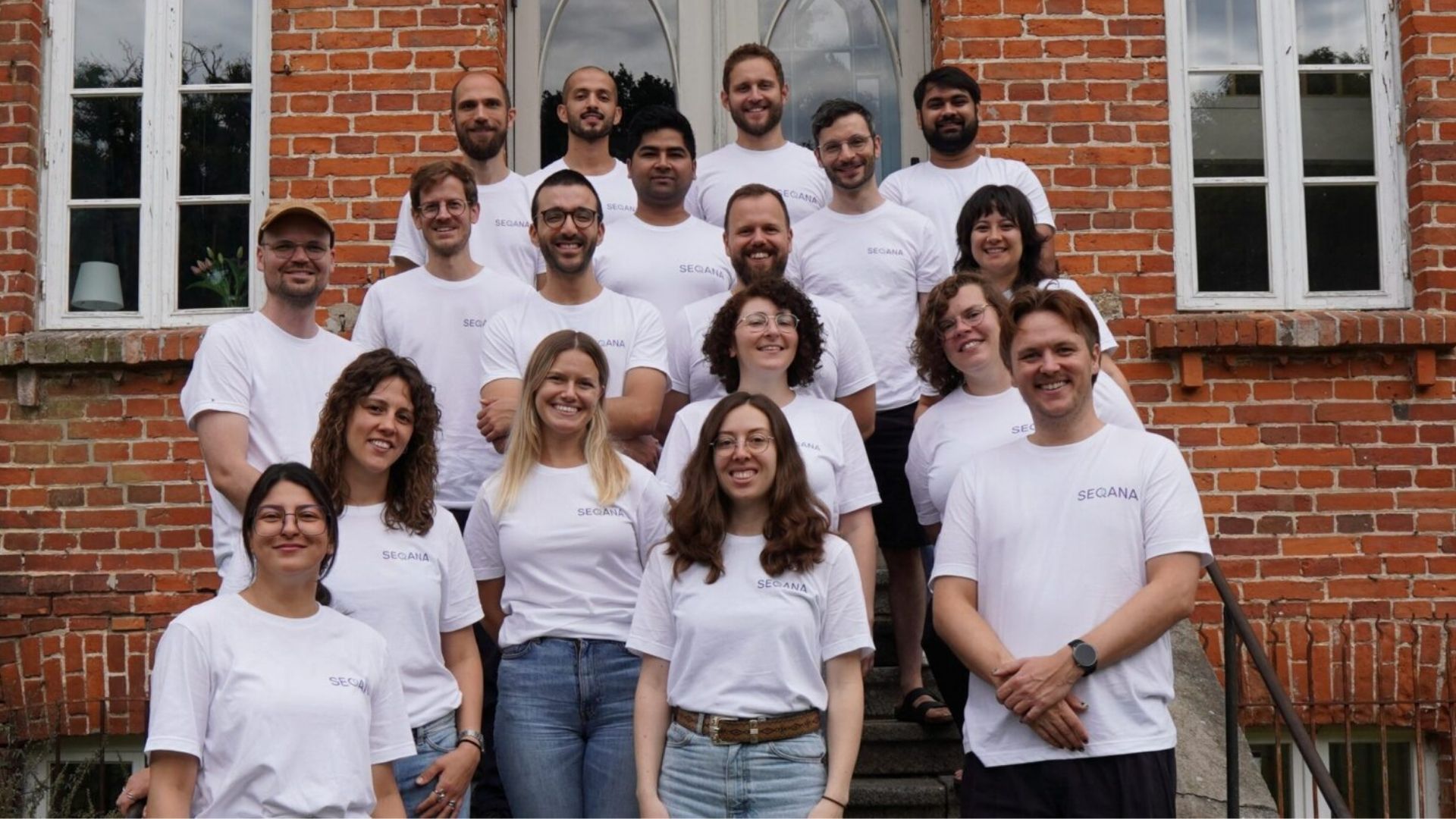
Sekanaa Berlin-based digital MRV (monitoring, reporting and verification) company that uses satellite imagery and machine learning to quantify soil health, has closed a €3.2 million funding round.
The round was led by Pymwymic, with participation from existing investors HTGF and Counteract. The round is a combination of venture and debt capital, including a startup loan from Landwirtschaftliche Rentenbank, and builds on previous investments from Counteract and HTGF, alongside a grant from the European Space Agency.
“Carbon is at the core of what we do, and it always will be. The market has learned to value soil for the first time, and discipline has thus been added to the basis of our measurements. The rest is the ability to manage yield stability, product quality, and ultimately supply chain continuity.Combined, these give companies a more complete picture of the soils on which their supplies depend.” said Stephen Generco-founder and CEO of Seqana.
Founded in 2020, Seqana builds digital MRV tools to quantify soil health metrics at scale. Its mission is to bring cost-effective and scalable solutions to soil carbon MRV without compromising accuracy or scientifically rigorous approaches.
The company says soil health is becoming central to how agricultural and consumer goods companies manage both climate goals and supply chain risks. It states that soil carbon, a key indicator of overall soil health, remains one of the most scalable natural carbon sinks available.
Measuring soil carbon levels and their accumulation over time across farmland can also be used to assess soil health and the effectiveness of regenerative agriculture initiatives in voluntary carbon markets (VCMs), Sekana explains.
Along with VCM, soil health has also emerged as a measurable financial risk. Degradation already costs the EU an estimated €50 billion a year, and more than 60% of Europe’s soils are classified as unhealthy (European Commission).
“The link to agricultural supply chain resilience is quantifiable: in the 2023 European drought, yields fell by just 8% on French farms with advanced regenerative practices, compared to 22% on the least regenerative farms.” You mentioned the company.
Seqana works with textile, food and fuel companies and carbon project developers across millions of hectares to provide insights into soil health through tools such as digital soil maps and soil sampling designs. These insights enable customers to reliably track regenerative agriculture progress, advocate for carbon removal, and build supply chain resilience.
The company combines proprietary machine learning models with ground truth data and satellite imagery to build tools such as digital soil maps that quantify soil health for project developers and food, textile and fuel companies.
Seqana also contributed to the development of voluntary carbon market standards by co-authoring Verra’s VM0042 v3 methodology and Gold Standard’s SOC model guidelines. Seqana’s products, used by clients such as Danone, eAgronom, Klim and Bayer, operate in real-world environments and help project developers and agri-food companies measure soil carbon at scale, with millions of hectares assessed to date.
“Secana is transforming soil organic carbon from an invisible asset to a measurable asset. We are proud to support a technology that has the potential to change the way agricultural resilience is understood and assessed.” said Monique MurmansPartner of Pymwymic.
With this capital, Seqana plans to accelerate the development of its soil carbon MRV tool while expanding its measurement capabilities to additional soil health indicators and carbon pools. These new developments will give customers a clearer picture of how well their regenerative agriculture programs are working and where they should prioritize intervention.

