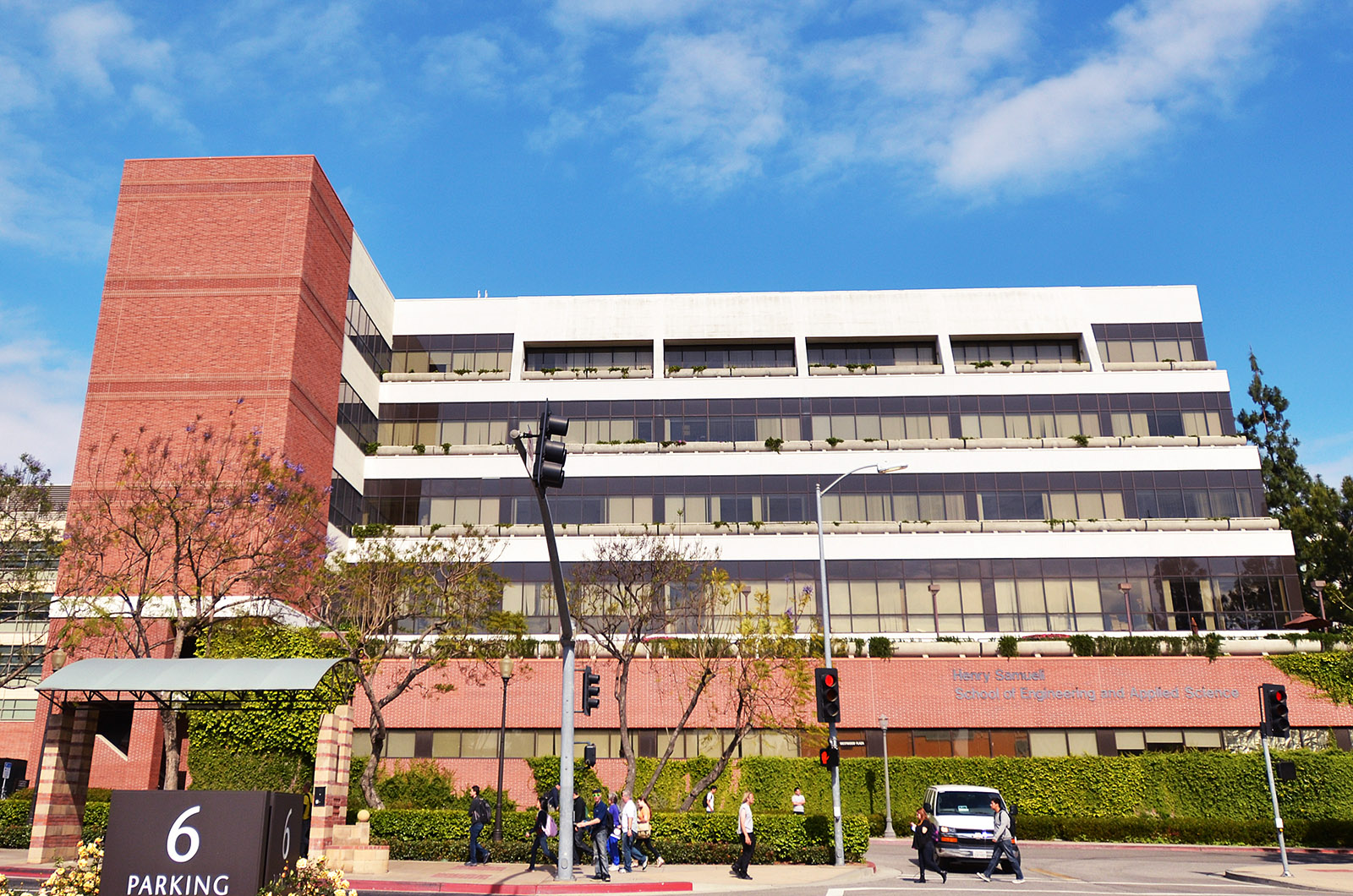
The UCLA Biomedical Artificial Intelligence Institute uses machine learning to improve the lives of patients.
According to UCLA Extension, machine learning is a field of AI that learns from existing data to predict relationships about populations of data. Corey Arnold, director of the BAIR Lab, said the institute’s researchers use machine learning to find connections in medical data.
Recognizing the potential of AI to analyze existing medical records with machine learning, Arnold decided to combine the engineering and clinical aspects of healthcare.
Arnold said the institute applies machine learning to various forms of medical data to analyze potential health risks. The data includes image and text data, as well as information about medical conditions such as cancer and mental illness.
The lab has developed a model trained on anonymized records with the aim of predicting future patient outcomes, Arnold added.
“We all generate very rich information in our medical records,” Arnold says. “The question is, ‘Maybe that information can tell us something about our future risks.'”
One of the lab’s most notable projects was finding connections between stored data measured by mobile activity trackers and known heart failure patients. The laboratory linked this association to specific predictors of patients experiencing heart failure-related events. This means that there was a significant correlation between daily step count and daily symptom severity.
Arnold added that the healthcare industry has been slow to adopt machine learning because of the potential impact of AI mistakes, including incorrect diagnoses, insurance complications, and even patient death.
According to a 2022 survey conducted by the Pew Research Center, 60% of American adults said they would feel uncomfortable if healthcare providers relied on AI.
Arnold said clinicians are collaborating with BAIR Lab and providing direct feedback on its application to real-world healthcare systems. According to Mara Pleasure, a bioinformatics doctoral student in the BAIR Lab, clinicians can give insight into how useful or applicable it is in a clinical setting and the potential problems it poses.
“We also want to seriously address the issues that will impact this very complex field of medicine,” Arnold said.
Pleasure said clinician expert opinions and perspectives on the model will help researchers finalize plans for the model.
Arnold added that the lab’s ultimate goal is to develop algorithms that alert patients to health risks based on data from mobile activity trackers.
“When I talk to other people, I feel like my work is making a difference,” Pleasure said. “At conferences, I talk to other researchers who are also excited about what I’ve done and find the novelty of the methods and applications interesting to them.”
BAIR Labs is also applying AI to digital pathology.
AI can analyze certain data sets more quickly and effectively than humans, Arnold said. This technology can analyze radiology images to determine potential diagnoses, such as cancer, and predict outcomes.
“It’s a really good job for AI to think about things that humans are bad at,” Arnold said.
Arnold added that he hopes to expand the scale of the BAIR Institute’s research.
“One of the areas where I would really like to grow the lab is building larger learning labs, where we can really shorten the timeline for innovation. We can test something in the ‘real world’ more quickly and see what the impact is going to be,” Arnold said.
Katya Redekop, a bioengineering doctoral student in the BAIR Lab, said she has worked on a variety of projects in the lab, including developing AI tools and frameworks for electronic medical record data and digital pathology.
“I’m personally really excited about this novelty and being able to be the first to explore something and bring cutting-edge results and then all of its medical applications,” Redekopf said.
Arnold said federal funding cuts have not affected the BAIR Institute. In late July, the Trump administration froze $584 million in federal research funding from UCLA over allegations of “anti-Semitism and bigotry,” leaving many researchers and their labs without grants.
[Related: Graduate, postdoctoral scholars grapple with labor strain amid funding cuts]
A federal judge filed preliminary injunctions in August and September that reinstated UCLA’s National Science Foundation and National Institutes of Health grants, which account for the bulk of UCLA’s previously frozen funding. The ruling, issued in response to a lawsuit brought by University of California researchers, will remain in place while the lawsuit progresses through the courts.
[Related: Federal judge orders Trump administration to restore $500M of UCLA research grants]
Arnold said he hopes the introduction of AI in the medical field will improve interactions between patients and doctors.
“This will be transformative for doctors who are overworked, burnt out, and have less and less time to see patients,” Arnold said.