![Acting Attorney General Koo Ja-hyun speaks at a press conference at a government building in central Seoul on February 26th. [NEWS1]](https://koreajoongangdaily.joins.com/data/photo/2026/02/26/832dcf0d-a5b1-4983-b604-fb33dc2b1a94.jpg)
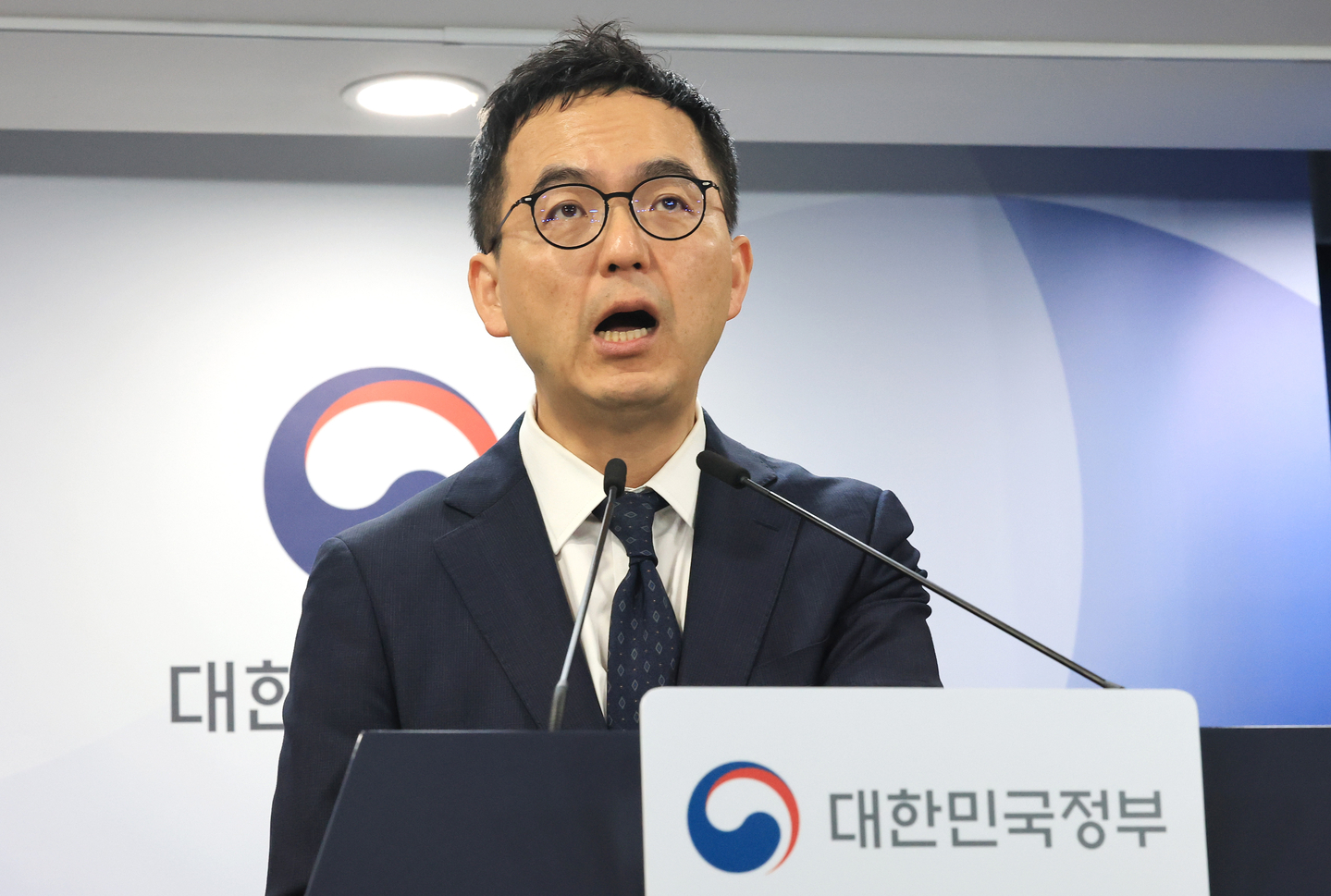
Acting Attorney General Koo Ja-hyun speaks at a press conference at a government building in central Seoul on February 26th. [NEWS1]
With less than four months left until local elections on June 3, prosecutors and police announced Thursday that they will pursue and punish those who create and spread AI deepfake videos and false information about the election.
Acting Prosecutor General Koo Ja-hyun and Acting National Police Agency Commissioner Yoo Jae-sung issued a joint statement after attending a cabinet meeting chaired by Prime Minister Kim Min-seok at a government building in Jongno-gu, central Seoul.
South Korea will hold local elections on June 3 to elect local government leaders, including city and province governors, mayors, and local assembly members.
“Recent advances in AI technology have made deepfake videos and other disinformation so sophisticated that people can barely distinguish them from real footage,” Koo said on Thursday. “Such false information can damage reputations, cause social disorder, and cause irreparable harm.”
He warned that there could be a surge in fake news related to the June 3 local elections.
“Black propaganda, including the spread of false information, directly affects voters’ ability to make fair judgments by providing false information,” he said.
Black propaganda refers to false or misleading information spread during elections to damage the reputation of the opposition or influence public opinion.
“Prosecutors will use forensic tools and all available investigative techniques to find those responsible, including those using overseas servers. We will prosecute these crimes and seek harsh punishments to prevent them from spreading to our society.”
Last month, the Supreme Public Prosecutors Office set up specialized election investigation teams at public prosecutors’ offices across the country to prepare an emergency response system. A meeting of the chief prosecutors in charge of election cases will also be held to discuss countermeasures.
Deputy Commissioner of National Police Agency
Mr. Yoo also took a strict stance.
![Acting National Police Commissioner Yoo Jae-sung spoke at a press conference at a government building in central Seoul on February 26th. [NEWS1]](https://koreajoongangdaily.joins.com/data/photo/2026/02/26/04cea19e-ddc4-4b72-90a9-25a84a162b6a.jpg)
Acting National Police Commissioner Yoo Jae-sung spoke at a press conference at a government building in central Seoul on February 26th. [NEWS1]
“We apply a zero tolerance principle to:
“This is fabricated information that undermines the fairness of elections and democratic order,” Yu said, adding, “We will trace the distribution channels and severely punish both the original creators and those who first disseminated the content.”
Police began setting up a task force to combat false information in October last year.
For serious incidents, the Metropolitan Police Department, rather than local police, will lead the investigation. Since February 3, police forces across the country have formed specialized teams to crack down on election-related crimes, including the spread of false information.
Authorities have stepped up their crackdown on AI-generated deepfakes as they pose a growing threat to election integrity.
The National Election Commission requested the removal of 388 deepfake videos during the 2024 general election, but that number rose to 10,510 during last year’s presidential election.
![Models demonstrate LG U+'s AI deepfake countermeasure technology at an AI security technology briefing held at the LG Building in central Seoul on June 26, 2025. [NEWS1]](https://koreajoongangdaily.joins.com/data/photo/2026/02/26/0948bf7e-dfd4-4cf6-81a6-2143947a7f6e.jpg)
Models demonstrate LG U+’s AI deepfake countermeasure technology at an AI security technology briefing held at the LG Building in central Seoul on June 26, 2025. [NEWS1]
President Lee Jae-myung was also targeted. In April last year, about two months before the presidential election, officials received a report about a deepfake video of Lee verbally accusing his wife, Kim Hee-kyung.
Under the Public Offices Election Act, anyone who manipulates a video to help a particular candidate win or lose the election could be sentenced to up to five years in prison or a fine of up to 30 million won ($21,000).
Under the 2023 amendments to the Public Offices Election Law, the use of deepfake videos in election campaigns will be prohibited from 90 days before election day. With local elections on June 3, restrictions will begin on March 5.
This article was originally written in Korean and translated by a bilingual reporter using generative AI tools. It was then edited by a native English speaking editor. All AI-assisted translations are reviewed and refined by our newsroom.
Written by Kim Sung Jin [[email protected]]