
According to Canada’s 2025 Trade Statistics, the proportion of Canadian small businesses exporting goods or services reached a record high of 15.1% in 2023, highlighting the growing international presence of Canadian businesses. At the same time, the Bank of Canada reports that the adoption of artificial intelligence in Canadian businesses has increased significantly in recent years as organizations invest in technologies that improve productivity, reduce operational friction, and support sustainable growth.
While AI has become widely recognized for assisting with content generation, document summarization, and routine administrative tasks, companies are increasingly evaluating AI based on its ability to solve real-world operational challenges. One of the most important of those challenges is multilingual communication during live meetings.
International business depends on effective conversation. Sales presentations, customer onboarding, supplier negotiations, technical training sessions, and cross-border project meetings all require participants to communicate clearly and respond naturally. While video conferencing platforms have made global collaboration easier, language differences continue to slow discussions, increase misunderstandings, and limit participation.
Traditional translation methods often rely on bilingual employees, external interpreters, or translated captions. While these approaches are still valuable in many situations, they can disrupt the flow of the meeting, increase costs, and make the conversation unnatural. Therefore, organizations are looking for AI solutions that integrate directly into existing business workflows rather than adding complexity.
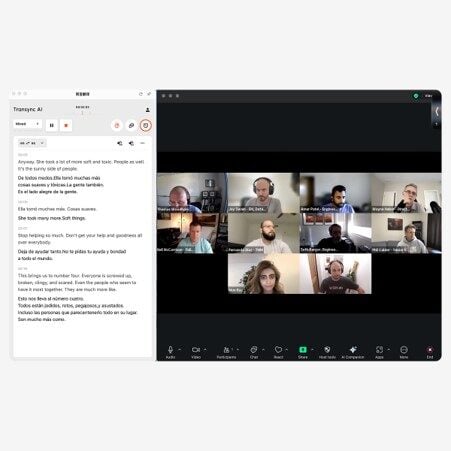
Transync AI was developed to address this need by providing real-time, AI-powered meeting translation across major collaboration platforms, including Zoom, Microsoft Teams, Google Meet, and other widely used meeting solutions. Rather than requiring meeting participants to install browser extensions, plugins, or meeting bots, the platform works in conjunction with existing meeting environments, allowing organizations to introduce multilingual communication with minimal disruption to existing workflows.
The platform automatically detects the language being spoken during a meeting and provides bilingual subtitles in real-time, allowing participants to understand conversations more naturally. Before a meeting begins, organizations can prepare industry terminology, product names, technical terms, and business context through the platform’s AI assistant, improving translation accuracy for professional discussions.
For organizations that require voice communication beyond language, Transync AI also supports AI voice playback with virtual microphone technology. Participants can speak naturally in their preferred language, and translated audio is delivered directly to supported conferencing platforms. When available, Voice Clone technology preserves the characteristics of the original speaker’s voice, helping to create a more familiar and engaging communication experience.
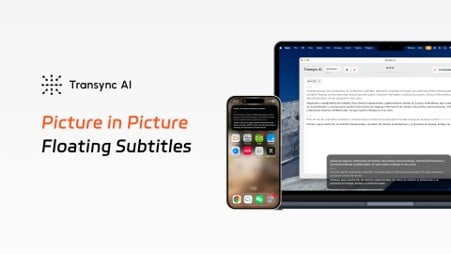
In addition to live translation, the platform also supports picture-in-picture subtitles that remain visible during presentations and screen sharing, reducing the need for participants to constantly switch between presentation materials and translated captions. AI-generated meeting notes transform conversations into organized summaries, important decisions, and follow-up tasks, allowing teams to save time and improve documents post-meeting.
The ability to communicate effectively across languages is becoming increasingly important across a variety of industries. Canadian manufacturers can use AI translation during supplier negotiations, equipment training, and quality assurance meetings. Technology companies can offer multilingual product demonstrations and customer onboarding sessions without relying on individual interpretation services. Consulting firms can work more effectively with international clients, and educational institutions, recruiters, and customer support teams can improve their accessibility to diverse audiences.
As business continues to expand internationally, multilingual communication is no longer limited to multinational corporations. Small and medium-sized businesses are increasingly engaging with international customers, remote employees, and global partners, creating demand for practical solutions that facilitate international collaboration without requiring significant operational changes.
Although AI translation continues to advance rapidly, it is not intended to replace professional interpreters in all situations. Legal proceedings, medical consultations, government communications, and sensitive commercial negotiations often require certified human interpreters to ensure the highest level of accuracy and understanding of context.
Organizations should evaluate AI translation based on the specific requirements of each use case, while maintaining appropriate human oversight as needed.
Companies considering AI-powered translation solutions should also evaluate factors such as target languages, translation delays, platform compatibility, terminology customization, security standards, and corporate privacy controls. These considerations play a key role in determining whether an AI solution can be successfully integrated into existing business operations.
Transync AI says that by default, meeting audio is deleted after processing, stored text is encrypted, and customer data is not used to train AI models. These privacy measures are intended to support organizations with internal governance requirements while maintaining the confidentiality of business communications.
As AI adoption continues to accelerate across Canada, organizations are now focusing on technologies that deliver measurable business outcomes, rather than simply implementing new digital tools. Reducing communication barriers improves collaboration, shortens sales cycles, strengthens customer relationships, and enables broader participation in international business activities.
The long-term value of AI will ultimately be determined by how effectively it removes friction from daily operations. For Canadian businesses operating in an increasingly globalized economy, multilingual communication is one of the most practical applications of artificial intelligence. Technology cannot replace cultural understanding or human expertise, but it can help people communicate more naturally, make decisions more efficiently, and build stronger relationships across international markets.
About Transync AI
Transync AI is an AI-powered live meeting translation platform designed to help organizations communicate across languages in real-time. The platform is compatible with leading video conferencing platforms such as Zoom, Microsoft Teams, and Google Meet, and combines live voice translation, bilingual subtitles, AI audio playback, meeting summaries, and enterprise privacy controls to support seamless multilingual collaboration for businesses around the world.
]]>
Copyright 2026 ACN Newswire. Unauthorized reproduction is prohibited.