The Asia-Pacific Energy Ministers gathered in Busan this week for the 15th APEC Energy Ministerial Conference to ensure stable electricity supply, modernize the regional grid, and develop artificial intelligence for innovation in energy systems and create a collective course.
Meeting against the backdrop of a surge in electricity, accelerated electrification and increased climate pressure, the Minister highlighted the urgency of resilience, diversification and technologically advanced energy networks that can provide regional energy security and sustainability.
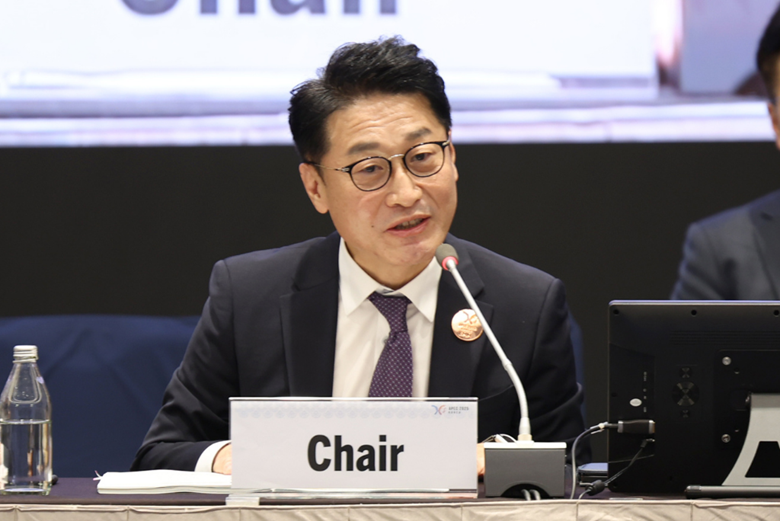
Hohyun Lee, chairman of the conference and deputy minister of energy at the Ministry of Trade and Industry and Energy, emphasized the interests. “South Korea is committed to balancing its energy sector,” Deputy Minister Lee said.
Emphasizing this priorities, Deputy Minister Lee said South Korea is working to build a grid, advance diverse energy technologies to meet the surge in electricity, and develop artificial intelligence-enabled microgrids to enhance energy resilience and reliability through “energy highways” and expanded storage, and improve grid management.
“This conference provides an important opportunity to reflect on and move forward on our energy strategy. We look forward to participating in APEC Energy Cooperation and meaningful discussions centered around three key topics we have outlined.”
The Minister built on this argument by identifying three regional priorities: scaling power supply, enhancing grid security, and tapping AI to optimize energy systems. They highlighted the need for stronger investments, cross-border cooperation and shared standards to provide reliable, future-ready energy networks.
“In an age of global economic and geopolitical uncertainty, ensuring sustainable and innovative energy systems for all economies is an immediate priority for all economies,” Eduardo Pedrosa, executive director of the APEC Secretariat, said in a statement at the meeting.
“With the rapid advancement in artificial intelligence, the need for resilient, intelligent, adaptive energy infrastructure is greater than ever. APEC, as an incubator of ideas, is uniquely positioned to support the economy to address these challenges,” added Pedrosa.
Busan itself provided a debate-worthy background with its offshore wind projects and environmentally friendly data centers illustrating the integration of digital technology and renewable energy. South Korea introduced plans to expand its national grid capabilities, build a next-generation “energy highway” and deploy AI-enabled microgrids, showing how the economy can combine innovation with long-term energy security.
“By convening in Busan, we reaffirm our shared vision of unlocking new possibilities in the energy sector. The challenges we encounter will encourage us to unite and work together,” Deputy Minister Lee said. “Today's discussion is important as we strive to find impactful solutions and ignite change.”
The Minister also heard from the private sector and international partners, including the World Bank and the International Energy Agency. They shared insights into the scaling and accelerated deployment of smart technology-critical input investments into the APEC process. Ministers highlighted the need for cross-sector collaboration to ensure that digital transformation supports it, rather than undermining energy security and resilience.
/Public release. This material of the Organization of Origin/Author is a point-in-time nature and may be edited for clarity, style and length. Mirage.news does not take any institutional position or aspect, and all views, positions and conclusions expressed here are the views of the authors alone.