Currently, the active use of AI chatbots is exploding in the United States, but their rapid development is causing many concerns among the public. A recent and authoritative study by Pew Research Center shows that there is a big difference between how technology is changing daily life and people’s expectations. Only 16% of respondents believe that smart systems will bring more benefits to society over the next 20 years, while 40% foresee a direct negative impact.
pew research
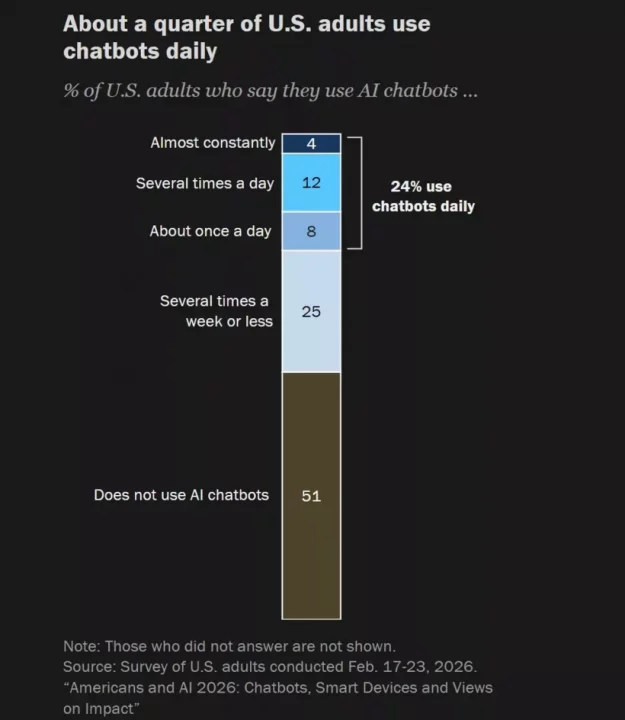
A year ago, just 33% of the U.S. population was using generative AI tools. This metric has now increased to 49%. About a quarter of users of such solutions use neural networks almost every day, and another quarter utilize the technology several times a week.
At the same time, 51% of residents completely ignore these innovations. The highest percentage of people who clearly do not use smart assistants are among the older generation, those aged 50 and above.
What tasks is AI used for?
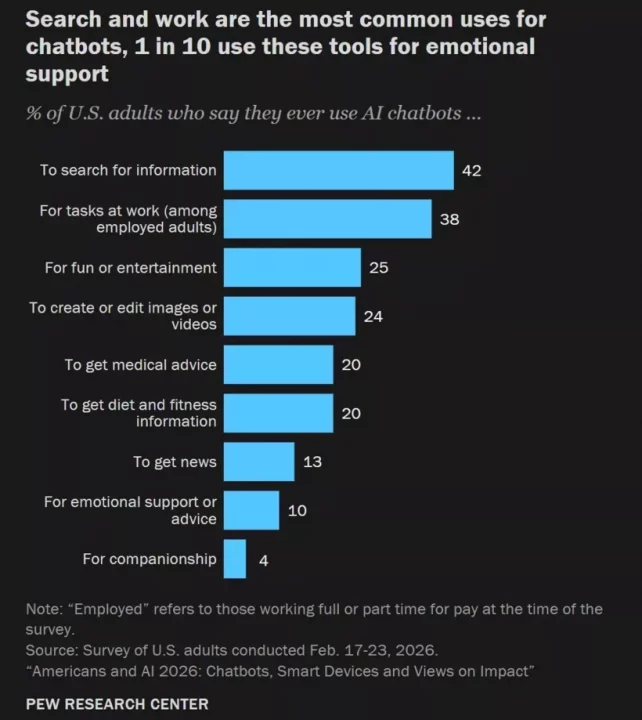
Users have discovered many application vectors for using chatbots.
- Search for different facts and answers instead of turning to regular web resources. This trend is disrupting the old mechanisms of traditional Internet business, which are based on direct clicks.
- Different work assignments and work organization.
- Image, video editing, media content and entertainment generation.
- Find advice in the healthcare field, develop a meal menu or find a sports training plan. Please note that experts and system authors strongly recommend not to use the obtained generations as medical conclusions.
Service evaluation
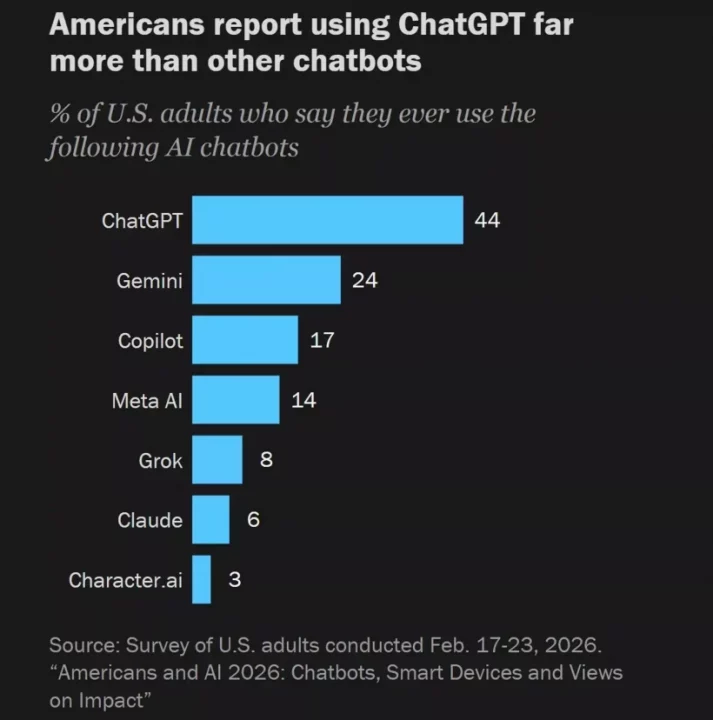
Although the generative systems landscape is rapidly expanding, one constant product still confidently holds its throne. Statistics on the use of tools from major IT brands were distributed as follows:
- ChatGPT is the main absolute favorite, used by 44%.
- Gemini’s share from Google was 24%.
- Microsoft Copilot came in third place with 17%.
- Meta AI confidently enters the list of popular assistants with an indicator of 14%.
Predicting the impact of AI on the future
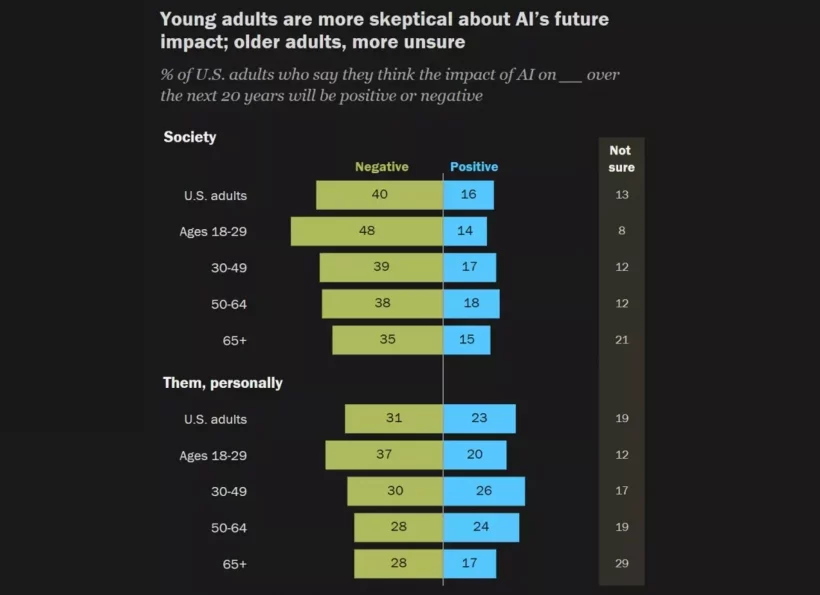
Predictions about the impact of the neural network ecosystem remain concerning. In addition to the 40% of outspoken skeptics who believe that generative algorithms will only make society worse in the long run, a further third of respondents expressed confidence that this technology will have both positive and destructive effects.
On a purely personal level, the mood changes little. 31% of the public are concerned that innovation will have a negative impact on their sense of well-being, but only 21% expect positive personal changes. A major portion of the distrust comes from Americans between the ages of 18 and 29.
Anxiety surrounding AI is increasing
The general public considers the current process of artificial intelligence expansion to be overly uncontrollable and aggressive. Residents fear serious reputational damage and personal loss.
- Two-thirds of Americans agree that the sphere is accelerating at an excessively high rate.
- Most people are aware of the harm posed by the growing inviolability of personal privacy.
- Approximately 67% of the public agrees that the government cannot ensure strict oversight of the AI sector.
- Approximately 60% of viewers do not trust the actions of the large conglomerates responsible for reasonable limits on the integration of such neural models.
Don’t miss interesting news
Subscribe to our channel to read tech news and test announcements.