California-based R&D software developer Albert Invent has announced the completion of a $7.5 million seed funding round. The investment was led by his Index Ventures, with participation from Homebrew, F-Prime Capital and high-profile angel investors.
Albert Invent’s primary product, called Albert, is a secure, collaborative, end-to-end digital R&D platform. Albert is designed to remove barriers to innovation caused by disconnected and siled R&D processes such as laboratory information management systems (LIMS) and electronic lab notebooks (ELN).
This digital platform incorporates artificial intelligence (AI) and machine learning (ML) technology for experimental simulation and a growing database of industry standards and over 50,000 commercial materials.
According to Albert Invent, the funds will be used for further growth of digital products and participation of more chemical and materials science companies. These additions will help expand the company’s influence within the $4.7 trillion chemical and materials science industry.
“Albert epitomizes the kind of software company we look to back,” said Paris Heyman, partner at Index Ventures. “Developed by a team with deep industry expertise, this platform is purpose-built for customers who are digitally transforming their R&D activities and developing the labs of the future.”
“We are thrilled to partner on this journey that will fundamentally change the way physical products are created,” added Heyman.

Albert – AI and ML driven R&D platform
Albert is reportedly designed by scientists, for scientists, to connect processes, data and insights into a single data source. According to Albert Invent, this allows for faster and more secure workflows.
Leveraging AI and ML technology, Albert provides predictive materials simulation and experimentation capabilities. Albert also tracks all current and past experiments into a standardized data framework to facilitate collaboration and improve productivity.
Albert’s inventory module includes a preloaded library of over 50,000 commercial raw materials and is touted as one of the largest material inventories on the market. Material tracking is also automated, providing real-time information on inventory levels, hazardous materials and regulatory compliance.
Albert also includes an integrated worksheet feature that replaces Microsoft Excel. This feature reportedly made it easier for the team to design new formulations and required fewer iterations. Additionally, Albert can automatically generate Safety Data Sheets (SDS) and labels, helping organizations ship products faster and easier.
Albert already boasts a global customer network, with customers in over 30 countries reporting significant return on investment (ROI). According to Albert Invent, scientists can now work on two to three times as many projects while increasing the value of their products.
Henkel, a leading manufacturer of adhesives, sealants and functional coatings, and 3D Systems, one of the largest 3D printing technology companies, both use the Albert platform. Applied Molecules, a manufacturer of formulated coatings and adhesives, is also noted as a key customer.
AI and 3D printing software
Artificial Intelligence is currently one of the biggest buzzwords in the 3D printing industry. His survey of 3D printing industry executives this year highlighted that AI will play a key role in his 3D printing future.
Earlier this year, Materialize released new process control software for metal 3D printing. This digital tool uses AI to automate the quality control process, analyzing and correlating layer data from the 3D printing process. This greatly speeds up the layer analysis process, allowing you to quickly identify problem parts before post-processing or quality inspection.
Elsewhere, Authentise recently released a free feature that brings ChatGPT functionality to 3D printing. Called 3DGPT, this new AI product allows users to ask a variety of additive manufacturing questions. This AI tool draws on general knowledge from OpenAI’s ChatGPT and more specialized information found in standard and academic journals to provide relevant and informative responses.
“There are many ways we think this tool could be useful within our product portfolio. To make it easier,” commented Authentise CEO Andre Wegner.
Finally, Nvidia has conducted research into a new AI model that can convert 2D video clips into detailed 3D models. Called Neuralangelo, this new AI technology is said to overcome the challenges faced by alternative generative AI models, allowing it to accurately reproduce repetitive texture patterns, uniform colors, and strong color variations. The Neuralangelo model is currently not 3D printable, but an Nvidia spokesperson told his 3D Printing Industry that this could be a future application of the tool.
subscribe 3D printing industry newsletter Make sure you get the latest 3D printing news.You can also follow twitterlike us Facebook Visit the page and subscribe. YouTube of the 3D printing industry Channels give you access to more exclusive content.
Interested in working in the additive manufacturing industry? Visit 3D printing jobs View available role choices and kick-start your career.
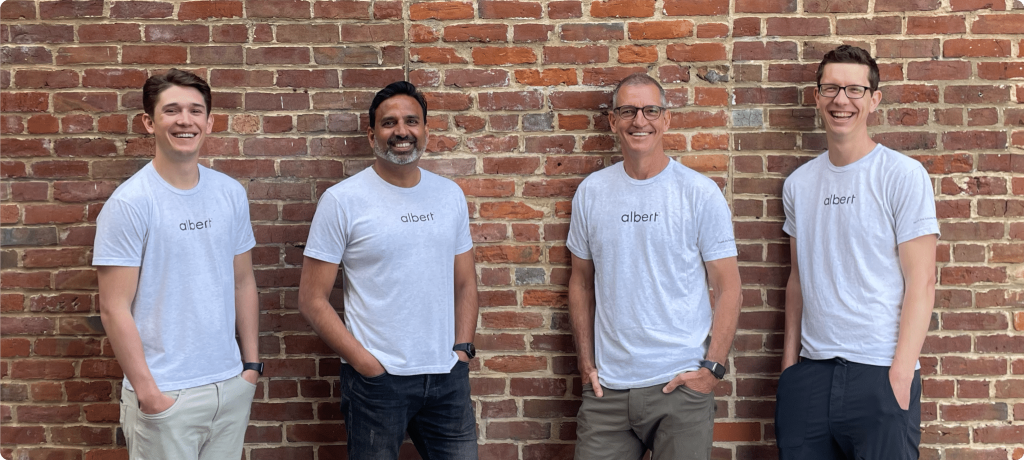
The featured image shows the Albert Invent logo. Image via Albert Invent.