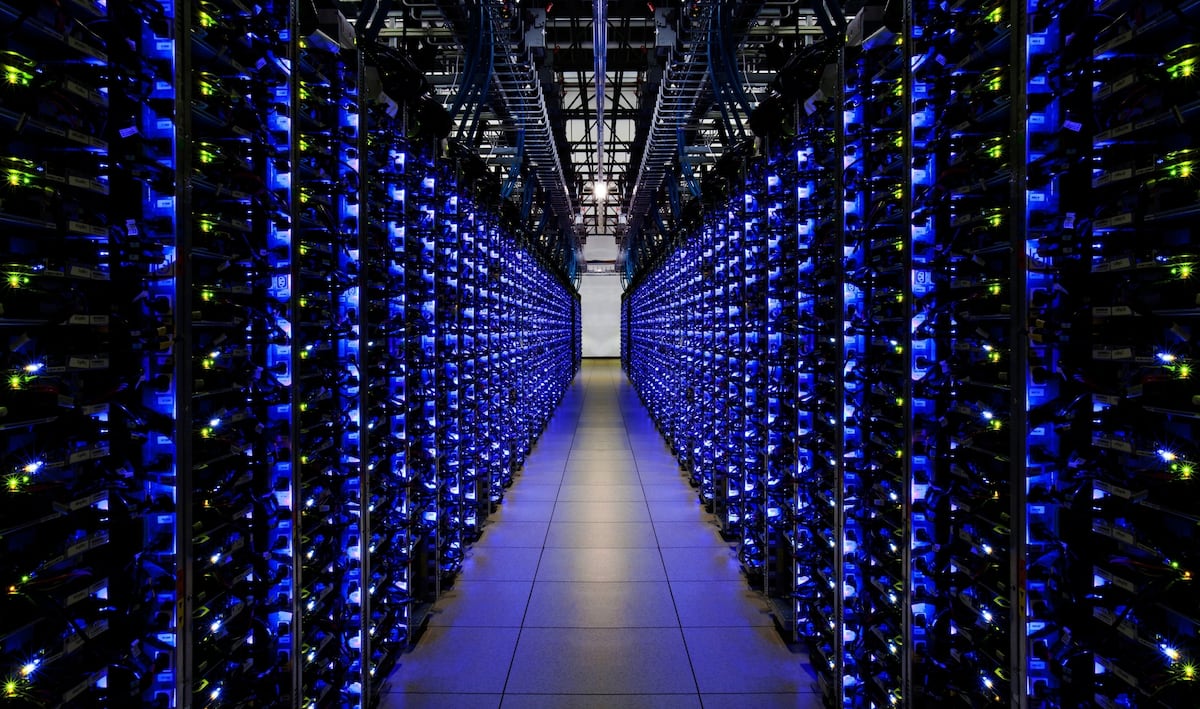
By 2030, the water consumption associated with the use of artificial intelligence will be equivalent to the equivalent of 1.3 billion people in sub-Saharan Africa, and will require nearly three times the annual energy consumption of Pakistan, Bangladesh, and Nigeria (countries with a combined population of 650 million people). In terms of carbon emissions, these could amount to 400 million tonnes of carbon dioxide equivalent, equivalent to the UK’s total emissions. AI operations require 14,500 square kilometers of land, including infrastructure and supply chains, twice the size of Greater Jakarta, a megacity with a population of over 32 million people, or 10 times the size of Mexico City (21 million people).
These are some of the figures cited by the authors of a report released this Wednesday by the United Nations University Institute for Water, Environment and Health (UNU-INWEH). In addition to these predictions, which are based on conservative growth forecasts, the report also includes some surprising data about the current situation. If the data centers powering AI were a country, their current electricity consumption (448 terawatt hours, TWh) would be equivalent to the electricity consumption of France.
The agency previously published a report warning of carbon emissions from the expanded use of AI. In doing so, the researchers also take into account the energy and water consumed by the data centers that power the AI (in the case of water, this includes both cooling systems and power generation).
“This report is not a lawsuit against artificial intelligence,” UNU-INWEH Director Professor Kaveh Madani said in a press release. “It is a call to use it responsibly and to proactively address unintended consequences to make it sustainable and equitable. There is a narrow window to ensure that the roots of the technological revolution of our time develop within global limits.”
“This report is an important and timely reminder that AI is not limited to models and algorithms, but also has real physical and environmental impacts determined by data centers, power systems, water systems, land use, and hardware supply chains,” said Xiaolei Ren, a professor of computational engineering at the University of California, Riverside, and an AI sustainability expert who was not involved in the study.
The underestimated environmental costs of AI
The report’s authors highlight several key messages. One is that the environmental costs of AI are systematically underestimated. Most of the analyzes published so far focus on the carbon footprint associated with training models. During the pre-release stage of a model, large datasets are used to process tens or hundreds of millions of parameters day and night over weeks.
“Every kilowatt-hour of electricity used to train or run an AI model generates emissions to the environment, including carbon dioxide emissions from the generation mix, emissions to water from power generation and cooling, and emissions to land from energy infrastructure, reservoirs, and fuel extraction,” the report highlights.

For example, if bioenergy replaces coal as the power source to power AI, carbon emissions could change by up to 70%. However, this increases the water footprint by 30 times and the land footprint by 100 times. Managing the impact of AI on the environment is therefore very complex. Lower emissions do not mean less water consumption or less land use. Using a single metric to assess the environmental impact of AI can obscure its harmful effects and shift impacts to other regions.
“If we continue to judge the sustainability of AI solely in terms of carbon, we may think that renewable energy will make AI infrastructure cleaner, but while it solves one problem, it often creates another problem in places where we don’t want it,” explained Miriam Axel, lead author of the study.
Which uses are more polluting?
The report also draws other interesting conclusions. Until recently, the general consensus was that most of the energy consumption associated with AI models occurs during the training phase (i.e., before public use). However, the Aczel team’s data challenges this view. Inference (the calculations performed every time a user submits a query so that the model can respond) accounts for the overwhelming share of total consumption, between 80% and 90%. The success of these tools, used by hundreds of millions of people every day, has reversed the balance.
The researchers also evaluated the energy consumption associated with different uses of AI. A standard conversation with a chatbot like ChatGPT or Gemini consumes 200 times more energy than basic AI functions like classifying suspicious emails as spam. Using this as a baseline, generating a synthetic image consumes 1,400 times more energy, while a short video can require up to 200,000 times more energy.
“This is one of the most comprehensive technical reports on the environmental impact of current AI systems, but the conclusions focus on the impact of GPT-4, a model that is more than three years old. And three years is an eternity in the AI field,” said Alex Hernandez, a researcher at the Quebec AI Institute (MILA), led by Yoshua Bengio of the University of Montreal. He did not participate in this study.
That the report’s conclusions are based on data from outdated models speaks to a lack of transparency in the field, Hernandez said. “The main limitation of this study is the difficulty in obtaining concrete data on consumption in the current system,” he added.
Unequal distribution of externalities
Another conclusion of this study is that the benefits and negative externalities of AI are unequally distributed. For example, in Ireland, where its lax tax system makes it the EU’s preferred location for many large tech companies, data centers will already account for 21% of total energy consumption by 2023. This has led the country to suspend construction of new facilities of this type in Dublin.
In Uruguay, plans to build a large, water-intensive data center in 2023 have coincided with a drought that has depleted Montevideo’s drinking water reserves, making tap water unsafe to drink.
Meanwhile, the authors estimate that by 2030, AI infrastructure will generate 2.5 million tonnes of e-waste (mainly outdated processors) annually, with much of it accumulating in low-resource countries.
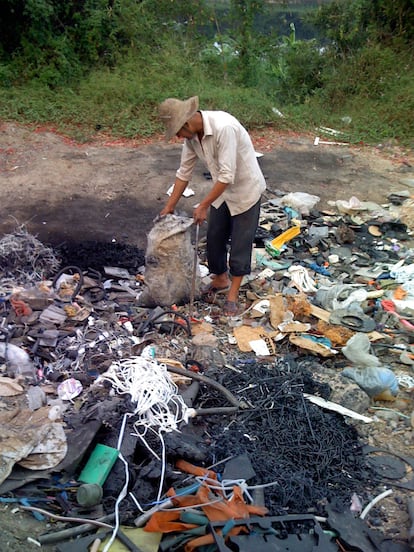
The report also highlights inequalities in infrastructure. Only 16% of countries have specialized facilities to run AI, and two of these countries (the US and China) account for 90% of total installed capacity. While e-waste, carbon emissions, and water consumption are spread across many countries, the benefits – access to AI applications – are concentrated in a few.
Towards sustainable AI
Like most UN-sponsored reports, this report includes policy recommendations. It calls on governments to require operators to produce standardized reports on the environmental footprint of AI, and for developers to prioritize choosing the right model for each task (avoiding using the largest and most resource-intensive systems for simple problems). This idea of ’efficiency by design’ and the call for greater transparency are the report’s key demands for the industry.
MILA’s Hernandez said it was important for the United Nations to commit to issuing a report on the environmental impact of AI, a topic that has so far been largely the subject of academics and investigative journalism. “While this report pursues the legitimacy of an academic paper, it also seems to reach into the policy realm,” he said.
register to our weekly newsletter Get more news coverage in English from EL PAÍS USA Edition