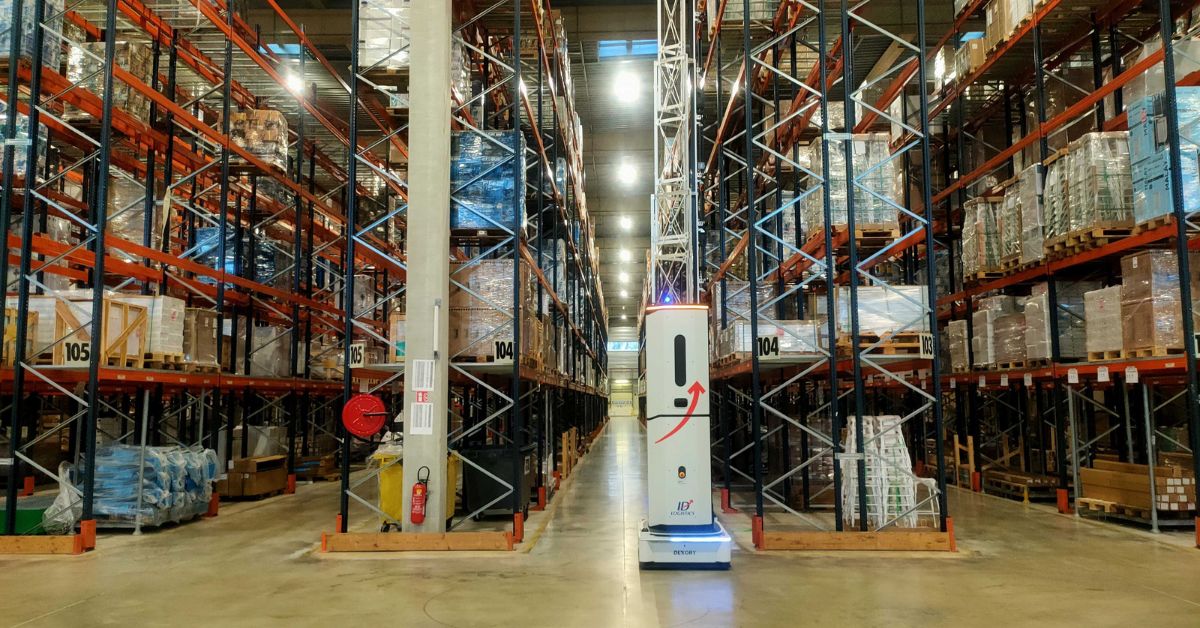
Nearly 60% of warehouses now have AI deeply embedded in their processes, and more than 90% use some form of AI or advanced automation.
Warehouses at the heart of the world's supply chains are rapidly transforming into highly intelligent, data-driven operations, according to a new collaborative study by intralogistics specialist Mecalux and the MIT Intelligent Logistics Systems (ILS) Lab at the MIT Center for Transportation and Logistics.
Based on insights from more than 2,000 warehouse and supply chain professionals in 21 countries, this study reveals that artificial intelligence is no longer limited to pilot projects. Rather, it has become a fundamental element of modern warehousing operations. Nearly 60% of warehouses now have AI deeply embedded in their processes, and more than 90% use some form of AI or advanced automation.
Large organizations with complex multi-location logistics networks are leading this change, with more than half of respondents reporting advanced or fully automated maturity levels. AI is increasingly being integrated into daily operations, supporting functions such as order picking, inventory optimization, predictive maintenance, workforce planning, and safety monitoring.
The study also highlights that investments in AI are paying off faster than expected. Most companies allocate 11-30% of their warehouse technology budgets to AI and machine learning efforts, with paybacks typically achieved within two to three years. These gains come from measurable improvements in throughput, inventory accuracy, labor productivity, and error reduction, marking a clear transition from experimentation to long-term capacity building.
Importantly, the findings negate concerns that automation will displace workers. On the contrary, the adoption of AI will lead to increased productivity and increased job satisfaction. More than three-quarters of respondents reported positive employee outcomes after implementing AI, and more than half said their warehouse workforce expanded. New roles are emerging in areas such as AI engineering, automation, data science, and process improvement.
As we look to the future, this momentum will only accelerate. Nearly all of the companies surveyed plan to expand their AI adoption over the next two to three years. Approximately 87% anticipate increasing their AI budget, and 92% are starting or planning new AI initiatives.
The next phase of implementation is expected to focus on decision-making technologies, particularly generative AI. Respondents identified generative AI as the most valuable emerging tool, with applications ranging from automated documentation and warehouse layout design to process optimization and software development for automated systems.
As generation capabilities mature, warehouses are expected to move beyond prediction to automated, real-time decision-making. The study concludes that the biggest impact of AI will be in making operations smoother, faster, and more resilient, and entrenching intelligent automation as the core of future warehouse performance.