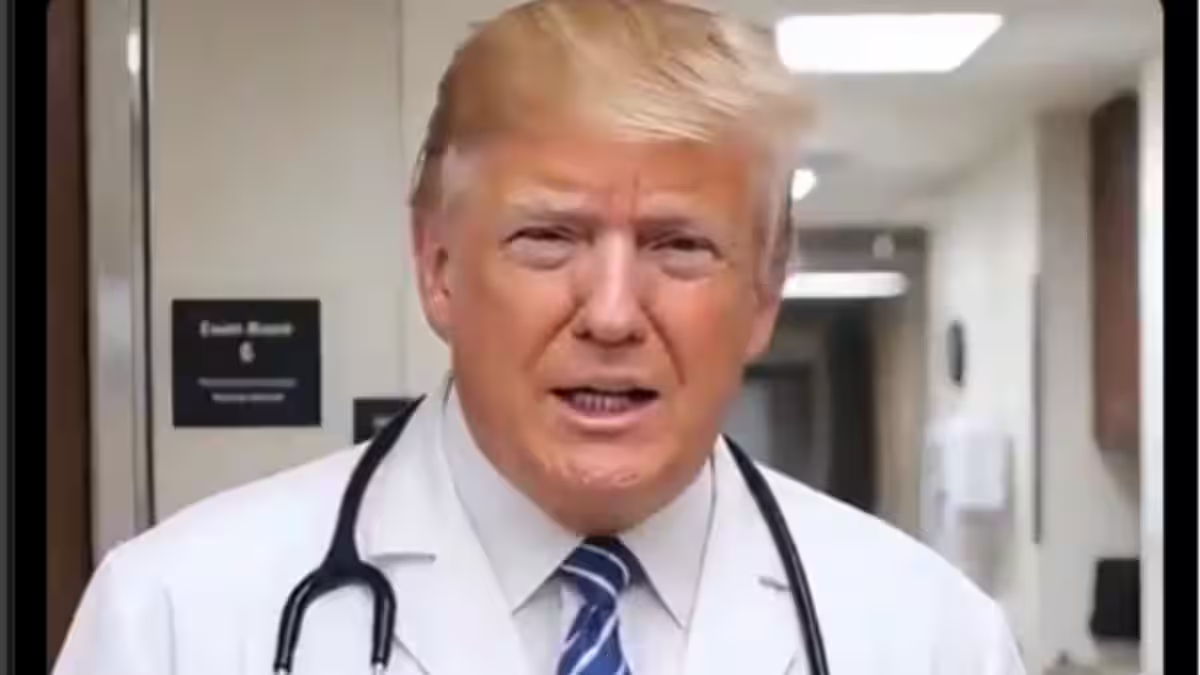
US President Donald Trump has released an AI-generated video of himself pretending to be a doctor prescribing treatment for Trump Derangement Syndrome, drawing sharp reactions online and from his political critics.
Late Wednesday, President Trump shared a 90-second AI-generated video on Truth Social depicting himself as “Dr. Trump” and proposing a hypothetical treatment for what he calls “Trump Derangement Syndrome” (TDS). It’s a term often used by Trump’s supporters to mock the president’s critics.
The clip features AI-generated versions of celebrities including Robert De Niro, Whoopi Goldberg, Rosie O’Donnell, Julia Roberts, Edward Norton and John Leguizamo, who appear as fictional “patients” praising Trump’s treatment for allegedly overcoming their hostility toward him.
The satirical “Prescription” exhorts viewers to stop watching “fake news,” pray, and drink Diet Coke, a nod to President Trump’s well-known fondness for soft drinks. Although clearly presented as a parody, the video quickly spread across social media and television, drawing both amusement from supporters and criticism from opponents for its use of AI-generated caricatures of real people.
The episode is the latest example of President Trump’s increasing reliance on AI-generated images and videos to convey his political messages. Over the past year, he has shared several AI-generated posts depicting himself in an exaggerated or symbolic role, reflecting a broader trend in contemporary political communication in which synthetic media is increasingly used to shape narratives, energize supporters, and dominate online discourse.
President Trump’s latest post therefore reflects more than just a social media controversy. This shows that artificial intelligence is becoming an increasingly influential element of political branding, as deepfake technology evolves from an internet novelty to a mainstream means of modern election campaigning.
As the capabilities of AI continue to improve, governments, technology companies, and election regulators will likely face increasing pressure to define what constitutes political satire and what constitutes potentially misleading synthetic media.
The debate extends beyond partisan politics. Experts have repeatedly warned that generative AI blurs the distinction between satire, political messages, and misinformation. Many viewers perceive such videos as parodies, but AI tools have become increasingly practical, making it easier to create compelling content that can go viral before context is established.