

Clouds were costing Chase Kerlin thousands of dollars. The founder of Austin, Texas–based Olive & Wool furniture had sprung for his first big photo shoot, and it wasn’t going well. He had rented an Airbnb in Boulder, Colorado; hired a photographer; and paid for the not-insignificant expense of freight, shipping his new line hundreds of miles.
“The photographer missed the flight, and it was a terribly overcast day in the mountains,” says Kerlin. “You couldn’t even see the damn mountains.” The trip cost roughly $35,000, and came very near to producing zero photos.
But Kerlin snapped some basic shots himself and sent them to his friend Michael Bashour, a tech entrepreneur who had become proficient with generative AI image tools. Bashour tweaked the pictures into usable shots. “I was cussing myself because he was sitting on his sofa, and he got better photographs than I could with all the hell I had been going through,” says Kerlin.
The experience became the basis for HookPic, a furniture-focused AI image generation company the two launched early last year. Roughly 18 months in, Bashour and Kerlin have 70 customers on their platform and are staffing up to bring in more. They’re not alone: A sizable handful of similar companies have launched over the past few years, all offering a comparable service. At a time when the business of selling furniture is moving at a crawl, the business of making AI pictures of furniture appears to be racing ahead.
Most shoots aren’t as catastrophic as Kerlin’s, but the home industry has long had a complicated relationship with photography. Much of the challenge is simple physics. Fashion brands can fit their entire season into a U-Haul and shoot their campaign on a street corner. Furniture makers need shipping containers and houses. That makes photoshoots expensive and time-consuming—then there’s the impossibility of capturing every SKU in every colorway and configuration.
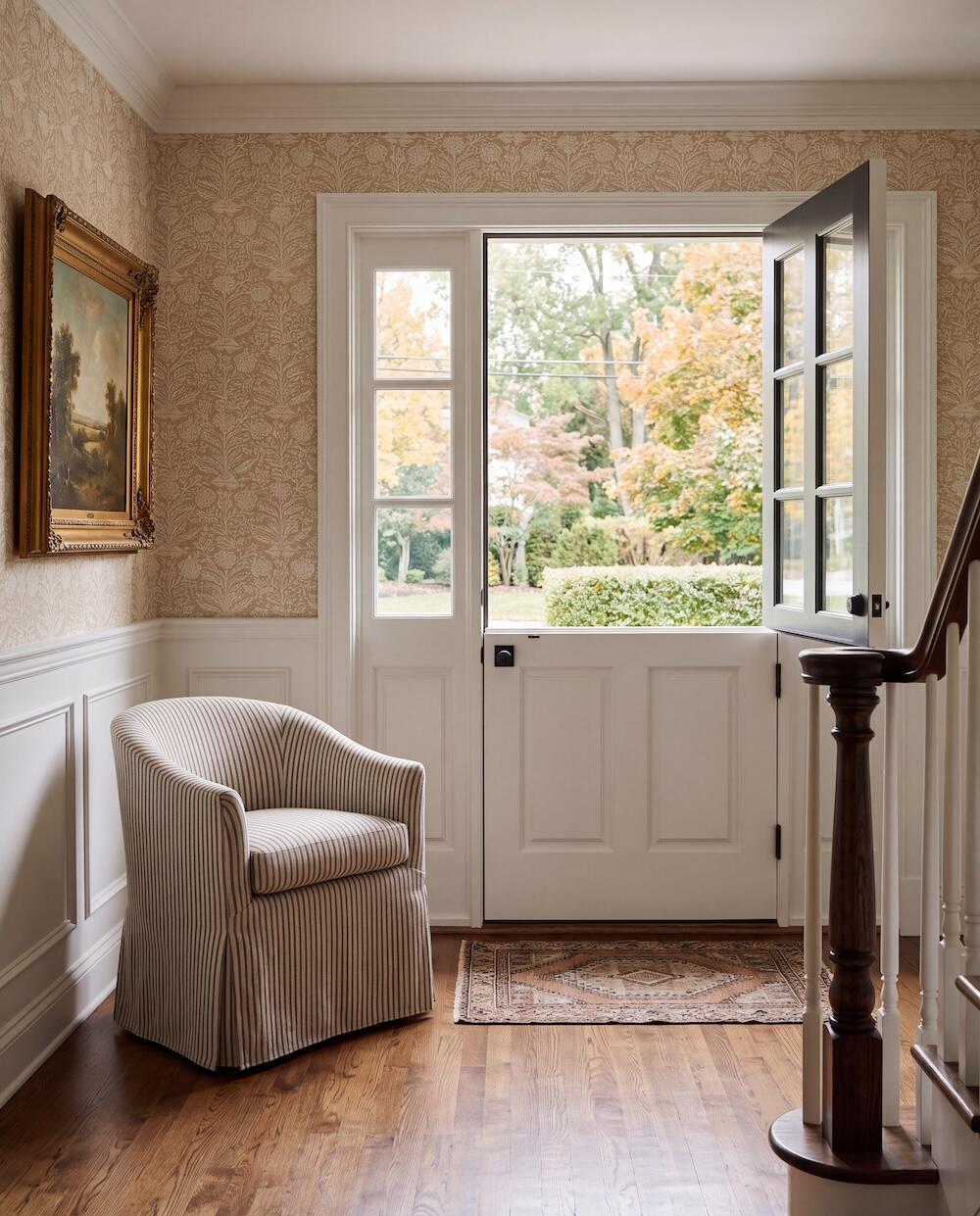
AI platforms like Presti allow brands to generate images of their product in multiple settingsCourtesy of Presti AI
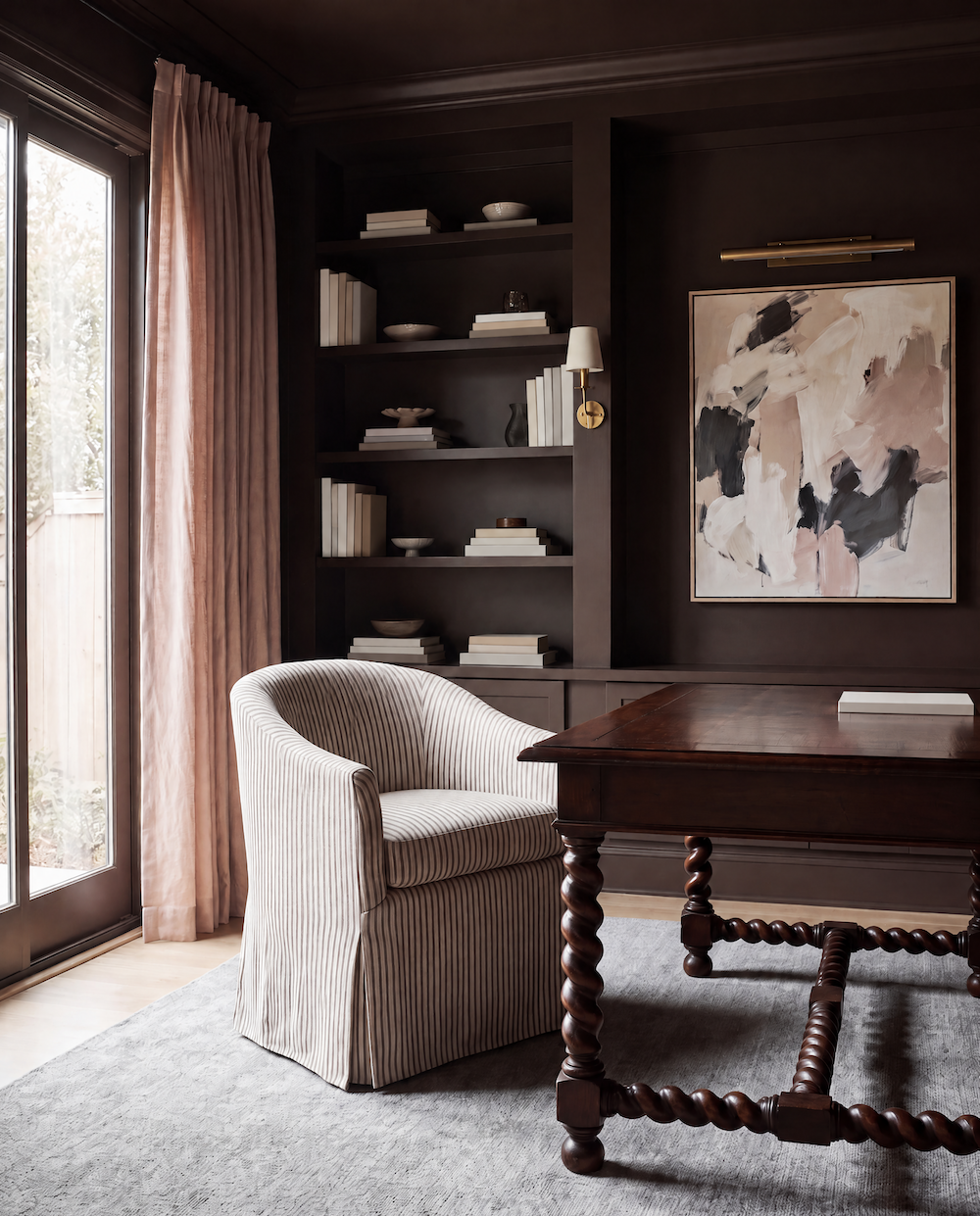
The process can be done cheaply and easilyCourtesy of Presti AI
Left: AI platforms like Presti allow brands to generate images of their product in multiple settings Courtesy of Presti AI | Right: The process can be done cheaply and easily Courtesy of Presti AI
Over the past two decades, many companies have attempted to fill the gap with computer-generated renderings. But even renderings—which can cost hundreds, if not thousands, of dollars for a single image—can be a considerable expense at scale. As AI image generation started to show radical improvements in 2024 and 2025, the technology struck many as a tantalizing solution to a perennial challenge.
It would be wrong to say that everyone in the home industry is using AI to make product imagery, but everyone is at least thinking about it. Large brands with endless SKU counts are figuring out how to use AI to showcase their vast selection of product configurations. Tiny brands are looking to use the technology to compete against those with bigger marketing budgets. It’s a time of toe-dipping and experimentation.
Makers of software like HookPic point out that some companies are using AI for almost all the marketing they do, from digital to print—Kerlin says a regional retailer is even using HookPic’s AI-generated video in TV commercials. Among the handful of design-world brands I spoke with, however, the approach was a little more incremental.
Rebecca Atwood is a case in point. Paradoxically, in recent years, the founder of the eponymous South Carolina–based textile brand has been investing more money in traditional photography and video. But demonstrating what her entire collection of wallpaper looked like in every colorway has always been prohibitively complex and expensive. Before, she used a combination of renders and Photoshopped stock images. Now, she uses the generative AI platform Midjourney.
“It was always a struggle to get images,” she says. “We used the same templates over and over, or we were using rooms that weren’t exactly right, but were OK.” Using Midjourney isn’t as push-button as some might imagine, and getting a usable image sometimes takes Atwood 20 or more iterations. But ultimately, she says, it “gives us a chance to show the wallpaper in different spaces versus just what homes we were able to [shoot in person] that had white walls. … It’s less expensive and it’s better.”
Brands with a boutique product selection will likely find all they need from consumer-facing tools like Midjourney, ChatGPT and Google’s Nano Banana (part of Gemini). When the SKU count gets higher, using chatbot-based tools is less scalable—it’s hard to maintain consistency and stay organized across hundreds of images. That pain point has birthed the class of startups that includes HookPic.
These platforms harness models like Midjourney and Nano Banana, but put them in the context of a user-friendly interface, usually charged on a monthly subscription basis (HookPic’s starts at $800). Users can create brand standards that apply across the board, allowing them to get a consistent look and feel across a large portfolio of images. Such services also tend to feature bells and whistles aimed at the unique needs of home companies, like targeting narrow customer profiles. To pitch a retailer in Miami, a furniture brand can spin up beachfront imagery; for clients in Denver, mountains in the background.
“One user put in what their buyer listens to, what they wear, where they shop for clothes—it really tells you how specific it can get,” says Jerrica Zaric, an account executive at Presti, an AI imagery startup that launched in 2024.
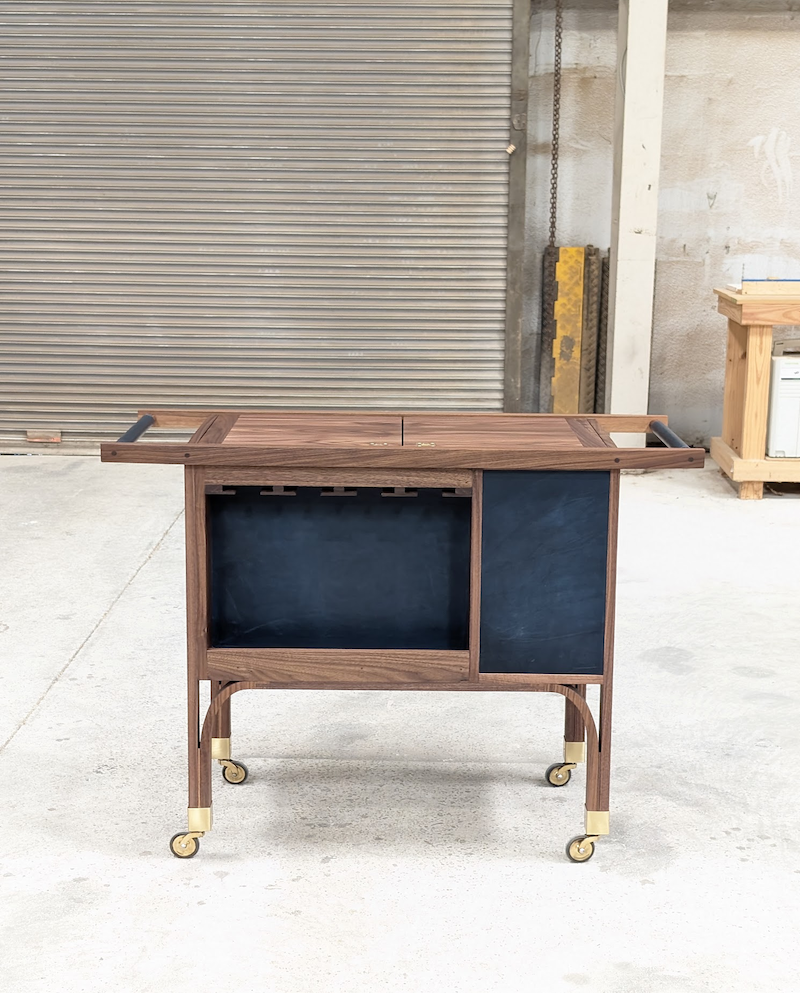
Software like HookPic allows users to input a low-quality photo from the factory floorCourtesy of HookPic
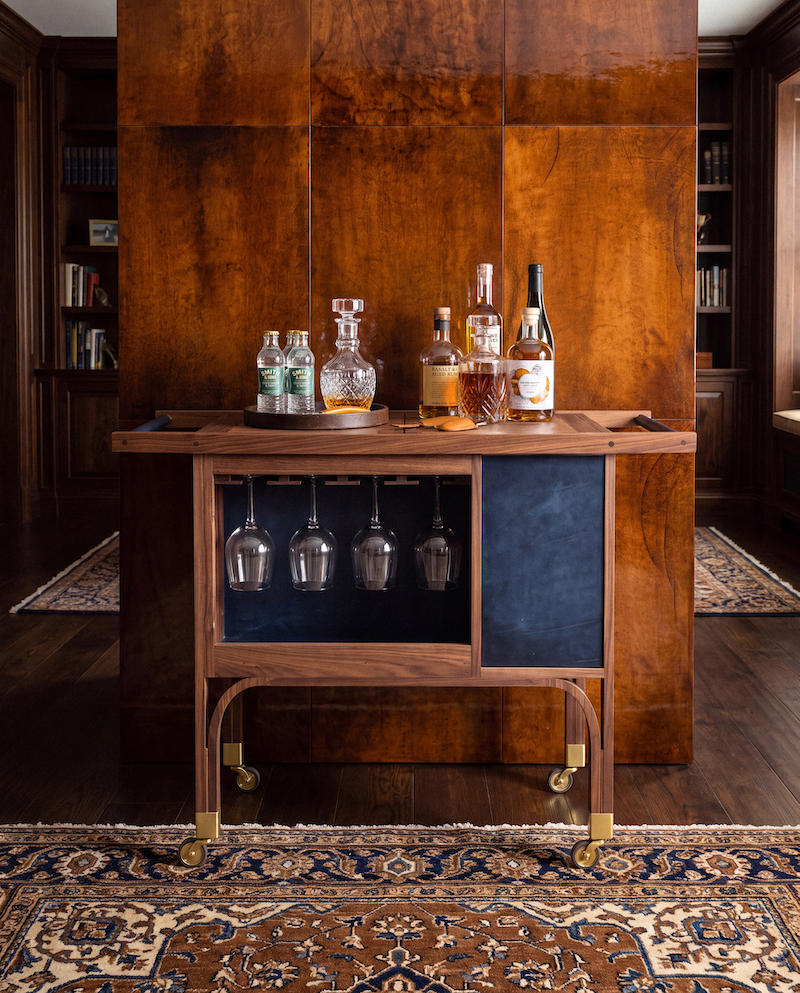
And end up with a polished lifestyle imageCourtesy of HookPic
Left: Software like HookPic allows users to input a low-quality photo from the factory floor Courtesy of HookPic | Right: And end up with a polished lifestyle image Courtesy of HookPic
Though all of these companies share a premise, each has their own angles. DecorX, founded by Markor chairman and CEO Mark Feng, is designed to work for furniture brands, retailers and interior designers alike. Feng is unique in that he’s both a maker of AI image software and a customer: Brands in Markor’s portfolio use DecorX internally, and the in-house designers for Markor’s Chinese retail stores use the software to increase conversion. “It’s got to work for me first and foremost,” he says.
Feng demoed a tool in which users can create a virtual 3D home, drop in product, then select an angle to photograph—essentially generating a mock photo shoot with a few clicks. “Working with AI, we just have more creative freedom,” he says. “Working with photographers, it’s like we get three shots at feedback—after that, it’s expensive to reshoot, and you feel bad. You can say no to AI as many times as you want.”
Getting a virtual tour of HookPic’s backend from Kerlin offered a look at the varied ways that brands can use AI to generate product imagery: The platform lets users strip away the background of a photo, combine multiple inspiration pictures, generate video, digitally re-skin armchairs in leather or alpaca, and produce marketing brochures, tear sheets and social media captions. “Our goal is plain and simple: help manufacturers sell more furniture,” says Kerlin. “Whatever we can do to help them do that, we’re going to do.”
Startups being what they are, some of these companies may fizzle out in the coming years. New ones may spring up to dominate the landscape with a new promise. But in the space of a few years, these companies have managed to work with customers ranging from Moore & Giles and Kathy Kuo Home to Wayfair and Ashley. There’s clearly a fast-growing demand for what they’re selling. Are we headed toward a world where most, if not all, design imagery is made with AI?
Not all brands are rushing into an AI-powered future. While most of the big public debates around artificial intelligence concern ethics, environmental impact and potential doomsday scenarios, for companies in the home world that are holding back, the issues are far more practical.
“It’s just not there yet,” says Kristy Greene, vice president of creative services at Austin-based furniture brand Four Hands. “We have found that, for all of its hype, AI is not able to be consistent and exact enough yet. If you generate an image and then you want to change something about it, it becomes this endless loop of redirecting, redirecting, redirecting. AI right now just cannot iterate to get something that meets our quality standards.”
Four Hands is an interesting case study. The company has hardly been hesitant about embracing technology: It has managed to grow aggressively over the past decade at least partially through adopting a tech-forward approach to sales and logistics. On the marketing side, the company has developed its own tools for computer-generated renderings. This is not a team of Luddites.
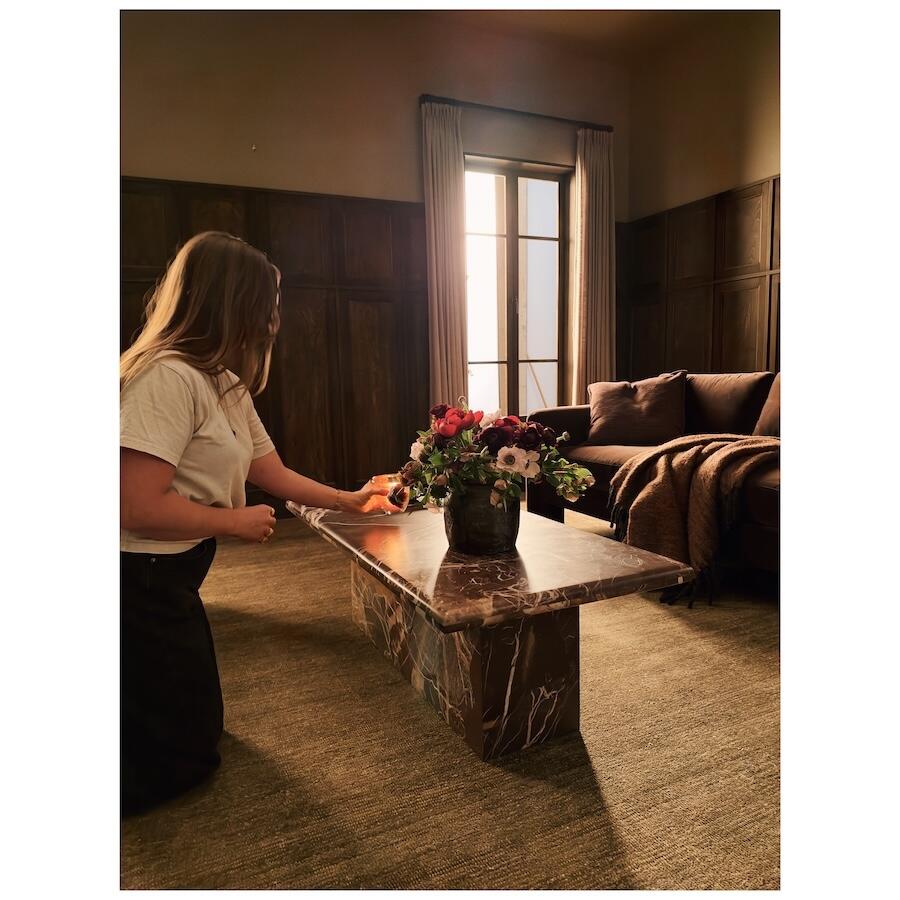
Four Hands has invested heavily in traditional photographyCourtesy of Four Hands
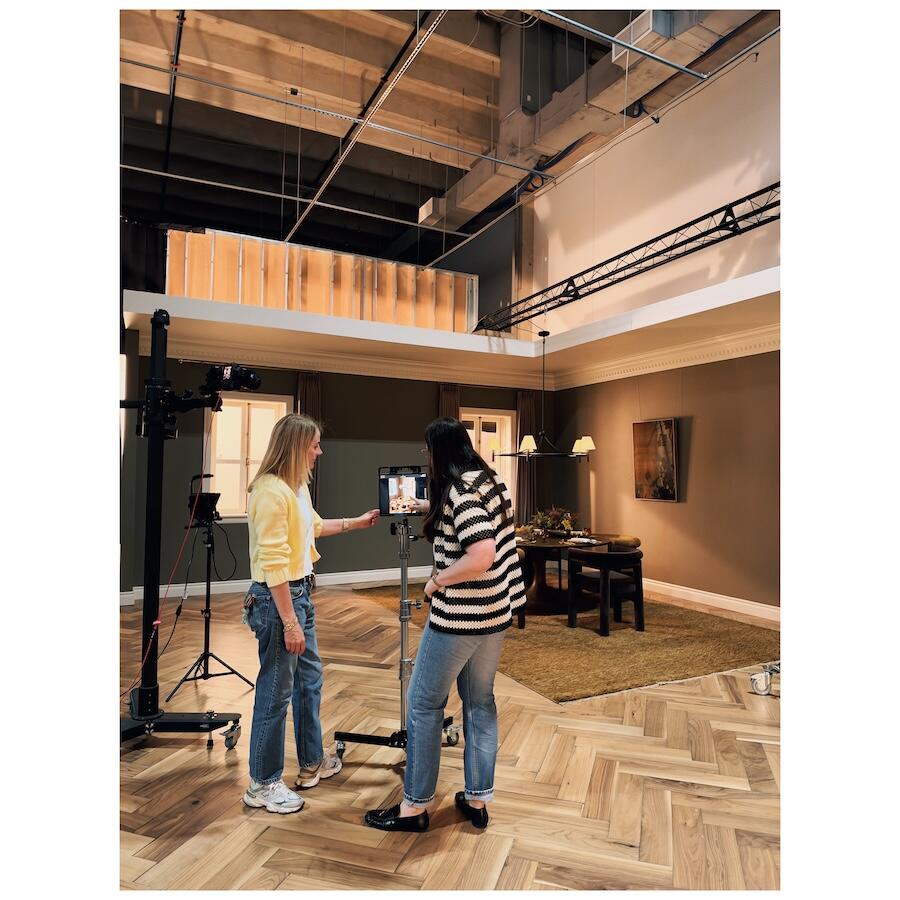
The company has a 13,000-square-foot photo studio in its Texas headquartersCourtesy of Four Hands
Left: Four Hands has invested heavily in traditional photography Courtesy of Four Hands | Right: The company has a 13,000-square-foot photo studio in its Texas headquarters Courtesy of Four Hands
But Four Hands has also invested heavily in traditional photography. The company has a 13,000-square-foot studio in its Austin headquarters. There, a sizable staff of photographers, stylists and retouchers produce images of 160 products per month out of nine photo bays. It’s a significant bet that “real” photography gives Four Hands edge.
“When you eat a really delicious meal, I say to my kids: ‘I can taste the love in this, y’all.’ And I think when it comes to real photography, you can taste the love,” says Greene. “There’s a magic thing about people working together in a creative environment that pushes people to innovate and ask, ‘How can this be more beautiful?’ And I feel like you can feel that human element in the work.”
New York–based Samuel & Sons is another example of a company that continues to bet on traditional photography. The passementarie brand’s vice president of creative, Milton De Paul, says that Samuel & Sons is open to experimentation, but that the technical nature of the category demands a level of precision AI can’t provide.
“I don’t think AI right now is that different from Photoshop in the past,” he says. “Twenty years ago, someone had done a photo with trim that had been Photoshopped, and then we got clients asking: ‘How do you sew the leather trim to make it look like that?’ And it was physically impossible. So I think the same could happen with AI. It’s a great tool in general … but you cannot replace the physical understanding that comes with actually constructing something.”
There are other challenges in using AI for imagery. Jim Kreber, CEO of Kreber, a firm that makes marketing content for a wide variety of home and design brands, has been excited about folding the technology into his company’s workflow—but says it has to be done carefully.
“Never in the history of marketing have marketers been able to sit down and prompt and create content out of thin air. But what we found is what we call the number one AI trap, where people think they can go [from] zero to 100 in one step,” he says. “You can’t do it. You’ve got to have [your] legal [department] look at the content, executives look at it, creatives look at it, and certainly product marketers weigh in.”
While AI can be part of the toolkit, Kreber says the technology isn’t precise enough for every context. As far as it has come over the past four years, algorithmically generated imagery is still prone to small “hallucinations”—and as good as the software has gotten, it can be difficult to make precise adjustments over a long series of iterations.
“Brand managers and product marketers expect the content that’s created to be absolutely precise, and they have zero tolerance for any imperfections that are interjected through the production process,” he says. “I’m talking about materials, features, textures, colors. If you have an appliance handle, the knurling on the handle has to be perfect. Companies are just not going to settle for sub-brand content.”
AI can also create complications on the distribution end. Retailers—both online and off—are in the midst of formulating their AI policies. Some are actively banning AI-generated content from brands, Kreber says, out of worries that misleading product imagery will result in mistrust and a higher return rate.
Lurking behind these challenges is a squishier issue. There’s no question that AI-generated imagery is technically impressive. How it will land culturally is more complicated. In speaking with companies that market their AI services, I found myself scanning through dozens of algorithmically generated images of living rooms, wondering if people could tell it was AI. And if they can, does that matter?
Fans of the technology tend to view AI as a neutral tool. It can be used to produce beautiful imagery or banal filler alike, depending entirely on who’s using it. “The nuance is: Does that look like AI made it—that to me is AI slop—or does that look like a human used a tool?” says Zaric. “When you give AI all of the control, that’s where we get the really bland rooms where everyone looks the same.”
Kerlin agrees. “You cannot give this to an average person that has no creative bone in their body and get a good image out,” he says. “You’ve got to have creativity and the ability to put a brand together to make any of this work.”
For them, debates over AI imagery are akin to the dustup over the advent of the photographic camera in the 19th century—a temporary period of adjustment to a new technology that will eventually pass. And as several people pointed out to me, is creating “fake” AI imagery truly different from creating “fake” renderings, or using Photoshop to polish a “real” image to a digital shine? Advertising has always involved embellishment of one kind or another.
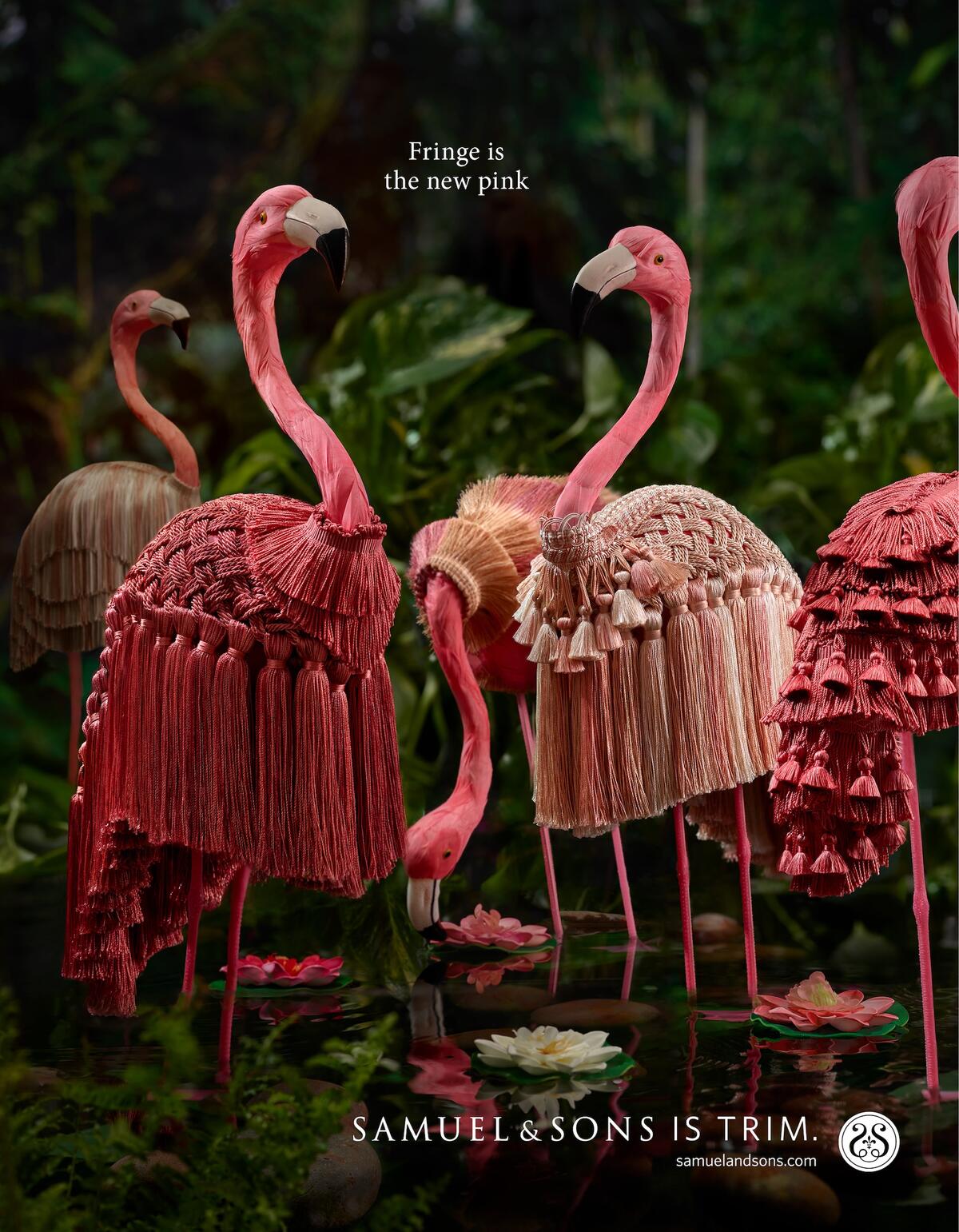
Samuel & Sons relies on traditional photography.Courtesy of Samuel & Sons
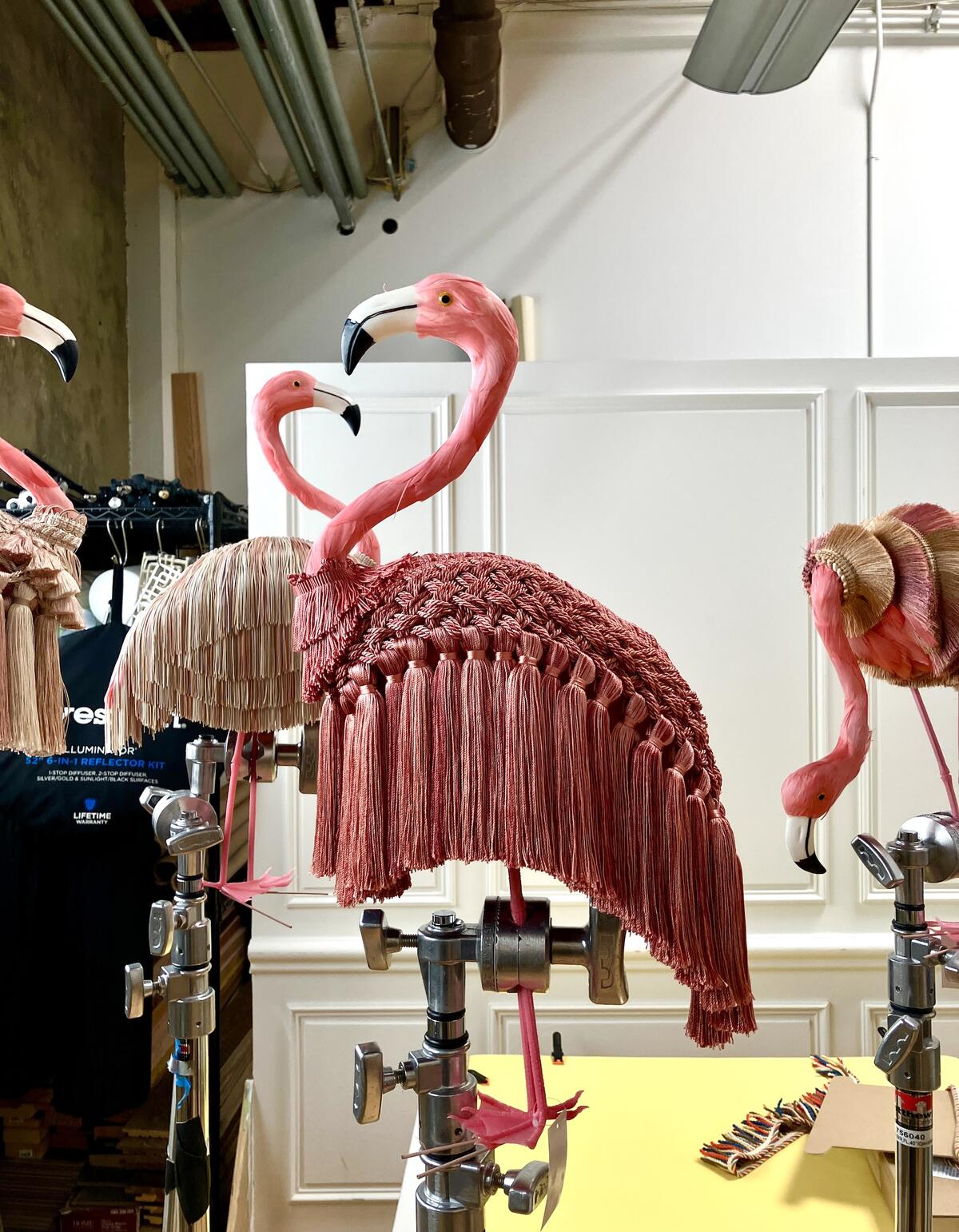
Its photoshoots are often complex affairs.Courtesy of Samuel & Sons
Left: Samuel & Sons relies on traditional photography. Courtesy of Samuel & Sons | Right: Its photoshoots are often complex affairs. Courtesy of Samuel & Sons
Still, it’s hard to ignore the volume of cultural agita over AI. You don’t have to look too hard on Instagram to find withering accusations about slop, and several consumer brands, including Dove and Aerie, have made public commitments specifically refusing to use AI to depict people in their marketing. Some companies will steer clear of the controversy.
It’s difficult to know where it all lands. For the time being at least, the movement towards using the technology is undeniable, and it seems likely that it will help a large number of home brands create imagery they would have otherwise found cost-prohibitive to make. The acceptable baseline for creative assets is likely going to get higher.
Perhaps we’re headed toward a new challenge: In a world where everyone can make decent-looking images, what will it take to stand out? Though Atwood has been using AI to make functional e-commerce images, for her traditional capture photography, she’s been experimenting with showing her papers partially installed, the bottom of the rolls hanging loose in curls—a kind of “imperfect” process-oriented shot. One possibility is that the AI era will see home brands seek to embrace a looser, less manicured feel, both to distinguish themselves against a sea of algorithmically perfected content and to subtly verify their product as real—at least until the robots figure out how to do that too.
“We’re starting to talk about what are the trends for 2027, and internally, at least, we’re calling it the ‘year of real’ … because I think it is fatiguing, this mental math that it takes to go: ‘Is this real? Am I having a real experience?’” says Greene. “We’re entering this realm where I don’t know if I can believe what I see. I think that it really creates more value for real art, and I consider photography real art.”
One thing’s for sure: These digital shifts will create strange new conundrums. For a recent Samuel & Sons campaign, De Paul and his team painstakingly created a mini flock of passementarie flamingos out of trim, accompanying the photo with the quippy slogan, “Fringe is the new pink.” All in, he says, it took 60 hours of (human) work.
People loved it. But then they wanted to know: Is it AI?


