
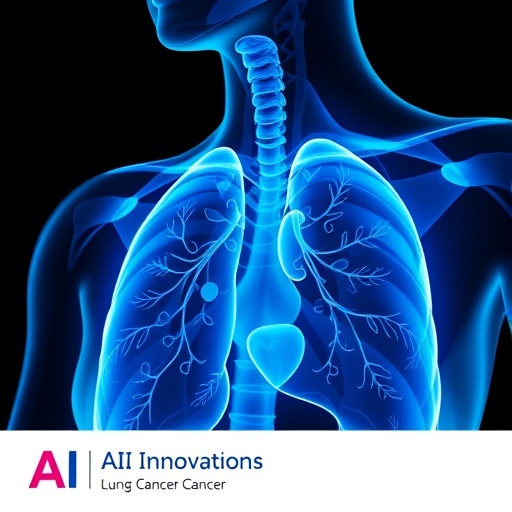
In recent years, the medical world has seen significant advances in the application of artificial intelligence (AI) technology in various areas of healthcare. This growing interest is particularly evident in the field of oncology, particularly with regard to non-small cell lung cancer (NSCLC). The groundbreaking study by Chang, Li, Wu and colleagues highlights the transformative potential of AI to not only improve diagnostic accuracy but also personalize treatment strategies for patients suffering from this aggressive cancer.
The study considers a multifaceted approach that leverages AI, including advanced algorithms that can analyze large datasets from a variety of demographics and medical histories. In doing so, the researchers aim to improve the standards of precision medicine and empower clinicians to make informed decisions based on predictive analytics derived from specialized AI models. These models analyze histopathology images and genomic data to facilitate early detection and improve treatment outcomes.
Additionally, one of the key aspects that will be addressed is the role of AI in biomarker discovery. Traditional methods of identifying cancer biomarkers can be time-consuming and labor-intensive. However, AI employs machine learning (ML) techniques to sift through extensive biological datasets to identify patterns and abnormalities that may indicate the presence of NSCLC. Such advances not only speed up the diagnostic process but also increase the potential for early intervention, which is critical to improving patient outcomes.
The potential of AI extends beyond diagnosis and into the realm of personalized treatment protocols. This study outlines different algorithms to analyze patient responses to different treatments, allowing treatment plans to be customized based on individual genetic and phenotypic profiles. Additionally, through real-time data monitoring and analysis, AI can predict potential treatment effects and side effects, allowing healthcare providers to proactively adjust treatments, highlighting a major shift toward patient-centered care.
An emerging trend outlined in the study is the incorporation of AI in the management of radiology images. Deep learning algorithms have proven particularly effective in interpreting images from CT scans and MRIs, providing unparalleled accuracy and specificity. This advancement reduces the potential for human error in interpretation and assists radiologists by highlighting important areas that require further examination. The researchers emphasize that such integration significantly reduces patient anxiety by reducing diagnostic turnaround times.
The ethical implications of AI use in healthcare are also critically analyzed. While the benefits are notable, concerns about data privacy and algorithmic bias remain. The researchers highlight the need for healthcare organizations to adopt rigorous governance frameworks aimed at protecting patient data while ensuring transparency and fairness in the algorithms used. This vigilance is paramount to maintaining trust between patients and healthcare systems, especially as AI continues to evolve.
Furthermore, this study shows that the integration of AI in oncology requires a multidisciplinary approach with collaboration between IT experts, oncologists, and bioinformaticians. This collaboration is essential not only to maintain the integrity of AI systems but also to bridge the gap between technology and clinical practice. Such partnerships allow algorithms to be fine-tuned based on clinical feedback, ensuring that AI applications are both relevant and effective.
Another important role of AI highlighted in this study is its ability to facilitate clinical trials. AI can streamline the process of patient recruitment by analyzing eligibility criteria and matching candidates with appropriate trials. Doing so could improve the efficiency of clinical research, accelerate drug development, and give patients faster access to innovative treatments.
Additionally, this study includes a discussion of the use of AI in predicting outcomes and survival for individuals diagnosed with NSCLC. AI's ability to analyze complex datasets enables the development of robust prognostic models that help clinicians discuss expectations with patients and their families. Such models can help facilitate informed decision-making and manage patient expectations more effectively by providing clearer insight into potential outcomes.
The researchers also advocate continued investment in AI training for healthcare workers. As AI technologies evolve, it will become increasingly important for healthcare professionals to become proficient with these tools. Continuing education will help clinicians effectively utilize AI and maximize its benefits in the clinical setting. The scale of these investments is likely to be matched by lower health care costs in the long term through improved efficiency and outcomes.
Additionally, this study highlights that the impact of AI extends beyond diagnosis and treatment. This also extends to post-treatment monitoring. AI tools facilitate the tracking of long-term health data for NSCLC survivors, allowing for continuous assessment of treatment efficacy and identification of recurrence. This holistic approach to patient care is critical to promoting continuity of care and providing support during recovery.
In summary, the research conducted by Chang, Li, Wu, and their colleagues has laid the foundation for the evolving role of artificial intelligence in the management of non-small cell lung cancer. The applications described here have the potential to revolutionize the oncology landscape, enabling highly accurate diagnosis, personalizing treatment plans, and promoting improved medical outcomes. Looking to the future, the convergence of AI and medicine not only represents a technological advance, but also a significant evolution in the approach to fighting cancer.
As these developments progress, continued dialogue between stakeholders, including researchers, clinicians, ethicists, and patients, will be essential in shaping the future of AI in oncology. A collective effort will ensure that the integration of artificial intelligence not only improves clinical capabilities, but also maintains ethical standards of patient care. To navigate the complexities of AI's role in healthcare, it is important that humanity remains at the forefront of these technological advances.
Ultimately, this study serves as an important reminder of what's possible going forward. The application of artificial intelligence in non-small cell lung cancer is a ray of hope, ushering in an era where cancer treatment will be more personalized, efficient and effective than ever before. The potential impact of these innovations extends far beyond NSCLC and could set a precedent for the integration of AI across various medical specialties in the fight against cancer and other formidable health challenges.
Furthermore, as technology advances, further innovations in AI are expected to transform the medical field. This study serves as both an inspiration and a call to action for healthcare professionals, researchers, and policy makers alike to embrace these changes and ensure that the full potential of artificial intelligence in improving patient outcomes is realized.
Research theme: Application of artificial intelligence in non-small cell lung cancer.
Article title: Application of artificial intelligence in non-small cell lung cancer: from precise diagnosis to personalized prognosis and treatment.
Article referencesIn: Chang, L., Li, H., Wu, W. et al. Application of artificial intelligence in non-small cell lung cancer: from precise diagnosis to personalized prognosis and treatment. J Transl Med (2025). https://doi.org/10.1186/s12967-025-07591-z
image credits:AI generation
Toi: 10.1186/s12967-025-07591-z
keyword:Artificial intelligence, non-small cell lung cancer, precision medicine, personalized therapy, machine learning
Tags: AI for biomarker discovery AI in oncology Early detection of lung cancer AI improves treatment outcomes Genomic data in cancer treatment Histopathology image analysis Machine learning in cancer treatment Non-small cell lung cancer diagnosis Personalized treatment strategies Precision medicine innovation Predictive analytics in healthcare Transformative AI technologies in healthcare


