image:
Prediction and mechanistic analysis of reaction kinetics in biochar-catalyzed antibiotic degradation using deep learning
view more
Credit: Junaid Latif, Na Chen, Jia Xie, Zheng Ni, Lang Zhu, Azka Saleem, Kai Li, Hanzhong Jia
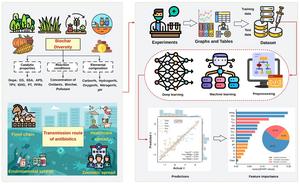
Antibiotic pollution has emerged as a serious global threat, contaminating water systems and contributing to the rise of drug-resistant bacteria. Now, researchers have developed powerful artificial intelligence tools that can predict how effectively biochar materials degrade antibiotics, providing a faster and smarter way to design environmental cleanup technologies.
In the new study, scientists introduced a deep learning framework that can accurately estimate how quickly biochar-based catalysts break down antibiotic contaminants under different conditions. This research combines environmental science and advanced machine learning to address one of the most complex challenges in pollution control.
“Designing efficient biochar catalysts has traditionally relied on trial and error,” said one of the study authors. “Our approach allows us to predict performance before experimentation, saving time, reducing costs, and speeding up real-world applications.”
Biochar, a carbon-rich material produced from biomass such as agricultural waste, is gaining attention as a sustainable water purification solution. Activates oxidants to produce highly reactive species that break down pollutants. However, its performance depends on many interacting factors such as pore structure, surface chemistry, and reaction conditions, making it difficult to optimize.
To overcome this challenge, the research team compiled a large dataset from dozens of previous studies that captured 16 key variables related to biochar properties, chemical composition, and experimental conditions. They then trained multiple machine learning models to predict reaction rate constants, a key indicator of how quickly antibiotics degrade.
Among the models tested, a transformer-based deep learning algorithm known as TabPFN achieved the highest accuracy, achieving predictive performance with an R2 value of approximately 0.91 and a very low error rate. This level of precision allows researchers to reliably estimate degradation efficiency across a wide range of scenarios.
Beyond predictions, the model also revealed important scientific insights. This study found that certain material properties play a dominant role in determining performance. Persistent free radicals formed during biochar production were identified as the most influential factor, as they promote the production of reactive oxygen species that degrade pollutants. Other key factors include pore volume, oxidant concentration, and contaminant levels.
This finding highlights that optimal performance depends on the balance of multiple factors. For example, moderate oxidant concentrations can greatly accelerate decomposition, whereas excessive amounts can reduce efficiency due to undesired side reactions. Similarly, biochar with a well-developed pore structure improves the access of contaminants and accelerates reactions.
To make this technology more accessible, the researchers developed an easy-to-use web-based tool that allows users to enter experimental parameters and instantly predict reaction rates. This platform supports rapid screening of new biochar materials and can guide the design of more effective catalysts without extensive laboratory testing.
The implications of this research extend beyond antibiotic removal. This framework can also be applied to the study of other environmental pollutants and complex catalytic systems, providing a general approach for combining data science and environmental engineering.
As antibiotic contamination continues to threaten ecosystems and public health, such tools could play an important role in promoting sustainable water treatment solutions. By linking artificial intelligence with materials design, this research opens new avenues for faster innovation and more efficient environmental remediation technologies.
===
Reference magazines: Latif, J., Chen, N., Hsieh, J. Others. Prediction and mechanistic analysis of reaction kinetics in biochar-catalyzed antibiotic degradation using deep learning. biochar 888 (2026).
https://doi.org/10.1007/s42773-026-00606-y
===
About biochar
biochar (e-ISSN: 2524-7867) is the first journal dedicated to biochar research across agriculture, environmental science, and materials science. We publish original research on biochar production, processing, and applications such as bioenergy, environmental remediation, soil improvement, climate mitigation, water treatment, and sustainability analysis. The journal serves as an innovative and professional platform for researchers around the world to share advances in this rapidly expanding field.
follow us above facebook, ×and blue sky.
Research method
experimental research
Article title
Prediction and mechanistic analysis of reaction kinetics in biochar-catalyzed antibiotic degradation using deep learning
Article publication date
April 3, 2026
Disclaimer: AAAS and EurekAlert! We are not responsible for the accuracy of news releases posted on EurekAlert! Use of Information by Contributing Institutions or via the EurekAlert System.