
image:
Advances in AI/ML-driven chemical exposomics to identify biologically relevant environmental exposures
view more
Credit: Hemi Luan, Tiangang Luan
Artificial intelligence is rapidly improving scientists’ ability to detect chemicals in the environment and the human body. In the New Perspectives article, the next major step is not just to identify more chemicals; Which exposures are most likely to disrupt biological systems and cause disease?.
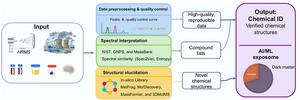
Published in Artificial intelligence and environmentthe article describes the transition to . Functional chemistry exposomicsThis is a new approach that combines high-resolution mass spectrometry, artificial intelligence, toxicology databases, and biological response data.
Exposomics examines the total range of environmental exposures experienced throughout a person’s life. Modern analytical instruments can detect thousands of chemical signals in blood, urine, tissue, and environmental samples. However, many of the detected compounds remain unidentified, and the biological significance of others is poorly understood.
“The future of exposomics is not just discovering what chemicals are present, but also predicting what effects those chemicals will have within biological systems.“AI can help researchers focus limited experimental resources on the exposures most relevant to human health,” said corresponding author Hemi Luan from Guangdong University of Technology.
The authors propose transforming AI from a chemistry “discovery engine” to a “discovery engine.” Feature prediction engine. Such systems have the potential to integrate chemical structures, toxicity predictions, molecular interactions, and changes in genes, proteins, and metabolites. Each chemical can then obtain a biological activity risk score, allowing researchers to prioritize candidates for clinical testing and health risk assessment.
The framework also incorporates machine learning approaches for causal inference, which may help distinguish meaningful exposure effects from simple statistical correlations.
Significant challenges remain, including limited high-quality training data, chemical mixtures, unknown confounders, and the need for transparent and interpretable models. Experimental validation using cells, organoids, or animal models also remains essential.
The authors believe that close collaboration between chemists, toxicologists, epidemiologists, bioinformaticians, and computer scientists will help move exposomics from chemical inventories. Prediction and prevention tools for public health activities.
===
Reference magazines: Luan H; Advancing AI/ML-driven chemical exposomics to identify biologically relevant environmental exposures. AI environment. 2026, 1(2): 77-82. DOI: 10.66178/aie-0026-0008
https://www.the-newpress.com/aie/article/doi/10.66178/aie-0026-0008
===
About the journal:
Artificial intelligence and environment is an international interdisciplinary platform for communicating basic and applied research advances at the intersection of environmental science and artificial intelligence (AI). It serves as an innovative, efficient and professional platform for researchers around the world across the fields of geoscience, environmental science, big data science and AI, and is dedicated to delivering discoveries from this rapidly expanding field of science. It is a peer-reviewed open access journal that publishes critical reviews, original research, rapid communication, perspectives, commentaries, and perspective papers.
follow us above facebook, ×and blue sky.
Research method
news articles
Article title
Advances in AI/ML-driven chemical exposomics to identify biologically relevant environmental exposures
Article publication date
April 29, 2026
Disclaimer: AAAS and EurekAlert! We are not responsible for the accuracy of news releases posted on EurekAlert! Use of Information by Contributing Institutions or via the EurekAlert System.


