

Solid-state batteries are widely seen as a key technology for future energy storage, particularly for electric vehicles and large-scale renewable energy systems. Unlike traditional lithium-ion batteries, which rely on flammable liquid electrolytes, solid-state batteries use solid electrolytes to transport ions. This transition offers significant benefits in safety, energy density, and long-term reliability.
However, translating these advantages into practical devices remains a major scientific and engineering challenge. Solid electrolytes must simultaneously exhibit high ionic conductivity, chemical and electrochemical stability, and a robust interface with battery electrodes. Achieving all of these properties at once has proven difficult with traditional trial-and-error approaches to materials discovery.
In a new review, researchers investigated how artificial intelligence (AI) agents are beginning to change the way solid electrolytes are designed and evaluated. Traditional machine learning techniques have already proven useful in predicting specific material properties from large datasets, helping to narrow down candidate materials more efficiently than manual screening alone.
This review highlights the move towards AI agents beyond single-task prediction. Unlike traditional machine learning models, AI agents can integrate data analysis, material modeling, simulation, and experimental design within a single adaptive workflow. “AI agents allow us to move from individual predictions to tailored, multi-step research strategies that evolve as new information becomes available,” said lead author Eric Jianfeng Cheng, associate professor at Tohoku University Institute for Materials Research (WPI-AIMR).
Data-driven approaches have already proven effective in accelerating materials screening across a wide range of solid electrolyte chemistries, including sulfide, oxide, and halide-based systems. By rapidly evaluating large numbers of candidates, these methods allow researchers to focus experimental resources on the most promising materials, significantly reducing development time.
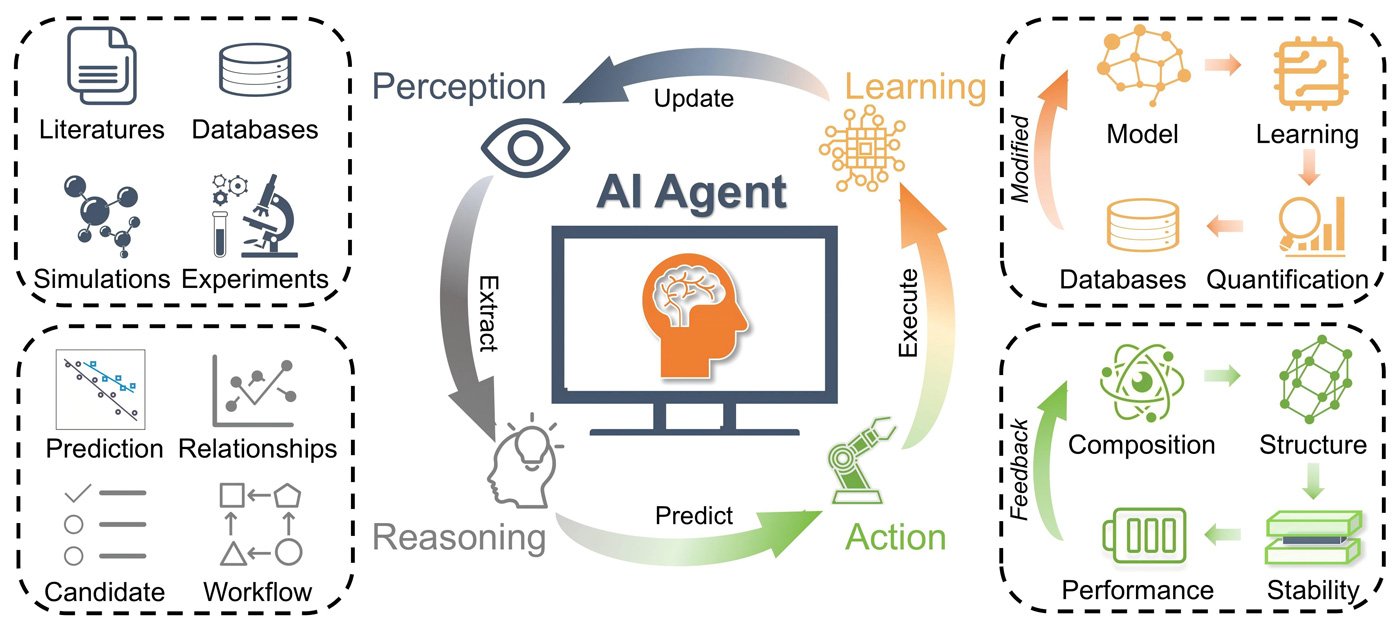
At the same time, computational modeling provides important insights into the degradation mechanisms that limit battery performance. Phenomena such as lithium dendrite growth and interfacial instability are difficult to study experimentally, but can be investigated through simulation. When combined with AI-based analytics, these tools can identify key failure paths and guide strategies to suppress them.
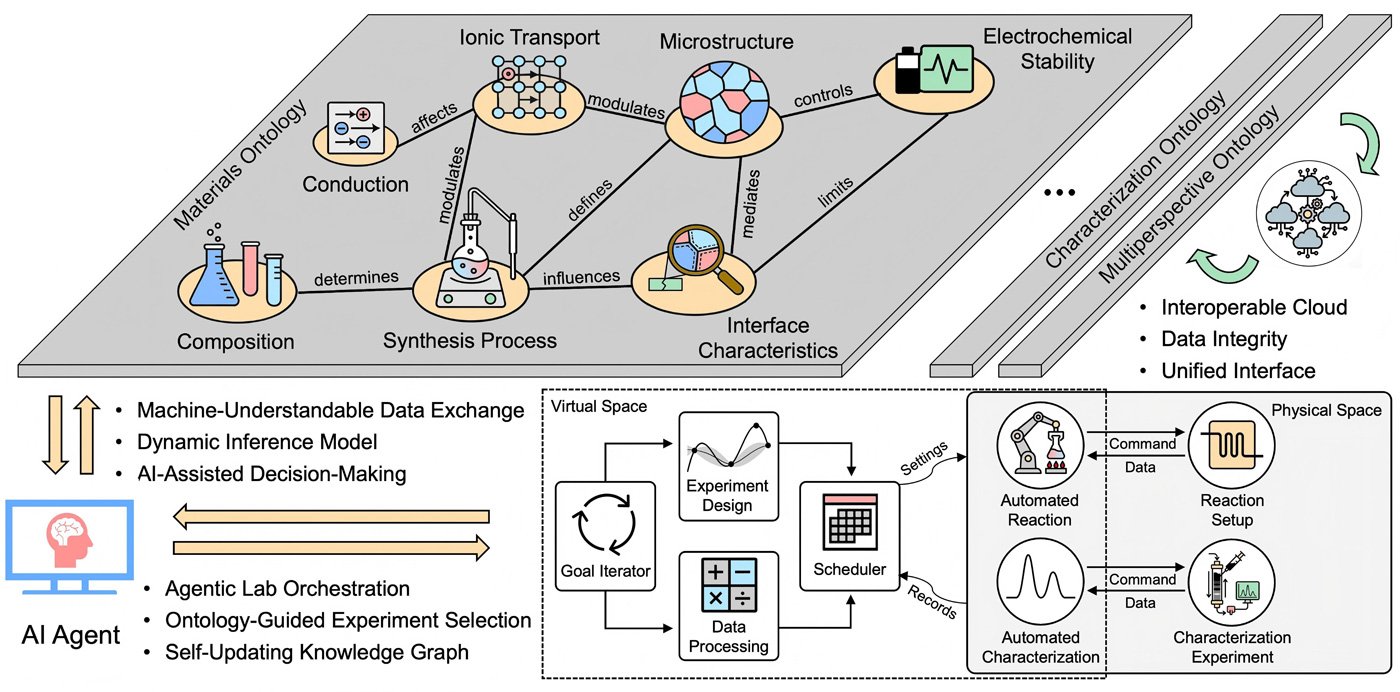
This review also highlights the importance of integrating AI with automated synthesis and advanced characterization techniques. By creating a feedback loop between prediction and experimentation, researchers can continually refine material designs and reduce the gap between theoretical predictions and real-world performance.
In the future, the team plans to develop an AI agent specifically for solid electrolyte research. These agents will incorporate reasoning and autonomous decision-making to guide both simulations and experiments. “Our goal is to build an autonomous discovery loop that can accelerate materials design across multiple solid electrolyte chemistries,” Cheng explains.
Overall, the integration of AI agents into solid electrolyte research is steadily changing the way next-generation batteries are developed. By enabling more systematic exploration and better-informed decision-making, these approaches could accelerate the realization of safer and more reliable solid-state batteries, with wide-ranging benefits for electric vehicles, energy storage, and the transition to a more sustainable energy future.
- Publication details:
title: How AI agents are transforming solid electrolyte discovery
author: Chen Wang, Ryuhei Sato, Regina Garcia-Mendez, Wusun Zhang, Pengfei Ou, Aloysius Soon, Jie Chao, Xiaonan Wang, Shinichi Orimo, Eric Jiangfeng Chen
journal: AI agent
Doi: 10.20517/aiagent.2025.10
/Open to the public. This material from the original organization/author may be of a contemporary nature and has been edited for clarity, style, and length. Mirage.News does not take any institutional position or position, and all views, positions, and conclusions expressed herein are those of the authors alone. Read the full text here.


