The growing role of local manufacturing
UAE is building an innovation economy
AI and the entire energy asset lifecycle
How does AI help reduce energy consumption and operations?
In response to this question, Liam Hurley, president of Emerson Middle East and Africa, said that over the next few years, AI will fundamentally change how energy consumption and operations are managed, not incrementally but structurally.
-
First, we will see AI move from monitoring performance to proactively preventing inefficiencies. Advanced analytics will allow subtle losses in energy performance to be detected long before they become visible at the operational level. This can be due to equipment deterioration, process imbalance, or excessive energy usage. This significantly reduces waste across large assets.
-
Second, AI will reshape daily operations through predictive and autonomous decision-making. Energy facilities will rely less on manual intervention and reactive maintenance and more on systems that continuously optimize the balance of throughput, energy use, and emissions in real time. This results in a measurable reduction in downtime and energy intensity.
-
Third, AI will become part of the design phase of new projects. Facilities will increasingly be designed to be autonomous, with intelligence built in from the beginning rather than added later. This change reduces lifecycle energy consumption and creates assets that are inherently more resilient, efficient, and scalable. Together, these changes will redefine the meaning of operational efficiency in the energy sector. ”
Emerson’s role in the region in the coming years
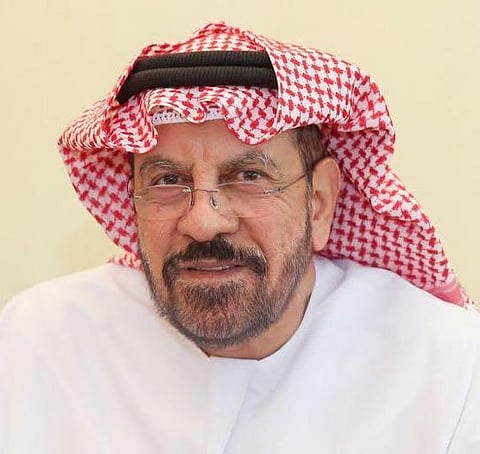
Abdullah Rashid Al Hammadi is an accomplished journalist from the United Arab Emirates with over 45 years of experience in Arabic and English media. He is currently the Abu Dhabi bureau chief for Gulf News. Mr. Al Hammadi began his career at Al Ittihad in 1980 and held key editorial positions including Director of International News, Director of the Research Center and Deputy Editor-in-Chief. A founding member and former director of the UAE Journalists Association, he is also affiliated with the Arab Confederation of Journalists and the International Federation of Journalists. Mr. Al Hammadi studied Information Systems Technology at the University of Virginia and completed journalism training with Reuters News Agency in Cairo and London. While in Washington, DC, he served as a reporter at Alitihad and became a member of the National Press Club. From 2000 to 2008, he wrote the widely read Dababees column, known for its critical views on social issues. Throughout his career, Mr. Al Hammadi has conducted high-profile interviews with prominent leaders including UAE President His Highness Sheikh Mohammed bin Zayed Al Nahyan and His Highness Sheikh Mohammed bin Rashid Al Maktoum, as well as key Arab figures such as the late Yasser Arafat and former presidents of Yemen and Egypt. He has reported on major historical events such as the Iran-Iraq War, the liberation of Kuwait, the fall of the Berlin Wall, and the establishment of the Palestinian Authority. His work continues to shape and influence journalism in the UAE and the wider Arab world.