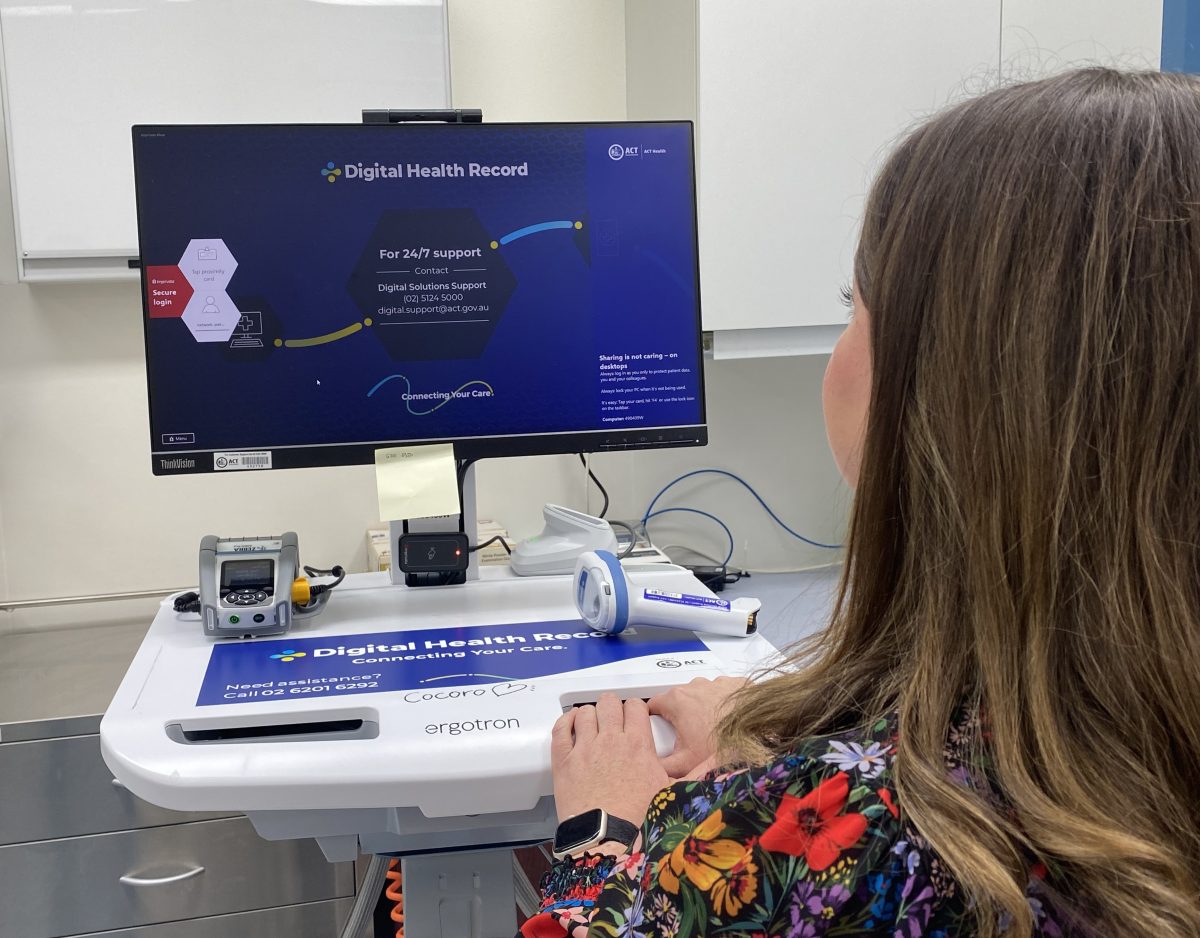
Australians are more satisfied with their health services than most citizens and believe AI will benefit them. Photo: Claire Fenwick.
Australians’ trust in public institutions has increased significantly in recent years, and AI is one of the reasons why, according to a highly regarded international report.
The results of the 2026 OECD Survey on Drivers of Trust in Public Institutions show trust in Australian public institutions is at its highest level ever.
51 per cent of Australians say they have high or moderate confidence in 2025, up from 38 per cent in 2021 and well above the OECD average of 40 per cent.

Perceptions of everyday interactions between citizens and public authorities, 2025. Image: OECD.
When it comes to specific issues, Australia outperforms the OECD average on 13 indicators on service interactions and 14 out of 15 indicators on complex government decision-making.
But it is in the introduction of artificial intelligence that Australians are paying greater attention to public services.
The use of AI in government scores higher than the OECD average on six trustworthiness indicators.
For the first time, the OECD’s Trust Survey collects evidence on the public’s knowledge of AI and expectations about its potential benefits in government.
In Australia, when asked about their level of familiarity with AI, 30% said they understood AI “enough to explain it to others.”
“When asked about the future use of AI in the public sector, 43% of Australians believe the government will use AI to provide more tailored services, and 42% believe AI will be used to reduce costs,” the report said.
“38% believe the government will protect personal information when using AI, 39% believe human oversight will be maintained, and 40% believe the government will be transparent about how AI is used.
“Finally, 39 percent believe the government will ensure fair treatment when AI is introduced into public services.
“Overall, across six dimensions, Australians are more positive about the potential use of AI by government agencies than the OECD average.”
Assistant Secretary for Public Services Patrick Gorman said the results showed Australia was on track to become a world leader in AI-powered public service delivery.
He said it was clear Australians had confidence in a public service that was responsive and embraced new technology, putting people at the heart of government services.
“While the results are welcome, the job is not done,” he said.
“This is the result of our ongoing efforts to deliver real change for Australians by reducing waiting times for government services and improving capacity and integrity across the public service.
“These results show what is possible when people remain at the center of how governments use AI.”
The report found that Australians also showed higher levels of trust in politics than the OECD average, although there was a slight lack of trust in party politics.
Across OECD countries, people who report more positive day-to-day experiences with government also tend to report higher trust in the central government.
This is especially true for people who are satisfied with government services, feel that their benefit claims are treated fairly, and believe that the public sector is using their data legally.
“Trust in Australia’s public institutions varies by institution, and tends to be above the OECD average for most political and administrative institutions,” the report said.
“In 2025, consistent with the overall OECD pattern, trust in law and order and public administration was higher than in political institutions: 73 percent trusted the police and 58 percent trusted the courts, while only 39 percent trusted political parties.”
“60% trust public servants, compared to the OECD average of 45%.”
The findings generally show that the trust gap is largest along political dimensions, particularly partisanship and political agency.
Trust gaps related to socio-economic conditions such as economic hardship, education, or perceived discrimination are usually narrower, and differences by age and gender are usually the smallest.
“In Australia, satisfaction with government services increased from 68% (2023) to 74% (2025),” the report said.
“Perceptions of fairness in benefit claims increased from 64 per cent (2023) to 68 per cent (2025), and perceptions of legitimacy in public sector data use increased from 46 per cent (2021) to 56 per cent (2023) and 62 per cent (2025).
“Overall, this shows broad-based improvements in everyday life, with OECD-wide results showing a meaningful association with trust.
“Overall, Australians outperform the OECD average on 14 out of 15 indicators of decision-making on complex policy issues. This indicates more favorable public ratings of how well our government system deals with complex, long-term issues, takes public input, weighs competing interests and acts in the public interest.”