China’s recruitment efforts reflect severe talent shortages in the most important AI industries
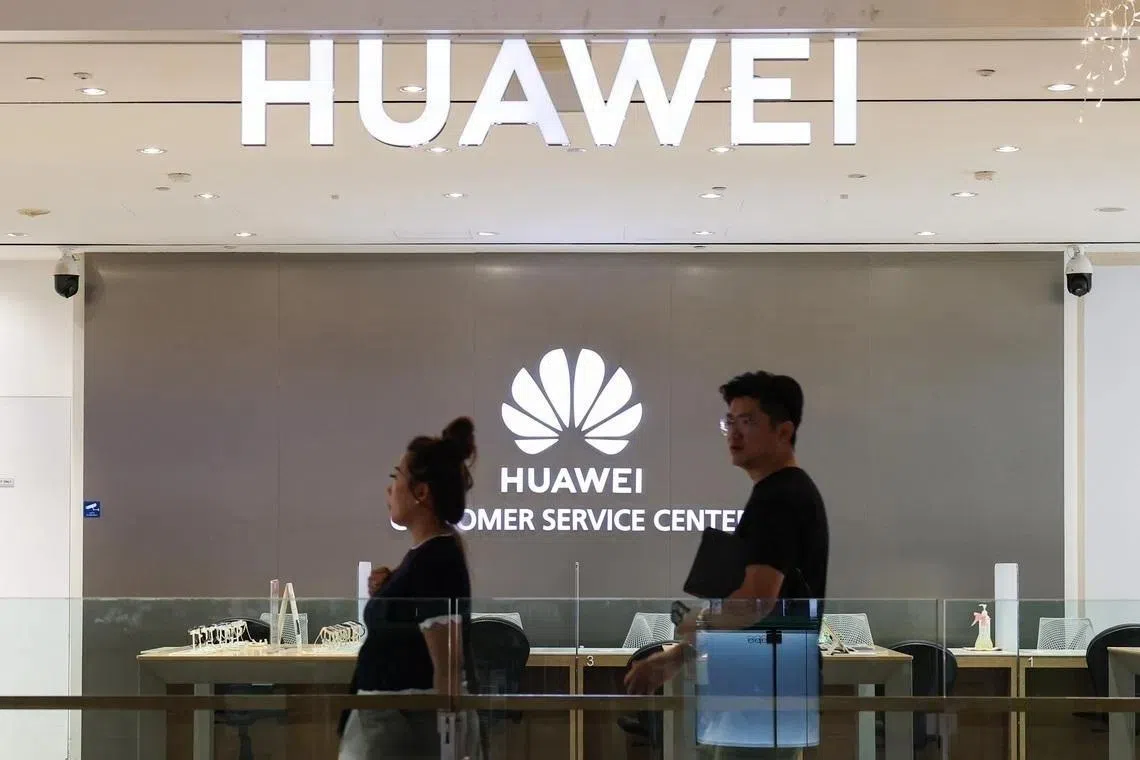
[SINGAPORE/SHENZHEN] On a weekday afternoon in April, doctoral students from Nanyang Technological University (NTU) were loaded onto buses and taken to Huawei’s research center in Buona Vista for technical talks, chats with engineers, and what the company calls informal networking.
A few kilometers away at the National University of Singapore (NUS), Huawei was holding an online career talk in Chinese touting its role in AI algorithms, large-scale language models and cybersecurity.
The message was clear enough. China’s technology industry is looking for talent, and Singapore is a prime hunting ground.
Chinese technology companies are stepping up efforts to recruit AI graduates from Singapore’s two flagship universities, offering significantly higher salaries to entice them to work in China.
Yuan Yijia, founder of Singapore-based AI recruitment firm Dada Consultants, said the average annual compensation for top master’s and PhD-level hires has risen to about 1.5 million yuan (S$282,500) from about 1 million yuan a year ago. Most of the people employed are Chinese nationals.
The best candidates, judged by the quality of their research papers and their citation scores, can outperform at least twice that.
Jason Yang, a China-based headhunter who recruits AI talent for tech giants Alibaba and ByteDance, acknowledged that top doctoral candidates could receive a total of 3 million to 5 million yuan per year. “Salaries are rising as companies compete for the best graduates,” he said.
Annual packages for Singapore-based Artificial Intelligence PhD candidates range from S$200,000 to S$350,000, similar to China-based offers, and can even go higher if stock options are included. But Yuan said such top-end positions are rare compared to those based in China.
According to data from the Ministry of Education, Singapore’s autonomous universities have enrolled an average of about 6,000 doctoral students annually in science, technology, engineering and mathematics courses over the past decade, with about two-thirds of them being non-resident international students. The country of origin of the students was not disclosed.
An estimated 50 per cent of the international student population at Singapore universities are from China, according to a report by Beijing-based education consultancy Sunrise International.
China’s recruitment efforts reflect a severe talent shortage in its most important AI industry. According to consultancy McKinsey, the country is estimated to be short of about 4 million AI experts by 2030. Elite talent at the PhD level is even rarer.
This gap has increased industry hiring appetite in Singapore, with NTU at the top of ShanghaiRanking’s global AI rankings and NUS among the top three in the world for data science and AI in the QS ranking of university subjects.
China-based ShanghaiRanking and UK-based Quacquarelli Symonds, which publishes the QS World University Rankings, both provide ratings of universities around the world.
Companies ranging from big-model startups like Shanghai-based MiniMax to tech giants like Alibaba and ByteDance are “now looking at university campuses in Singapore as their primary recruiting target for overseas AI talent,” Yuan said, putting them on par with leading U.S. universities.
explore the unknown
Huawei, widely seen as a Chinese domestic alternative to Nvidia in AI computing hardware, said it “plans to increase hiring at its Singapore campus this year,” although it did not provide specific hiring targets.
“In the AI era, what we need most is the ability to innovate to challenge conventional wisdom, explore the unknown, and create new solutions,” a Huawei spokesperson said. “Singapore’s talent, known for its adaptability, bilingualism and global outlook, naturally has this innovative mindset, making it an invaluable asset to the workforce of the future.”
The university itself believes this interest is mutually beneficial. A university spokesperson said NUS is actively reaching out to foreign employers in China, India and ASEAN countries, and views Chinese placements as offering graduates the opportunity to “early expose themselves to large-scale production systems, faster iteration cycles, and a product-driven engineering culture.”
NUS says such experiences build intercultural competency and improve graduates’ prospects for future regional leadership roles.
The NTU report said job interest from Chinese companies “has remained consistent over the past five years” and that most undergraduates hired full-time are likely to take on technology or AI roles.
Interest isn’t limited to China; NTU is also working with major US companies such as Meta, Microsoft and Google to connect PhD students with internships.
Both universities emphasize that companies most value multidisciplinary graduates who blend real-world knowledge with technical expertise, particularly those trained to apply AI across industries such as healthcare and finance.
Language and cultural compatibility are also important. Yang pointed out that Chinese companies recruiting in Singapore are scouting “not necessarily only Chinese nationals, but mostly ethnic Chinese”, with the latter making up the majority of hires. He said this is because the team needs to coordinate with its headquarters in China.
The timing is right for Beijing. For decades, American universities and Silicon Valley have attracted the world’s best technology knowledge. Lausanne-based business school IMD argues that its gravitational pull is weakening, with rising costs, stricter visa regulations and policy uncertainty making the US less attractive.
Meanwhile, China has put AI-powered technological independence at the heart of its five-year plan for 2026-30, suggesting its resources and ambition are unlikely to wane.
One Chinese-born PhD student at NTU’s School of Computing and Data Science, who asked to remain anonymous to keep his career options private, said most of his colleagues are leaning toward returning as salary offers rise.
“There is a recognition that AI development in China is becoming very strong,” he says. His own ambition is to join a Chinese technology company rather than remain in academia, for practical reasons: “Infrastructure and computing resources are still very concentrated in companies rather than schools.”
The flow of people returning home is accelerating. According to recruitment portal site Zhaopin, the number of Chinese new graduates returning from overseas to seek jobs in the country will increase by 12% year-on-year in 2025, the highest level in eight years. Among returnees, interest in AI engineering roles surged by 37%, and software development applications increased by 31%.
manus concerns
China’s ability to acquire overseas talent may continue to face self-imposed limits. On April 27, the Chinese government ordered a rollback of Meta’s acquisition of China-based AI startup Manus, which had moved its headquarters to Singapore before the deal closed.
The episode unsettled observers, who noted that such heavy-handed intervention could prompt ambitious Chinese AI founders to incorporate overseas in the first place to avoid future entanglements with their own governments.
But Mr. Manas, who cut ties with China and then tried to sell the company to a U.S. company, may be something of an outlier. Some analysts argue that experience will not deter Chinese tech companies from setting up offices in Singapore. Yang said he believed the Chinese government would not restrict Chinese companies from opening R&D centers overseas while keeping their main operations in China. However, the NTU PhD student said that while he feels the AI industry has become “overly politicized” due to the Manus case, most of his peers would still consider returning to China.
Not everyone has been invited to return home. Chinese tech companies are also expanding their Singapore-based AI teams, especially for products aimed at global markets, Yuan said.
Yang pointed out that these Singapore-based offices can also help companies attract candidates who are reluctant to move to China.
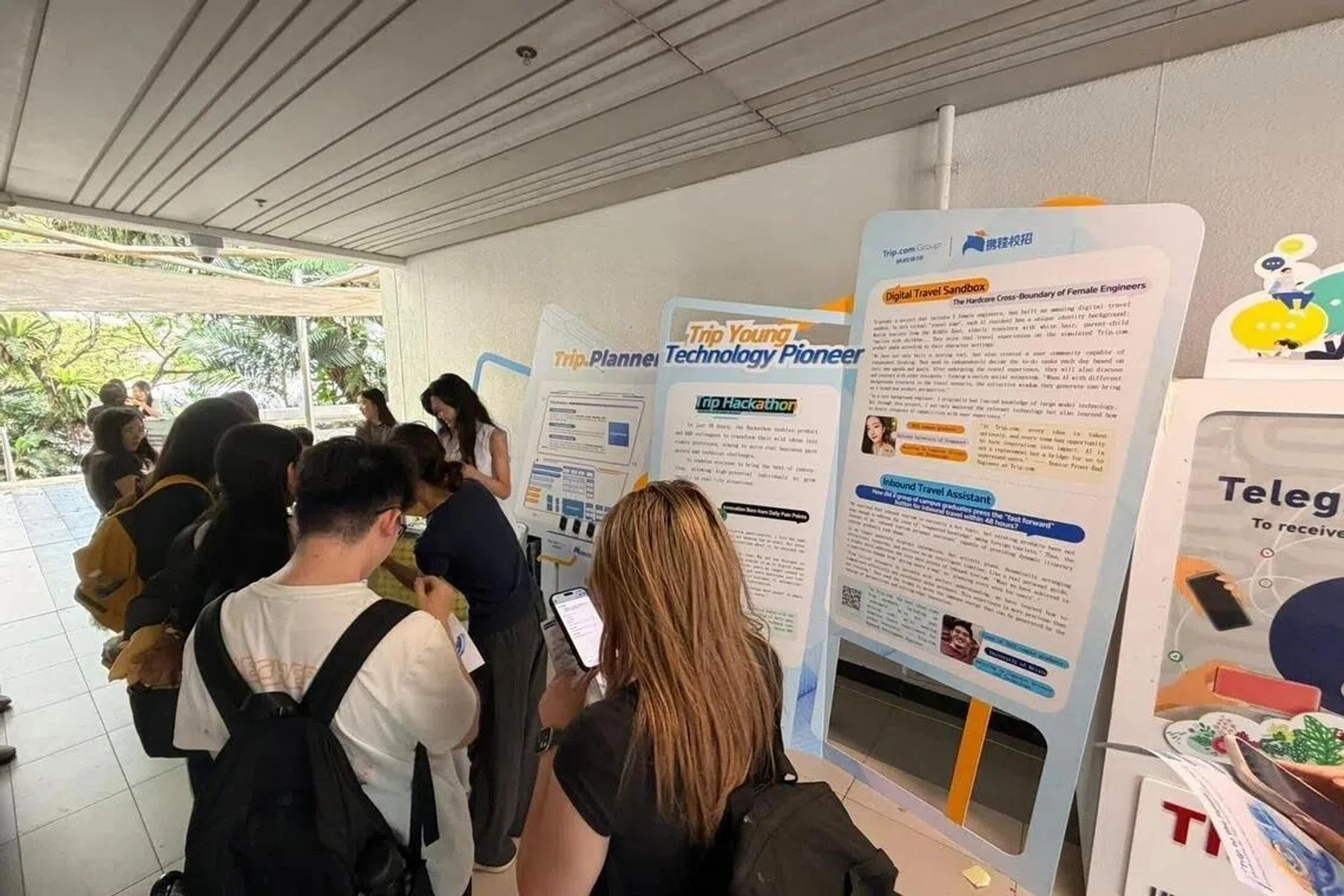
On the same afternoon that Huawei was bussing NTU students to its research centre, Chinese online travel giant Trip.com was holding a pop-up career fair at the NTU campus in Boon Lay, where it highlighted the roles of AI engineers and data analysts and promoted its AI-assisted travel booking service. Students lined up to buy umbrellas and stuffed animals.
The fair is one of six university campaigns scheduled to be held in Singapore in 2026.
“AI proficiency is an increasingly important criterion for many of our roles,” said Edmund Ong, general manager of Trip.com Singapore, adding that the company is primarily recruiting for roles based here.
“Our international headquarters are based here and we are focused on building a strong local team to support our business operations and global growth.” Strait Times
Decoding Asia Newsletter: A guide to navigating Asia in the new world order. Sign up here to get the Decoding Asia newsletter. Delivered to your inbox. free.