

What if your security system didn’t just log problems, it prevented them?
A delivery arrives and blocks the emergency exit. Instead of noticing it until it becomes a compliance issue, AI-enabled cameras immediately flag issues and alert staff before they escalate. When an unfamiliar vehicle enters a parking lot, an AI camera trained to recognize the licensed vehicle’s license plate, make, model, and color can tag the vehicle it doesn’t own.
These are not potential scenarios. These are real-world examples of how today’s organizations are using surveillance technology for more than monitoring and protection.
For many organizations that still view video surveillance as a tactical cost center, this shift represents a major shift in how they leverage the technology. As artificial intelligence, connectivity, and advanced data analytics reshape the way businesses operate, surveillance is evolving from a passive record-keeping function to something more dynamic. It is becoming a source of real-time business intelligence that can support safety, efficiency, resiliency, and smarter business decisions.
While many organizations are still exploring practical applications for AI, the surveillance industry is adopting AI faster and at scale, and AI-based analytics is becoming a standard feature of modern video systems, said Lloyd Taylor, Hanwha Vision’s senior vice president of sales for North America.
“Security in the past has been largely reactive,” Taylor said. “The team will review the footage after the incident to understand what happened.”
Today, video is a proactive tool that allows businesses to discover issues early, respond quickly, and work more efficiently in real-time. “What’s changed is that we can now continuously analyze what’s going on,” Taylor said. “This allows organizations to go from looking back at incidents to responding instantly or even acting pre-emptively.”

Despite these advances, many companies still view security as just an administrative cost. This mindset can lead companies to assess security very narrowly, focusing on the hardware and overlooking the software, analytics, and cyber layers that turn those systems into more integrated, intelligence-driven resources.
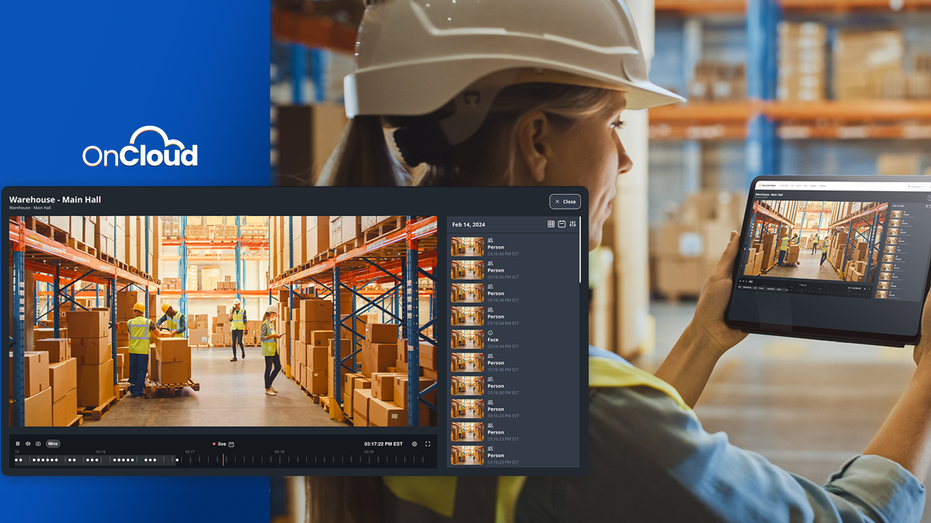
AI-enabled video is already enhancing everyday tasks. Detects when checkout lines are forming and alerts staff to respond. In warehouses, dangerous situations such as loitering in restricted areas can be identified before an incident occurs.
In more complex environments, the same functionality is applied on a larger scale. City planners are using predictive analytics to design safer and more efficient transportation systems, while hospitals can continuously monitor patients, giving staff and families greater peace of mind even when medical teams are not physically present.
Regardless of the configuration, the underlying benefit is the same: increased visibility. Organizations can understand how space is actually used, reduce energy costs by adjusting staffing levels, knowing when to turn off air conditioning and heating, and even make higher-level decisions about where to expand or contract operations.
This data becomes even more useful when connected to other parts of your business. Companies are implementing video analytics into their business intelligence tools and combining it with data such as sales, time and attendance, and weather to build a clearer, real-time picture of their entire operations.
“This technology has the flexibility to be applied to a variety of industries and use cases,” Taylor said. “Importantly, it can deliver the most tangible business impact by being tailored to specific operational priorities.”
For large organizations, these capabilities become increasingly valuable as they grow. But growth also comes with additional complexity. Some companies still operate across fragmented systems on legacy platforms, resulting in uneven coverage across sites.
One of the biggest challenges for organizations with multiple locations, especially in the event of an acquisition or organizational change, is keeping everything up to date on a single platform, Taylor says. That’s why centralization, cloud-based management, and systems that work together are so important. Companies are moving to systems that provide a single, unified view across all locations, rather than treating each site individually.
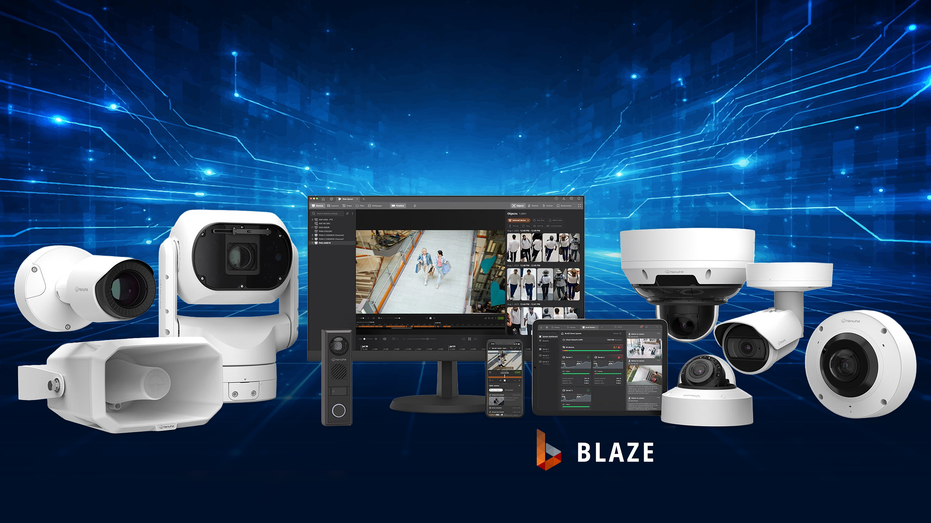
As surveillance systems become more connected, they are also becoming part of an organization’s larger IT setup. Today’s cameras are networked devices, often using the same systems as printers and other wireless tools. This means cybersecurity needs to be considered from the beginning, not just patched on afterwards.
“A platform’s cybersecurity is only as strong as its weakest link,” Taylor said. “If any of your video surveillance or security devices are vulnerable,” malicious parties could gain access to your larger network.
The solution is to choose a system that was designed with security in mind from the beginning and keep it updated with the latest firmware.
“Surveillance systems are more than just office equipment,” Taylor says. “It’s there to protect your assets, generate ROI for your business, and protect you from potential breaches.”
After all, smarter video is part of a larger movement towards resilience. The most effective systems are advanced yet resilient by design, supporting uptime, adapting to changing needs, and serving as a trusted layer of visibility across the organization. For business leaders, this means moving from reaction to prevention to ensure everything continues to run smoothly.
“Before we reported on what happened,” Taylor said. “Right now, we’re actually building a system that will actually resolve and even prevent some of these cases.”
This requires a balance between new technology and reliability. The best systems are both advanced and reliable. They provide AI-powered insights and are built to perform well in real-world situations.
Across industries, from retail and logistics to transportation and infrastructure, businesses are moving to a more connected, data-driven way of working. Video is at the heart of this change, turning everyday activities into real-time insights.
The question is: Are surveillance systems providing meaningful value or just adding cost? Is it helping your team respond faster, reduce risk, and make better decisions? If not, it might be time to upgrade.
In the age of AI, video is not just for seeing what happened. It’s about knowing what’s going on and taking immediate action.