
brief overview
Polo AI Avatar Video Generator helps marketers and content creators create professional presenter-style videos without a camera, studio, or complex editing workflows. The platform dramatically reduces production time while enabling scalable content creation by transforming written scripts into realistic avatar-driven videos with synchronized lip movements, natural expressions, and multilingual audio support.
This article explains how Pollo AI fits into modern marketing workflows, what differentiates high-quality avatar tools from lower-quality alternatives, and how enterprise solutions like Synthesia compare for large-scale corporate training and global communications needs. We also outline practical strategies for scripting, batch production, branding consistency, platform-specific formatting, and SEO distribution to help your team integrate AI-generated video into repeatable content operations.
introduction
Video content has become the backbone of digital marketing, but the production side has always been the bottleneck. Creating the script takes a few minutes. It takes hours to get in front of the camera, record multiple takes, edit, caption, and format for different platforms. This assumes you have the equipment, lighting, and the confidence to always appear on camera. For most marketers, content teams, and individual creators, the honest reality is that the overhead of video production is why a video strategy looks better on a content calendar than on a channel.
AI Avatar Video Generator solves this problem by separating the content from the work. You write the script. AI handles presenters, delivery, lip-syncing, and formatting. What comes out the other end is professional-looking video that takes a fraction of the time that traditional production takes and requires no cameras, studios, or anyone on screen.
What Polo AI’s avatar video generator actually does
Having a specific understanding of a tool’s capabilities will help you set realistic expectations and identify where the tool fits into your workflow.
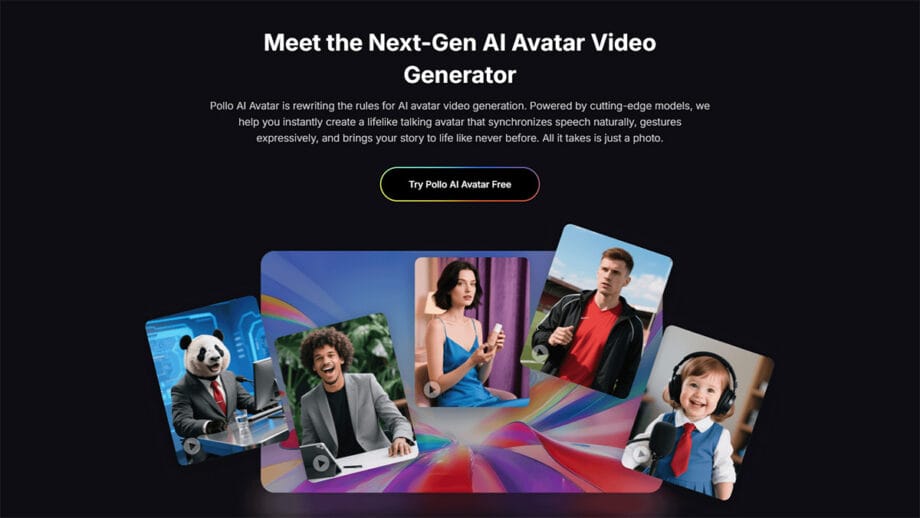
Polo AI Avatar Video Generator creates AI-powered presenter videos from text scripts. Choose your digital avatar (a realistic AI-generated presenter), select voice and language settings, and paste or create your script to generate. The output is a video of your avatar delivering your script with synchronized lip movements, natural facial expressions, and professional audio. Polo AI handles rendering, formatting, and exporting at resolutions and aspect ratios suitable for various distribution platforms.
What sets Polo AI apart in this category is its combination of output quality and workflow accessibility. The platform is designed for marketers and content teams who don’t have a production team and need to churn out multiple videos per week in a variety of formats for different channels. Polo AI’s interface prioritizes speed and repetition. Create, generate, review, adjust, and regenerate scripts. This cycle doesn’t require a dedicated production session and is fast enough to fit into your regular content workflow.
The use cases where this approach provides the most value span a wide range of content types. Product explainer videos, onboarding sequences for new customers, FAQ content, course materials, LinkedIn thought leadership videos, YouTube tutorials, internal training content, and multilingual marketing campaigns are all viable formats. The type of video where a presenter conveys information to an audience can be created using AI-generated avatars.
Avatar quality comparison: what to look for in 2025
Although the quality gap between AI avatar tools has narrowed significantly over the past two years, significant differences remain, especially in the areas most important for professional use.
Lip sync accuracy is a key quality signal. Today’s best tools produce lip movements that match audio with enough precision that the synchronization is not immediately apparent to viewers who aren’t looking for it. Using low-quality tools will result in noticeable delays and inconsistencies between mouth movements and audio, which will immediately detract from the professional look of your output.
naturalness of facial expression The second key differentiator. Realistic tools generate subtle microexpressions that make your avatar appear immersed in the content, rather than the fixed expressions of previous avatar generations.
voice quality and naturalness It varies greatly depending on the platform. Although text-to-speech has improved dramatically, prosody (the natural rhythm, emphasis, and pace of human speech) is still an area where premium tools outperform budget options. A presenter who sounds like a robot undermines the credibility of your content, no matter how good the visuals are.
Depth of avatar customization It determines how well the presenter can fit into your brand. Some tools provide a limited number of pre-built avatars. Others allow you to create a custom avatar based on your likeness and give your brand a unique digital persona.
Synthesia: The Enterprise Standard for Avatar Video
For organizations with higher production volume requirements and enterprise-scale use cases (particularly corporate training, compliance content, and global communications), it’s worth considering a comparison to established platforms.
Synthesia is well-established in the field with a strong reputation in enterprise deployments and is also accessible through Pollo AI, setting the benchmark for avatar video quality in enterprise and training contexts. Synthesia’s particular strength lies in large-scale multilingual content production, producing the same video in dozens of languages from a single script. This use case makes it the default choice for global corporate communications.
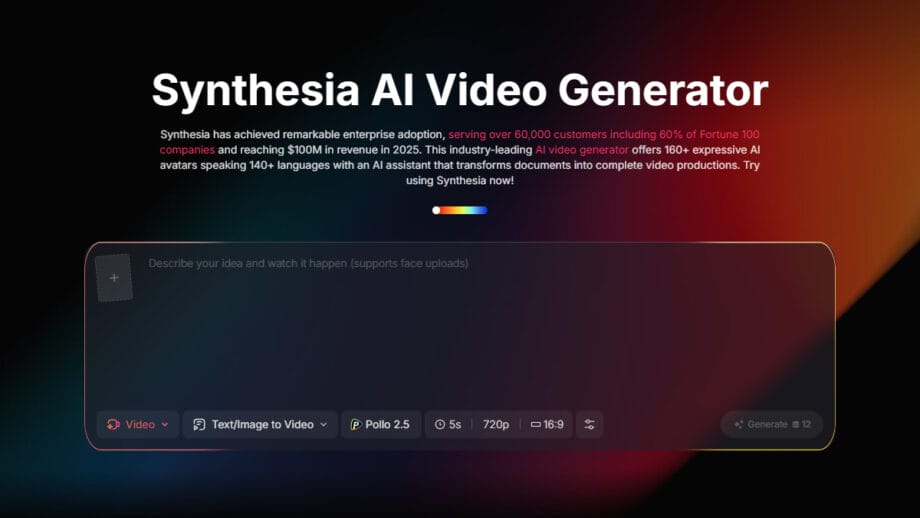
For organizations running learning management systems, employee training programs, or localized marketing campaigns across multilingual markets, Synthesia’s infrastructure for managing this complexity is well-developed. Polo AI provides access to Synthesia along with its own avatar generation tools, giving content teams the flexibility to match the right tools to each project’s specific quality, budget, and scale requirements.
The real difference between Polo AI’s avatar generator and Synthesia is largely in use case and scale. Pollo AI’s tools are optimized for content creators and marketers who need fast, high-quality output for their social media and marketing campaigns. Synthesia is optimized for enterprise teams managing large-scale training and communication programs. Both tools are valuable, and having access to them through the same ecosystem is a practical benefit for teams whose content spans both categories.
Building an AI avatar video workflow for content operations
Marketers and content teams who are getting the most value from AI avatar tools are not treating them as a one-time production solution. They have built a systematic workflow that makes video production a consistent and repeatable part of their content operations.
A real-world workflow for a content marketing team using AI avatar videos might look like this:
script development This is still a human job and the most important part of the process. The quality of the output is directly proportional to the quality of the script. This means writing with delivery in mind, including short sentences, natural phrasing, and strategic emphasis, rather than writing to fit the page. A good rule of thumb is to read the script out loud before generating it. Anything that sounds unnatural when spoken will also sound unnatural when conveyed by an avatar.
Preparing assets This includes choosing the appropriate avatar, background, and language settings for a particular video. For teams with a consistent brand identity, these selections should be standardized across all videos so that the output is visually unified rather than looking like it came from different production sessions.
Batch generation This is where the efficiency benefits of AI avatar videos become most apparent. Rather than creating one video at a time, experienced users create multiple scripts in one session and generate them in batches, creating a week’s worth of video content in the time it takes to shoot one talking head video.
Review and quality control Focus on three things: accuracy of script delivery (did the avatar deliver the script as written?), visual quality (are there production artifacts that need to be addressed?), and brand consistency (does the output meet the visual standards of other content?). Although this review step is faster than traditional video editing, it shouldn’t be skipped.
Platform-specific formatting This is the last step before distribution. For YouTube and LinkedIn, it’s horizontal, for TikTok and Instagram, Reels is vertical, and for Facebook feed, it’s square. AI avatar generation tools that natively support multiple export formats reduce the post-production effort required for this step.
SEO and distribution considerations for avatar video content

Producing the video is only half the equation. Just like any other content type, you need to think about distribution to ensure it reaches the right audience.
YouTube is the most valuable long-form distribution channel for most AI avatar video content due to its search-driven discovery mechanism. Your title, description, and tags should be optimized for the same search queries your target audience uses. Captions (which YouTube automatically generates but benefits from manual review) improve both accessibility and search indexing.
LinkedIn performs well with professional and B2B content delivered in avatar video format. The platform’s algorithms currently give video posts much higher organic reach than text posts, and the context of targeting professional audiences makes information-dense presenter videos a good fit for this format.
Especially for training and educational content, distribution strategies often include embedding videos directly into product interfaces, help documentation, and LMS platforms rather than publishing them on social channels. This is where the integration capabilities of an enterprise platform like Synthesia become especially important, and where the ROI of AI avatar creation can be most directly measured through reduced support tickets and improved onboarding completion rates.
The technology has matured to the point where AI avatar video is a viable production option for content operations of all sizes. The remaining variables, like all content, are the quality of the idea and the discipline of the workflow behind it.


