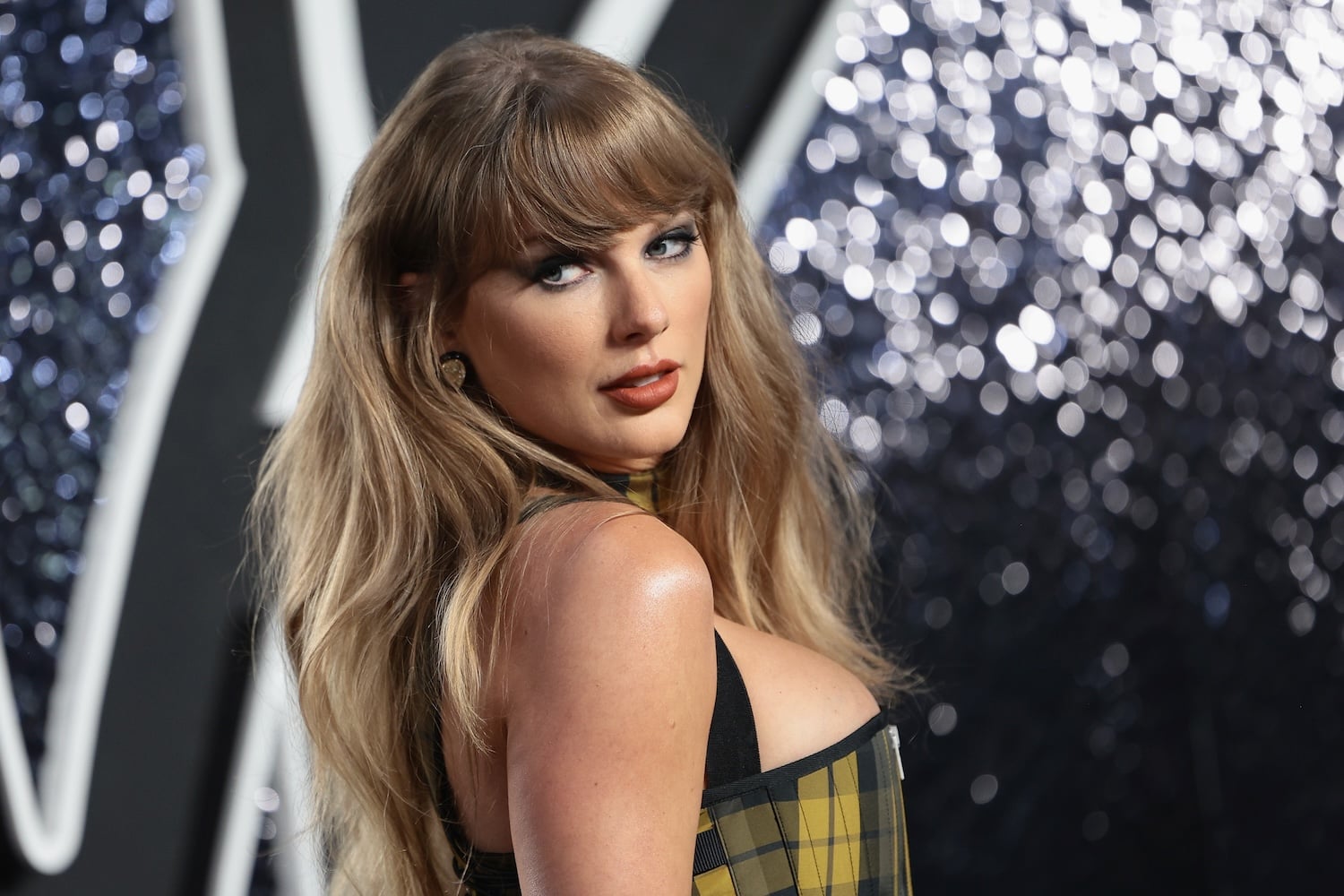
Taylor Swift takes her image in the public eye very seriously. As it turns out, she’s pretty protective of it even in the eyes of the AI. Now, the pop star is following the blueprint established by Matthew McConaughey, potentially creating a legal shield that prevents her likeness from being used in generated AI output in ways she doesn’t approve of.
Variety first reported that Swift’s strategy includes filing three trademark applications with the U.S. Patent and Trademark Office, which were filed on her behalf by her company, TAS Rights Management, which handles intellectual property and copyright matters for pop stars.
Two of her trademarks are audio of her voice, one saying “Hey, I’m Taylor Swift” and the other saying “Hey, I’m Taylor.” You know, the classic Taylor Swift way of saying it. The third trademark is visual, covering a photo of Swift on stage. “Photo of Taylor Swift holding a pink guitar, wearing a black strap, and wearing a multicolored iridescent bodysuit and silver boots. She stands on a pink stage in front of a multicolored microphone against a background of purple lights,” the filing states.
Why would one of the most famous people on the planet need to trademark a frankly mundane marker? This follows a strategy developed by Matthew McConaughey’s legal team, which filed similar protections for both his audio (McConaughey saying “Okay, okay, okay” is a bit more iconic than “Hey, it’s Taylor”) and images of the actor.
The idea is to use generative AI to remove the touchstone of celebrities who seek to imitate, and create a handle for any legal challenges these celebrities may wish to file against unauthorized copying of their likenesses.
This is a growing concern among celebrities, with Swift already at the center of several AI scandals. Back in 2024, she was the victim of a widespread deepfake porn campaign spread by Elon Musk’s X, in which users created non-consensual, sexually explicit images of her that were viewed millions of times. She also had to speak out after then-candidate Donald Trump posted an AI-generated video of Swift endorsing him for president, but she didn’t.
The approach developed by McConaughey and copied by Swift has not yet been legally tested and could prove difficult to implement in practice. Perhaps the end result will be proving that the training dataset that ultimately produced the generative AI replica of the person in question contained trademarked material. But whether that strategy actually works in court is probably less important than the strategy’s simple threat. This idea could probably just be another club in the bag that could scare AI companies from even trying it in the first place.
This is great for celebrities who can afford to both file a trademark and defend it in court. Unfortunately, the rest of us will literally have to live with our names, images, and likenesses becoming fodder for the machine until our legislators do their job to protect us.