
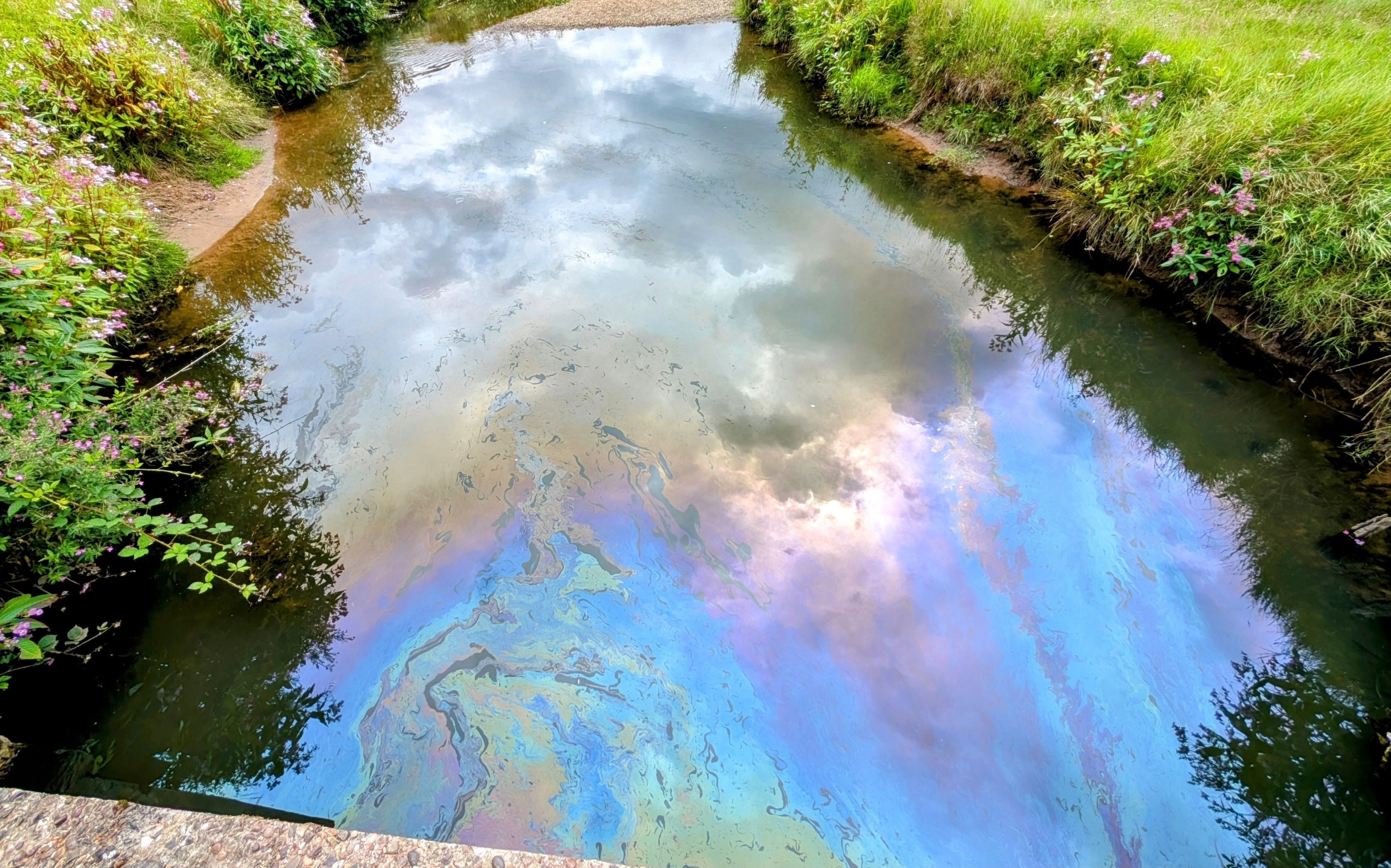
Environmental damage is often easy to detect, but usually only after the damage has already spread. By the time pollution appears in the water, soil, or air, the most difficult parts of the problem are often already underway.
New analysis suggests artificial intelligence (AI) could change that timeline. Rather than reacting to contamination after the fact, researchers are starting to use AI to spot warning signs early, sometimes before damage is visible.

This change could make environmental science more proactive, allowing risks to be tracked, predicted, and addressed sooner.
From monitoring to warning
When researchers compare different environmental systems, they focus on a common pattern: when environmental harm is recognized, better connected information can change.
Dr. Shulin Zhuang from Zhejiang University (ZJU) claims that AI can reveal links that were routinely missed by older approaches.
These connections are most important when contamination persists and moves throughout the system, making it difficult to contain once established.
The question going forward is not whether early warning is possible, but where this new benefit will be first and most pronounced.
AI speeds up notification of pollution alerts
Timing is everything in both water and air systems. Contamination could rise and spread between measurements, forcing authorities to react reactively.
AI can help bridge these gaps by integrating sensor feeds, satellite observations, and weather data into a single continuous view. Machine learning (computer systems that learn patterns from data) can flag when unusual changes occur.
In water bodies, one system in 2024 tracked algae-associated chlorophyll across a lake with high precision over a 30-day period, providing early signs of potential pollution.
Because in the atmosphere, pollution can vary by the hour or even by city block, the hybrid model improved detailed estimates by 11 to 22 percent over the standard approach.
These improvements do more than just improve measurement. This allows for earlier warnings, faster responses, and more targeted actions, from water safety warnings to traffic enforcement and public health guidance.
Tracking hidden pollution hotspots
On land, visibility is often more of an issue than speed. Toxic metals are not evenly distributed in the soil.
Instead, they form hidden hotspots that can exist undetected within normal fields. AI can reveal these patterns by combining chemical, land use, and meteorological data in ways that a single map cannot.
The 2025 global analysis utilized 796,084 sampling points from 1,493 regional studies to better map toxic metal risks.
That level of detail is important, especially when cleaning resources are limited and missing hot spots can spread contamination to crops and waterways.
In waste systems, the problem shifts to sorting materials quickly and accurately. The longer mixed waste is left unsorted, the lower its value becomes. Here, computer vision (AI that interprets images) identifies shape, texture, and color and guides a robotic system to efficiently separate materials.
A 2025 study reported 86-97% classification accuracy across multiple use cases, while also reducing adaptation time and cost.
These benefits are paramount in circular economy systems, where success depends on how efficiently materials are recovered in the first place.
Transparency is important for AI
None of these advances will work without reliable data and reliable models. Environmental datasets are often a combination of laboratory measurements, satellite images, and sensor streams.
Small inconsistencies in formatting and labeling can quickly lead to complications and misleading results within an AI system.
One of the most common problems is data breaches. Information from the test data is unintentionally fed into the training data, making the model appear more accurate than it really is.
At the same time, good performance alone is not enough. Because environmental decisions affect public health, agriculture, and cleanup costs, the model must also explain how it reaches its conclusions.
Hybrid approaches help by combining data-driven learning with physical rules to keep predictions grounded in real-world processes.
After all, trust depends not only on accuracy, but also on transparency and consistency across real-world applications.
Who will benefit from environmental AI?
Access to these tools is not evenly distributed. Regions with limited data can result in weak models even when environmental risks are high.
At the same time, privacy concerns are heightened when systems rely on sensitive information such as medical records or land use data.
If these challenges are ignored, AI could exacerbate rather than reduce existing inequalities.
Responsible use depends on building systems that protect communities while allowing researchers to compare results and improve models across borders.
Detect contamination with AI
The next step is not just building bigger models, but creating tighter connections between sensors, cloud systems, and automated decision-making tools.
As large-scale language models improve, these AI systems trained to predict and generate text could help organize scattered and contaminated knowledge more quickly.
“Combining advanced data analysis and scientific knowledge will help us better understand environmental systems and design smarter solutions for sustainability,” said Dr. Zhuang.
At the same time, environmental surveys are beginning to function more like a coordinated alarm system than a series of disjointed inspections. This change could make it easier to detect risks earlier and respond more effectively.
Still, progress will depend on researchers building systems to ensure accuracy, clearly explaining results, and working in areas where data are scarce.
Until better data, clearer models, and more equitable access become part of everyday work, these advances will remain limited.
The research will be published in a journal Artificial intelligence and environment.
—–
Like what you read? Subscribe to our newsletter for fascinating articles, exclusive content and the latest updates.
Check out EarthSnap, a free app from Eric Ralls and Earth.com.
—–


