
In the optical transport domain, Huawei has released next-generation OTN products for OTN backbone, OTN optical layer, and OTN metro network to help carriers build Agentic UBB networks.

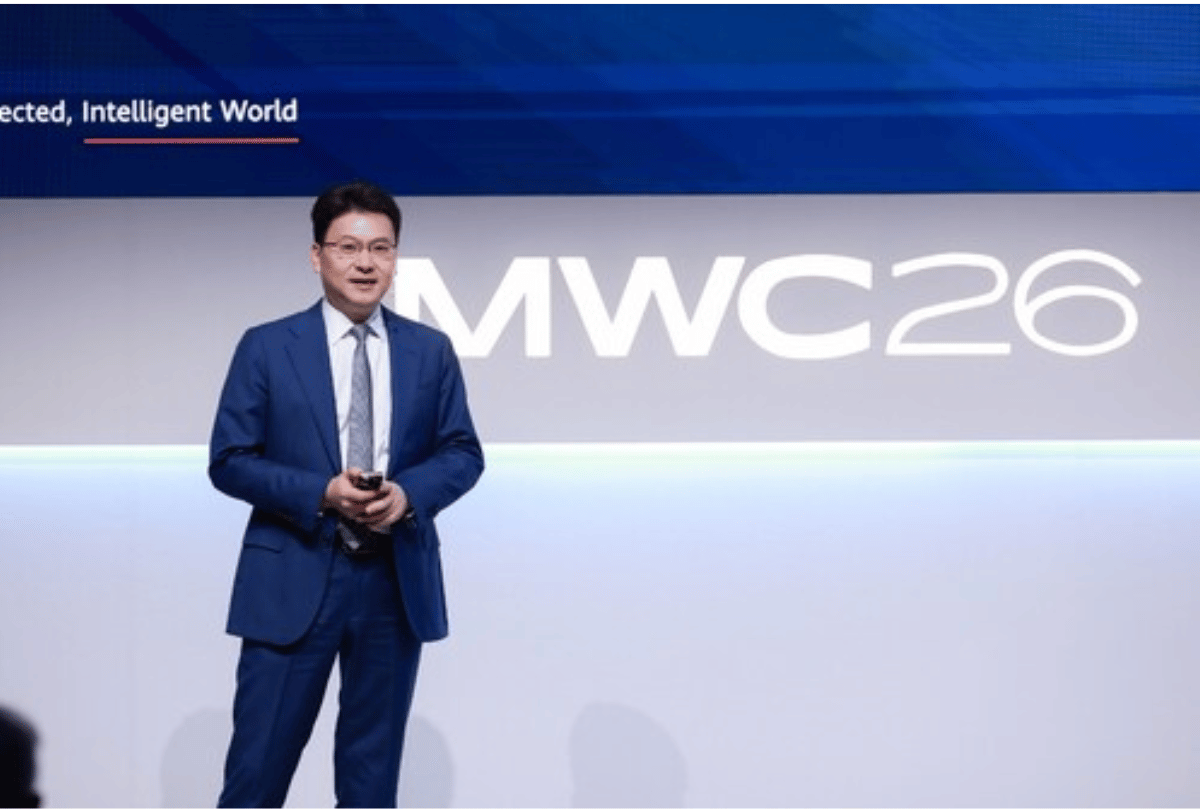
At Huawei At a product and solution launch event during MWC Barcelona 2026, Bob Chen, President of Huawei Optical Business Product Line, announced next-generation optical network products and solutions that promote synergy between AI and networks and accelerate the evolution to AI-centric all-optical networks.
Upgrading your optical network for the AI era is the right choice. ITU-T has officially released the ION-2030 vision, which defines key features, application scenarios, and standardization roadmaps for next-generation optical networks. Major carriers around the world are also accelerating the deployment of next-generation optical networks.
“Huawei is promoting next-generation optical network solutions in two directions: AI for Networks and Networks for AI. With AI for Networks, AI technology enables intelligent fiber sensing to improve network performance and user experience, improve O&M efficiency, and reduce energy consumption. With Networks for AI, enhanced network capabilities enable carriers to build AI-centric all-optical target networks and accelerate AI adoption across homes and enterprises.”
– Bob Chen, President of Huawei Optical Business Product Line
AI for networks: Improving network quality and efficiency
- Intelligent fiber sensing: Based on fiber risk sensing model and fault localization model, risks can be identified in advance and fault location can be determined within 10 meters.
- Improving network performance: Optical performance simulation models built on thousands of optical parameters significantly improve the accuracy of network performance evaluation and extend transmission distance by 20%.
- Enhanced network experience: It can detect Wi-Fi interference in real-time, and the AI algorithm intelligently adjusts Wi-Fi power to increase speed by 20% under interference situations.
- Energy saving: Service traffic is analyzed in real time and ports and boards are intelligently adjusted. When there is no traffic, all ports and boards are dormant, reducing average energy consumption by 40%.
- Intelligent O&M: AI technology is used to enhance the intelligence of network planning, construction, maintenance, and optimization processes. For example, the Home Broadband O&M Agent automatically identifies and locates more than 60 types of faults and helps NOC O&M engineers quickly resolve faults through natural language interaction, significantly reducing home visits.
AI networks: Accelerating the adoption of AI
- Optical access: To meet the bandwidth requirements of new home AI services and improve the overall home network experience, a target network is built with Gigabit-level downlinks and 100M-level uplinks.
- Optical transmission: Latency circles of 5 ms for national networks, 3 ms for regional networks, and 1 ms for metro networks are built to enable millisecond-level computing access and ensure optimal AI application performance.
Huawei has launched a complete series of products and solutions for next-generation optical networks. In the optical access area, Huawei is introducing next-generation FAN products such as FTTR, OLT, ONT, and ODN. In the optical transport domain, Huawei has released next-generation OTN products for OTN backbone, OTN optical layer, and OTN metro network to help carriers build Agentic UBB networks.


