
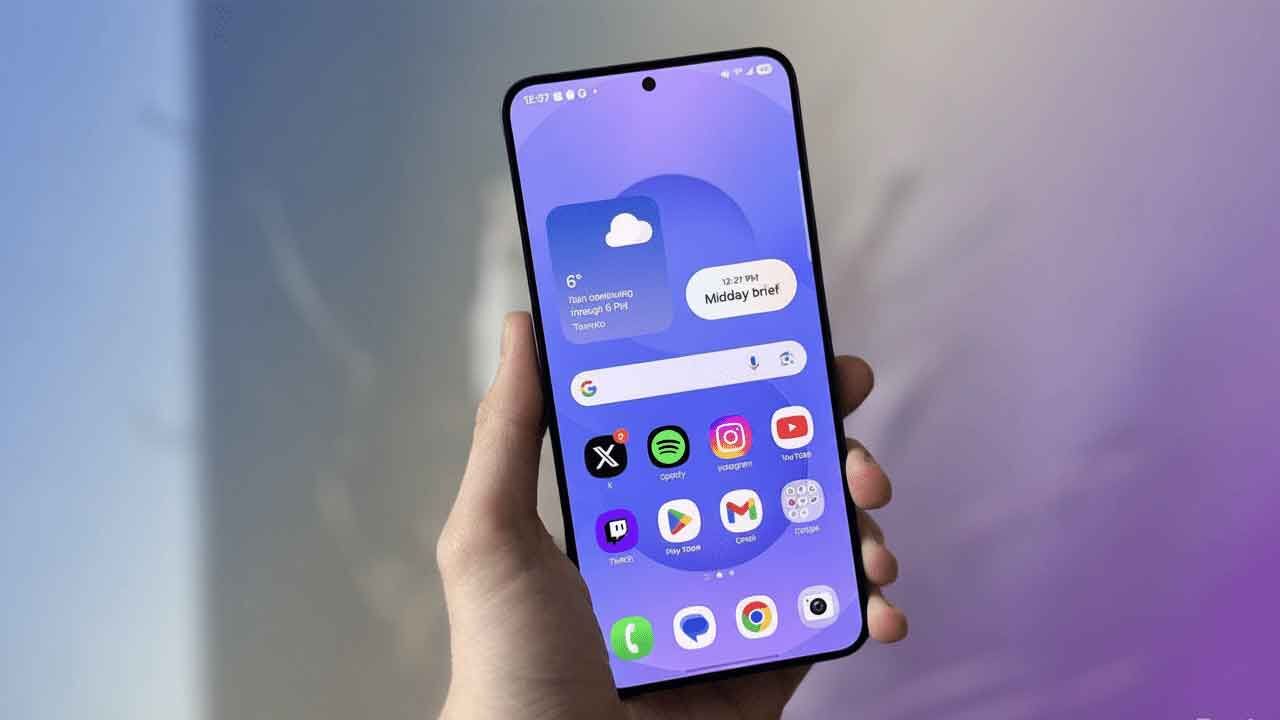
Artificial intelligence is starting to change the way people use smartphones, and tech companies are now exploring how AI can change the way they build apps. One of the latest ideas comes from Samsung, which suggests a concept the company calls “vibe coding.” This is a feature that could potentially allow smartphone users to customize apps and create simple tools tailored to their personal needs.
Smartphones have long been central to daily life, helping people communicate, work, watch content, and manage daily tasks. However, while the hardware has steadily improved over the years, the overall smartphone experience has remained relatively similar. Artificial intelligence is currently emerging as a major force that has the potential to bring about meaningful changes, especially in the way apps are designed and used.
The concept of vibe coding proposed by Samsung reflects this change. Although the idea is still in its early stages, it could potentially allow users to modify existing apps and create small personalized features without requiring deep programming knowledge.
“We are considering something,” the company told a well-known publication. Wonjun Choi, head of Samsung’s Mobile Experience (MX) business, added: “While currently limited to off-the-shelf tools, Vibe Coding allows users to adjust their favorite apps and create customized apps to suit their needs.”
As of now, Samsung has not started testing this feature within its Android-based interface, One UI. Nevertheless, this concept suggests that the company is actively looking into ways to give users more flexibility and control over their smartphone experience.
Over the years, Samsung has gradually refined its software ecosystem by introducing practical features while maintaining a user-friendly interface. If successfully implemented, vibecoding could extend this approach by allowing users to personalize apps directly on their devices.
While Samsung’s idea is still being discussed, AI-assisted app creation is already starting to appear in other areas of the tech industry. For example, smartphone brand Nothing introduced a platform called Nothing Playground in September 2025. This tool allows users to generate widgets and customize simple app functionality through text prompts.
Playground allows users to create tools like flight trackers, meeting summaries, and even small virtual companions. Experienced users can also tweak the underlying code to add functionality. However, this platform cannot currently support the creation of full-fledged applications, showing that the technology is still evolving.
Meanwhile, major AI developers are also contributing to this trend. Tools like Anthropic’s OpenAI Codex and Claude Agent now allow developers (and even novices) to produce functional software much faster than before.
9to5Mac journalists recently demonstrated the potential of these tools by using Codex to build a working Mac application in just 15 minutes. This app solved a specific productivity problem that existing software couldn’t address.
Despite these advances, many everyday smartphone users are still unaware of such tools. Experts believe that as AI becomes easier to use, more people may start creating and customizing their own apps without learning traditional coding.
These developments point to a future where smartphones are no longer limited to pre-installed or downloadable apps. Instead, users can design digital tools to suit their daily tasks.
The challenge for companies like Samsung is to balance powerful AI capabilities with simplicity. If concepts like vibecoding work well, people will be able to tailor their smartphones to their personal needs more closely than ever before.


