The story so far: When you open Instagram, Meta AI, TikTok, YouTube Shorts, or X on your phone, it doesn’t take long for you to see short video clips of animals and humans sharing bizarre encounters.
While an AI-generated video of a man taking an underwater selfie with a shark is easily identified as fake, a more realistic Gen AI video could distort the way we think about wild animals and their behavioral traits, putting both us and the wildlife at risk.

Why are AI animal deepfakes on the rise?
This is thanks to a suite of Generative AI tools that allow users to enter text prompts in everyday language and create hyper-realistic videos at scale that can be easily uploaded online. While platforms like Meta are pivoting to short-form videos in an effort to surpass TikTok, X rewards virality and engagement, incentivizing users to create and share lower-cost, lower-effort content.
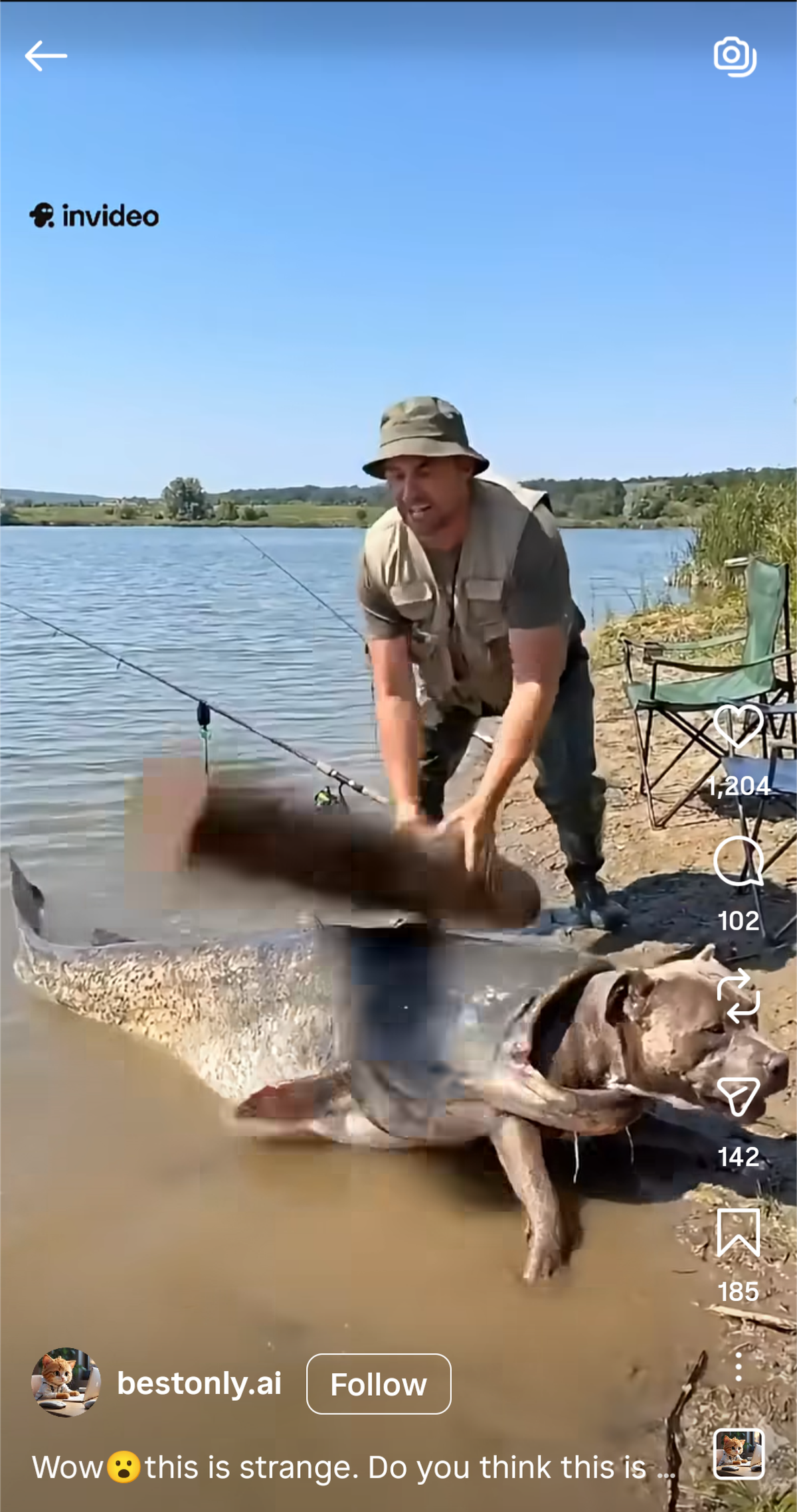
Many AI videos show unrealistic and violent scenarios that can influence how children perceive and treat animals. Photo credit: Instagram
As a result, you may have seen gorillas bursting out of zoo enclosures, crocodiles devouring their owners, dying lions handing over their cubs to humans, fishermen rescuing polar bears, and monkeys dancing with children.
These videos are commonly referred to as “AI slops” due to their low entertainment value and short length. Often shared with sensational captions or presented as if they were real news events, viewers inevitably waste time trying to figure out whether the content is real or generated by AI.
Violence is also a major factor in AI animal videos. A giraffe gets decapitated on a viaduct, a gorilla smashes a tiger with a rock, a hippopotamus defecates in another animal’s face with the force of a missile, a crazed shark attacks a swimmer, and a whale swims in pursuit of a desperate arctic fox.
Such videos may or may not contain melodramatic storylines. These are then reshared, repeated, and readapted by others hoping to go viral.

What harm can AI animal videos cause?
AI-generated animal videos have racked up millions of views on platforms like X and YouTube. This is because they are watched by audiences of different ages and with different levels of media education and digital literacy. In essence, AI animal videos can change our relationship with animals.
For example, videos of a girl feeding a puppy with a meta-AI or a boy dancing with a monkey may seem harmless and heartwarmingly vulgar, but they downplay the dangers of parents exposing their children to untested animals without professional supervision, especially in a country struggling to control rabies.
Research in this area is ongoing, but the September 2025 report is titled “Threats to Conservation from Artificial Intelligence-Generated Wildlife Images and Videos.” [Conservation Biology, 40, e70138]investigates how AI-generated images and videos of animals can undermine conservation efforts by spreading misinformation. According to the report, videos of AI animals could lead social media users to believe that endangered and endangered species are actually easily found around them. Exposure to inaccurate AI animal videos can also confuse children on social media and set back their efforts to identify different types of animals and distinguish between native species.
Other possible outcomes outlined in the report could directly harm the animal. These include overtourism due to AI-generated animal sightings, the spread of the false belief that animals have human behavioral traits such as a love of children (known as anthropomorphism), and the glamorization of exotic pets despite laws against wildlife trafficking.
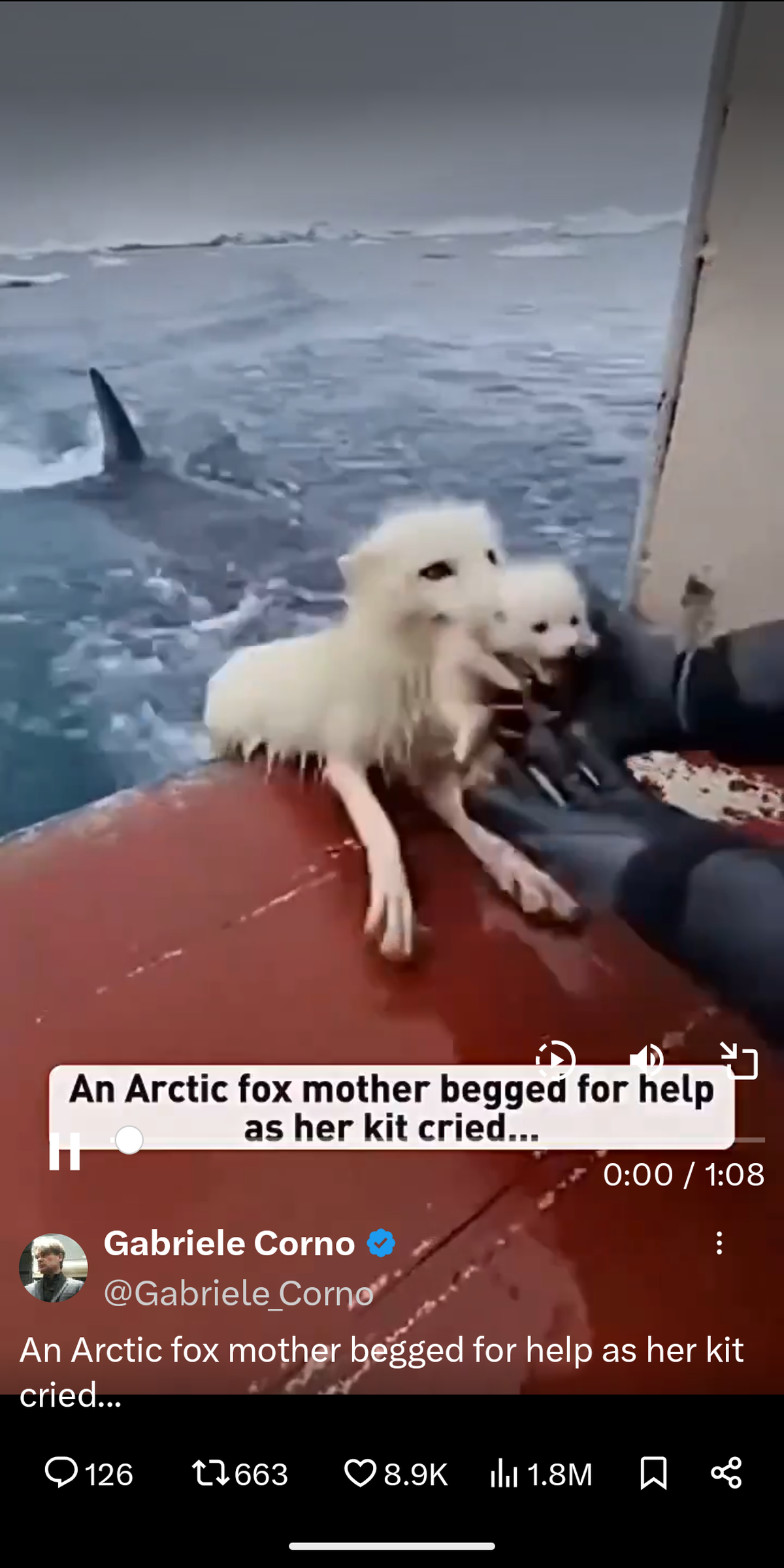
AI animal videos are sometimes used to falsely portray rescue and rehabilitation attempts. Photo credit: X
“Some AI videos depict incredible interspecies interactions, such as affiliative behavior between animals of different species, such as between predator and prey or between parasite and host. Some videos depict friendships between humans and wild animals, which can become dangerous if humans fail to recognize them as potential threats during animal encounters,” the paper’s authors note.

How do conservation groups feel about AI?
According to Dipankar Ghose, Senior Director, Biodiversity Conservation, World Wildlife Fund India, responsible application of generative AI technology will definitely help professionals in the conservation field.
The organization uses AI to identify images of large mammals captured in camera traps, classifying hundreds of mammals by species within minutes. This process would take several days if done manually. AI is also used to create bioacoustics and data-driven content.
However, Ghose strongly opposed AI videos of animals made for entertainment.
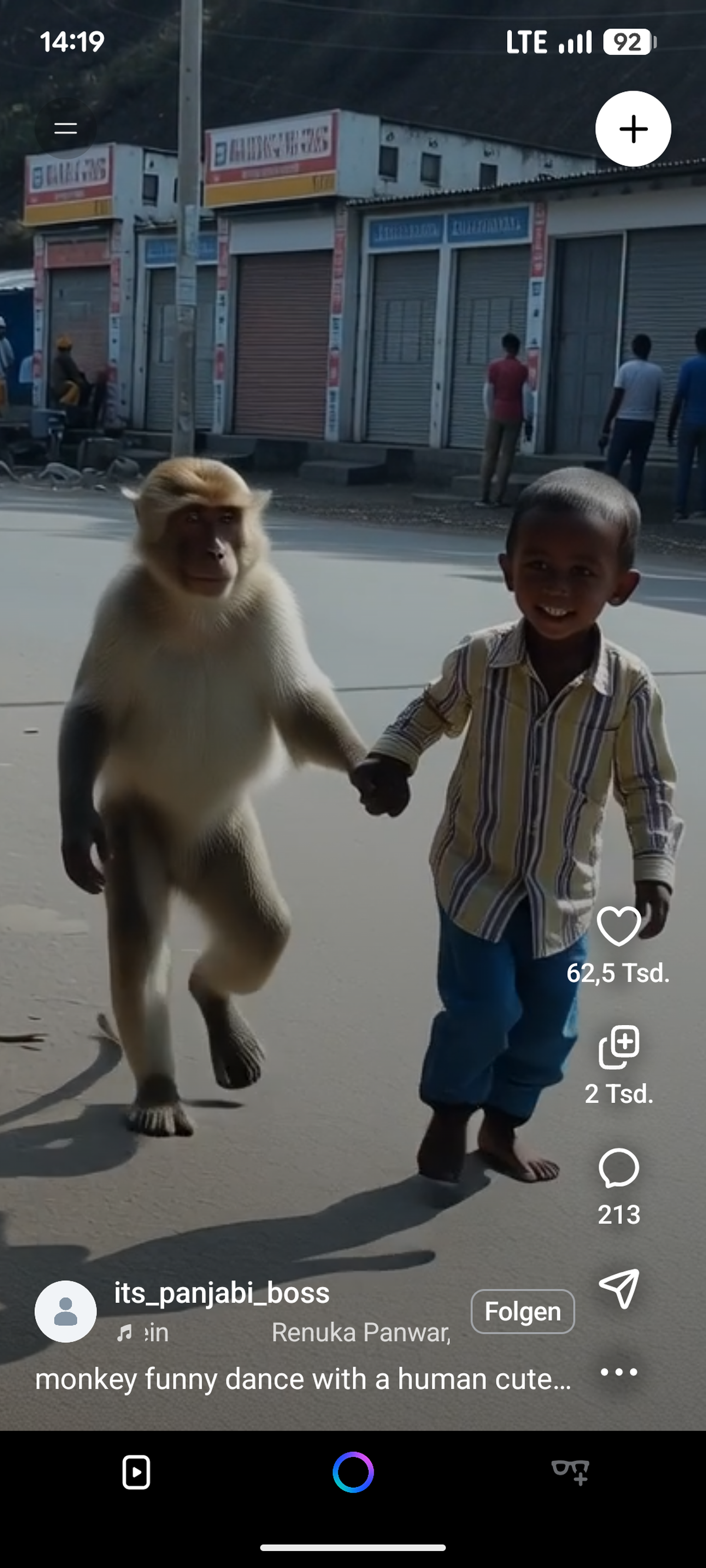
More realistic AI videos could lead parents to believe that their children can safely interact with wild animals. Photo courtesy of Meta AI
“This is a dangerous trend where AI creates very realistic clips, such as a tiger picking people out of bed or a leopard drinking water from a child’s water bottle, all of which are completely fake,” he explained.
“This is a nightmare for conservationists, wildlife and forest managers, especially state forest department and government officials and field workers, as these fake videos can manipulate public perception and lead to retaliatory violence against wildlife.”
How can you identify AI animal videos?
Apart from the realism of the content, there are some signs social media users can look for before sharing animal videos
If an animal video is shot in vertical format and depicts a complete “feel-good” storyline in just 10, 15, 20, 30, or 60 seconds, this is a strong sign that it may be AI-generated for social media influence purposes.
Look for watermarks in the corners of the video frame that the original uploader may have forgotten to remove before posting.
Consider the source of the video. Authentic, high-quality animal videos are more likely to be posted by well-known photographers, wildlife videographers, researchers, pet owners, zoos, and animal aid organizations, rather than by “meme” pages or anonymous social media users who aggregate lots of low-quality videos.
As the quality of AI-generated videos improves, be sure to check out unknown individuals and organizations asking for funds or donations and posting dramatic videos to “prove” that they are rescuing animals.
Make an effort to show your children the work of honest animal lovers and wildlife researchers. Their quiet, ethical, and much-needed real-life wildlife coverage was created with more care than any AI-generated animal video. Nature documentaries for children are a good place to start.
issued – March 7, 2026 12:14 PM IST