
3 minute readnew delhiFebruary 3, 2026 05:18 PM (IST)
Only about a quarter of recruiters in India, 26%, say they are able to find the right candidates for their current job openings. Looking at it another way, this number is simply the inverse of the larger, more compelling number: 74% of recruiters struggle to identify qualified candidates. This contrast highlights the paradox of employment in India. Even though hiring activity remains well above pre-pandemic levels, matching skills and roles is proving more difficult than ever in a labor market shaped by speed, scale, and artificial intelligence.
According to LinkedIn, data from its global recruiting platform shows that confidence in the quality of candidates has plummeted, even though hiring activity in India is about 40% higher than before the pandemic. Recruiters say the sheer volume of applications no longer translates into better hiring results, and the mismatch between quantity and quality is growing. More than half of recruiters who say hiring is becoming more difficult attribute this to the proliferation of AI-generated applications, while nearly the same number point to persistent shortages of in-demand skills across all sectors.

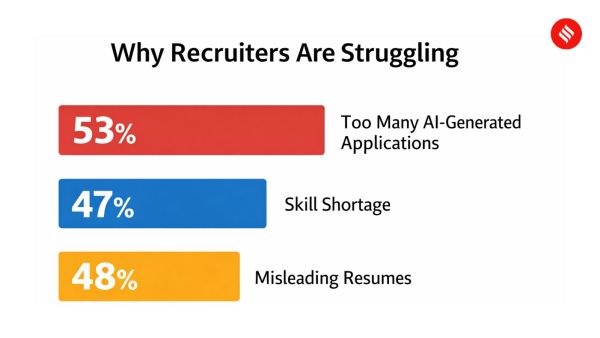 Why recruiters struggle with the hiring process (Source: LinkedIn data)
Too many applications and too little signal?
The challenge lies not only in volume, but also in reliability. Almost half of hiring managers say that separating genuine, high-quality candidates from misleading or low-effort applications is a major source of friction. As AI tools make it easier for candidates to apply in bulk, tailor resumes on the fly, and embellish their experience, recruiters are now spending more time filtering through the noise than assessing competency. This has made the recruitment process a more crowded and competitive one, with a steadily worsening signal-to-noise ratio.
Platform data further illustrates that pressure. The number of applicants for each open role has more than doubled in India since 2022, increasing competition on both sides of the market. At the same time, job seekers themselves appear ill-equipped to navigate this environment. Although the majority of professionals say they are actively looking for a job in 2026, even more admit that they feel unprepared for the hiring process, highlighting the widening gap between opportunity and readiness.
Can we fix the mess AI has caused?
Ironically, the same technology that complicates recruitment is also being positioned as the solution. According to LinkedIn, recruiters who are already using AI tools report tangible benefits. A majority of people say that AI has enabled them to discover candidates with relevant skills that they might otherwise have missed, while many believe that AI has made assessing candidate abilities faster and more accurate. For time-strapped recruiting teams, AI is increasingly being looked at as a way to restore efficiency and focus.
Ruchee Anand, vice president of APAC at LinkedIn Talent Solutions, points out that hiring tends to focus on proven skills and abilities, whether through pedigree or past positions. She says it would be nearly impossible to execute this transition at scale without AI.
According to the report, adoption is expected to accelerate in the future. Around 8 in 10 recruiters in India say they plan to expand the use of AI in recruitment, from talent sourcing to applicant evaluation. Many also expect to see an increase in AI-powered pre-screening interviews in 2026, which will make conversations between recruiters and candidates more meaningful, shorten hiring timelines, and provide better insight into actual skills rather than surface-level credentials.
© IE Online Media Services Pvt Ltd


