
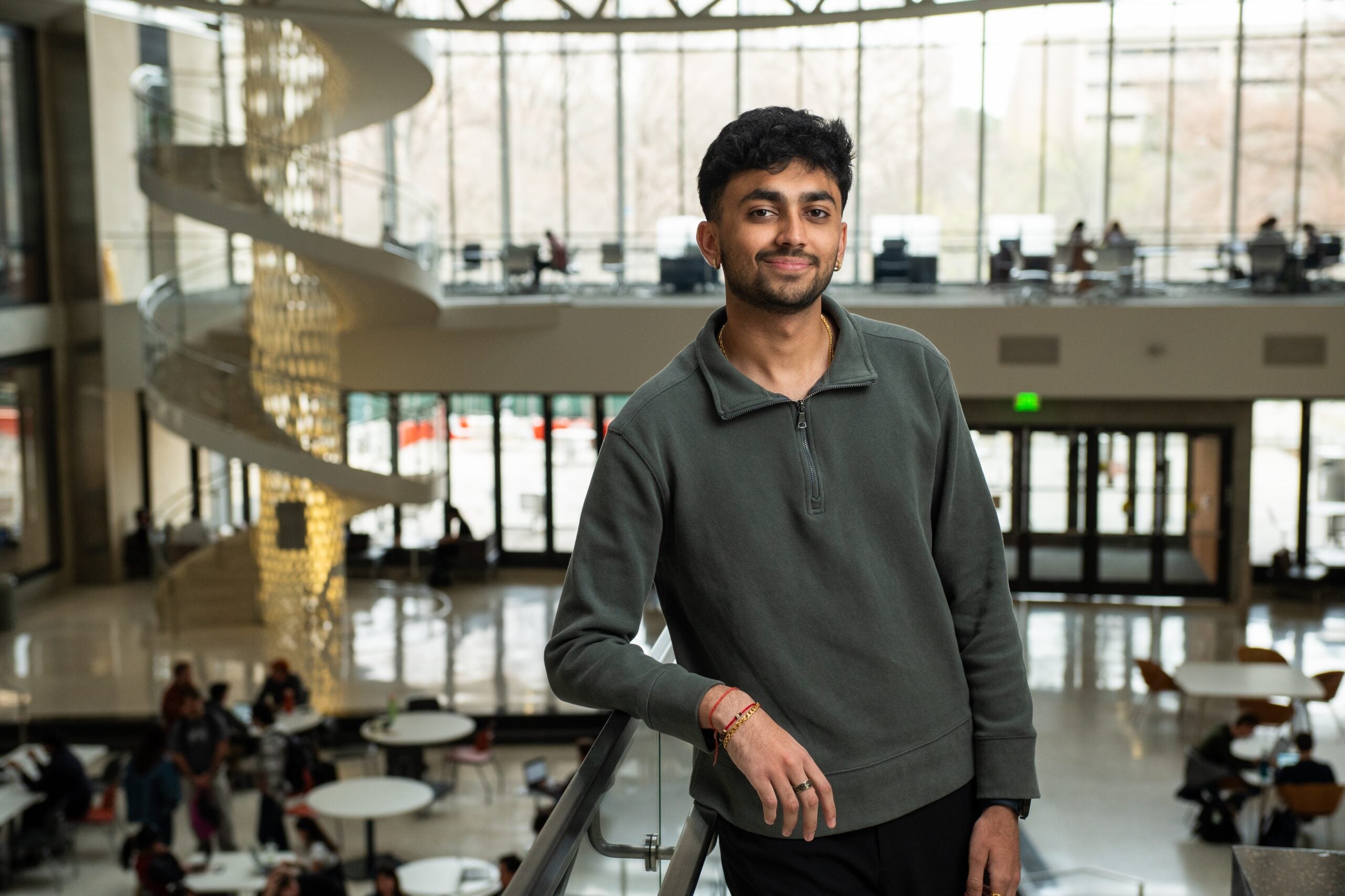
For the first time, researchers have used machine learning to identify the most important factors in cancer survival rates in nearly every country in the world. One of the researchers leading the effort was Mirit Patel, an undergraduate student at the University of Texas at Austin. This paper was recently published in Annals of Oncology, one of the most cited cancer journals in the world.
This study identifies what improvements and policy changes in nearly every country around the world can have the biggest impact on cancer survival rates. Patel developed the machine learning model used in the study based on data from global health systems. It is also behind a new online tool that shows which factors, such as national wealth and access to radiotherapy and health insurance, are most strongly associated with cancer outcomes in a particular country.
“We chose to use machine learning models because they allow us to generate country-specific estimates and predictions,” said Patel, first and corresponding author of the paper and a senior in biochemistry. “Of course, we recognize the limitations of population-level data, but we hope these findings will help guide global cancer system planning.”
Patel, who is majoring in statistics and data science and minoring in health care reform and innovation business, said his starting point was early lessons learned in a statistics and data science course at UT. He also credits on-campus mentoring and other opportunities, including participating in the College of Natural Sciences’ Freshman Research Initiative and working on an ongoing thesis project at UT’s Dell School of Medicine that uses artificial intelligence to prioritize cancer drug candidates.
Each opportunity led to collaborations with researchers at Memorial Sloan Kettering Cancer Center, MD Anderson Cancer Center, Massachusetts Institute of Technology, Massachusetts General Hospital/Harvard Medical School, and the National Institutes of Health through the Google Summer of Code project.
Through these collaborations, Patel has contributed to research on how statins affect cell signaling in ovarian cancer, how to improve real-time decision-making for clinical principal investigators, and the ethical and policy implications of implementing AI in healthcare. We have also worked to build AI systems that enable researchers and clinicians to analyze complex cancer genomic datasets using natural language queries.
“The skills I developed at UT gave me access to top cancer research institutions to conduct specialized research,” Patel said.
For the new paper, researchers used machine learning, a form of artificial intelligence, to analyze data on cancer incidence and mortality from the World Cancer Observatory in 185 countries. We also gathered information on health systems from the World Health Organization, World Bank, United Nations agencies, and radiation therapy center directories to better understand how different factors relate to cancer outcomes in each country.
“Cancer outcomes around the world vary widely, largely due to differences in national health care systems,” said Edward Christopher Dee, M.D., resident physician in radiation oncology at Memorial Sloan Kettering Cancer Center, who co-led the study with Patel. “We wanted to create a practical, data-driven framework that would enable countries to identify the most impactful policy levers to reduce cancer mortality. We found that access to radiotherapy, universal health coverage, and economic empowerment are the key levers often associated with improving national cancer outcomes.”
This study was funded by the National Cancer Institute. National Heart, Lung, and Blood Institute. Prostate Cancer Foundation. and the Swiss National Science Foundation.
Patel’s model produces a mortality-versus-morbidity ratio that reflects the proportion of cancer cases that result in death and serves as a proxy for the effectiveness of cancer treatment. In the online tool’s country charts, green bars represent the factors currently most strongly positively associated with improved cancer outcomes in that country, indicating that continued or increased investment in that area is likely to have a meaningful impact.
“Rather than simply explaining disparities, our approach provides policymakers with an actionable, data-driven roadmap to pinpoint which health system investments will have the greatest impact in each country,” Patel said. “As the burden of cancer increases globally, these insights will help countries prioritize resources and close survival gaps.”
As she begins her final semester before graduation, Patel reflects on her beginnings in academic research as a first-year student in UT’s Freshman Research Initiative “Virtual Cures” lab, where she worked under research educator Josh Beckham. FRI enables hundreds of students to conduct real-world research with colleagues and faculty early in their undergraduate careers.
“I learned the core wet lab and computational approaches to protein modeling,” Patel said. “That early experience made it clear that I wanted to work at the intersection of biology, computers, and health systems.”


