The future of factory floor and household support will be even faster.
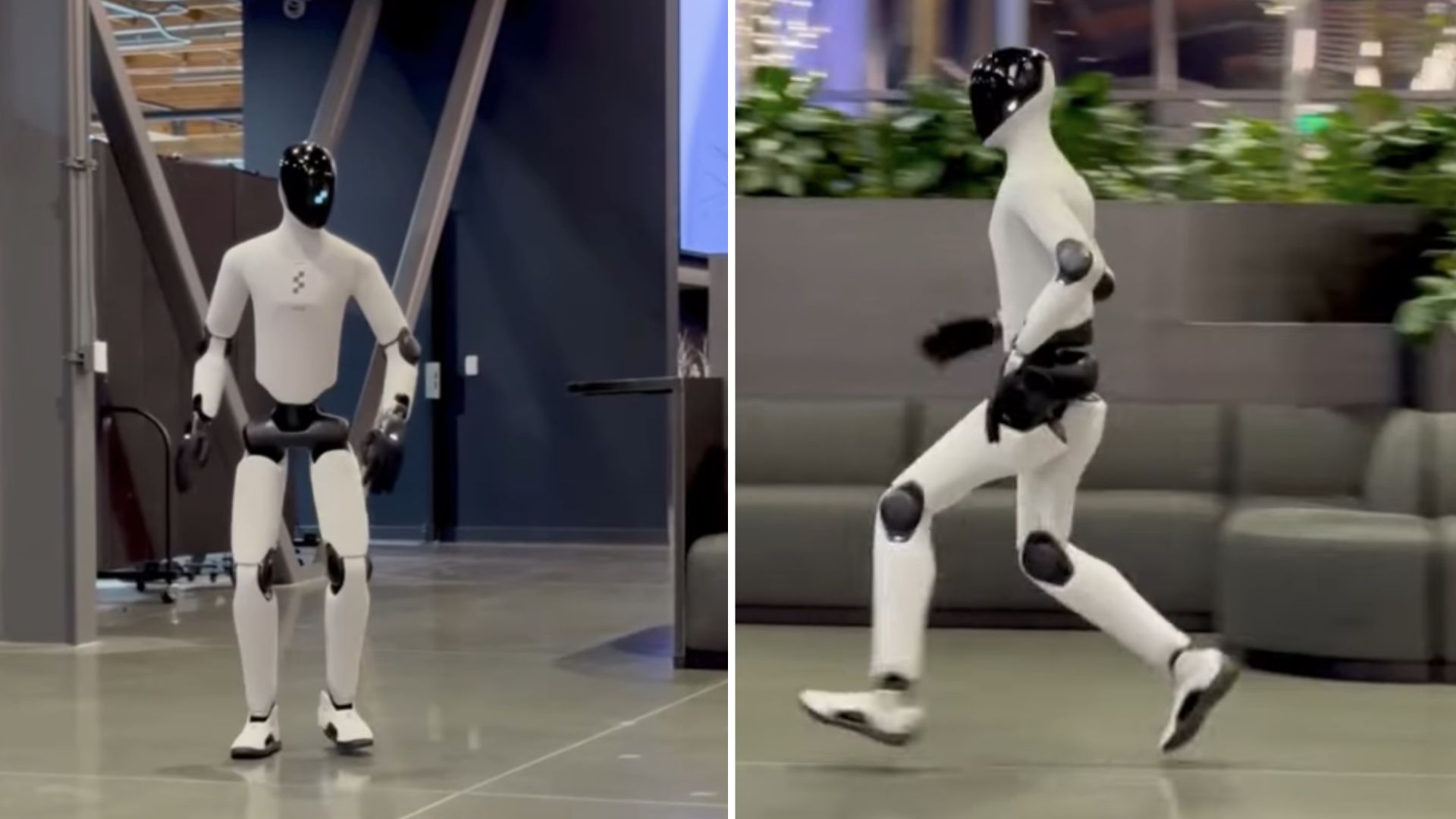
Recently, Figure AI CEO Brett Adcock posted a short video on social media teasing the extraordinary speed and agility of the Figure 03 humanoid robot.
The clip clearly shows the robot's quick starts, smooth turns, and hard braking as it navigates the complex. These movements overturn the widely held notion that today's humanoids are slow and sluggish.
“This F.03 robot controller is powered by an onboard neural network built by the Helix team,” Adcock wrote in an Instagram caption.
break the speed barrier
For years, the Achilles heel of general-purpose humanoid robots has been their inability to move quickly.
Companies that make humanoid robots often withhold maximum walking speed because the numbers are usually not that impressive.
Competitors such as Agility Robotics' Digit and Sanctuary AI's Phoenix typically publish maximum walking speeds in the conservative 3-4 mph range.
California-based Figure AI reported its own numbers for Figure 03 at a deceptively modest 1.3 meters per second, or 2.7 miles.
But this new footage shows that's not the case. forbes They reported that the robot appeared to operate at 4 to 6 miles per hour, which is the upper limit of human jogging speed.
Interestingly, the robot is shown lifting both feet off the ground at the same time, a motion that technically defines running and requires complex dynamic stability control. This is a major engineering hurdle that has already been overcome.
This quick and smooth movement, especially the ability to quickly decelerate and change direction, represents a major advance in Figure's control system and high-torque actuation.
The Helix team's neural networks provide the advanced intelligence needed for Figure 03 to perform complex and agile movements such as running and quick turns. Remarkably, this development moves from a rigid automaton to a more capable machine.
“Figure 03 is suitable for commercial applications for several reasons. The actuator can operate twice as fast while maintaining improved torque density (nm/kg). The most important consequence of this is the ability to pick and place items at higher speeds,” the website states.
This breakthrough appears to be a direct response to, or a new benchmark for, recent speed improvements demonstrated by rival robots such as Tesla's Optimus.
The race for dynamic real-world utilities appears to be on.
Figure 03 is equipped with advanced sensors
Third generation robots are ready-to-production machines for both domestic and industrial use.
At 5 feet 8 inches tall, the Figure 03 represents an upgrade over its predecessor, the Figure 02, with a sharper sensory system, softer aesthetics, and enhanced adjustability.
With 9% less mass and significantly reduced volume compared to the Figure 02 robot, the Figure 03 robot is much easier to operate, especially in a home environment.
interesting engineering As previously reported, the robot's design features an advanced setup that allows it to grasp objects and continuously adjust its grip.
A key element of this feature is a softer, more flexible hand, equipped with a fingertip sensor that detects very light pressure down to 3 grams (about the weight of a paper clip). This high level of sensitivity allows the robot to safely handle delicate items such as glassware and prevents tools and objects from slipping.
The combination of high speed movement and production viability makes the Figure 03 a strong competitor in the growing humanoid market.