Business leaders now understand the importance of artificial intelligence (AI). They know that AI will be a game changer. However, it remains unclear what this means in practice, both at a strategic and operational level.
 Many companies still view AI in a relatively narrow way. Most companies will tell you that AI helps reduce costs and increase efficiency. Some see this as a mechanism to increase customer intimacy and redefine business models. All of this is valid, but it only scratches the surface of what AI can do.
Of course, China is the leader in AI. Some of its large-scale language models (LLMs) rank among the best in the world, rivaling leading models in the United States. Many LLMs in China are also open source, making them appealing to a wide range of users.
The wide range of application scenarios driven by China’s extensive industrial development has earned the country a world-leading position in the field of AI applications, commonly referred to as “AI+”.
Chinese companies are implementing AI at an impressive speed. Although many are still in the early stages, some companies are beginning to use AI to redefine business boundaries, business models, supply chains, and customer reach.
At the same time, “AI native” companies are increasingly emerging in China. These companies were founded in the AI era and are designed and operated with AI at their core. At the same time, so-called “one-man companies” (companies with small staff numbers) are on the rise, as AI tools, especially AI agents, are giving humans a level of proactivity that was previously not possible.
For managers of foreign-funded enterprises (FIEs) in China, these developments are creating hidden challenges.
They know that AI is advancing rapidly in China. They see Chinese competitors being equipped with AI and customers expecting a different level of service, products and experiences.
In addition to this, technology in general, and AI in particular, is entering a “one world, two systems” situation: one led by the US and one led by China. Head offices naturally tend to adopt the American method. But business in China cannot and will not be done in the same way.
Data adds another layer of complexity. In many countries, including both the United States and China, data security is considered a national security issue and directly impacts how FIEs collect, store, move, and use data across borders.
The time has come for business leaders to recognize the true meaning of AI and demonstrate leadership that embraces it with the right mindset.
AI is more than just a technology or a tool. It is a driver of business change, transformation, and often a fundamental redefinition of identity.
Business leaders need to understand what AI and AI+ mean from a philosophical perspective. AI will certainly disrupt many existing businesses, but it will also create many new ones. The format is often very different from existing businesses.
Will AI eliminate many jobs? Certainly, some jobs will disappear. However, AI will create many new things, especially in the field of innovation. AI will accelerate the speed and intensity of innovation across the board, creating new opportunities for both businesses and entrepreneurs.
Our understanding of ourselves, the universe, and our relationship with nature remains very limited. There is still so much to explore, both physically and mentally. AI opens new frontiers of exploration and understanding.
A recent Wall Street Journal article proposes that AI will widen the gap between those who excel at using it and those who don’t. A key question for business leaders is: What capabilities and organizational structures will be needed in the AI era?
In the future, more and more daily tasks will be replaced by AI. The use of AI agents will become more widespread. Increase productivity. Organizations will then become flatter and the need for middle managers will decrease. The process becomes even more streamlined. Combinations of humans and AI agents will become commonplace.
In such an environment, companies and humanity will move further towards exploring the unknown and promoting innovation. Today, humans only understand a small part of the universe, which remains physically limited to the Earth and its near orbit. We know almost nothing about the quantum realm. The increasing capabilities of AI will enable companies to explore areas that were previously inaccessible. New discoveries will be made, many of which will be translated into innovations.
The people who will succeed in this new world will be those with strong problem-solving skills who can navigate ambiguity and complexity. They learn to apply critical thinking and first principles reasoning.
Corporate leaders in the AI era are different from leaders in the industrial era. Rather than relying on “command and control,” leaders need to become thought leaders who lead their organizations in a direction of innovation and breakthroughs.
Large companies will continue to exist. But many smaller, nimble companies will emerge and become competitive in their own right. New sectors will be formed, creating more “new lanes” for innovation and business development
Based on my recent interactions with many business executives, most will say they are using AI, but very few are fundamentally building or re-architecting their entire business around AI. In many cases, AI tools have been introduced, but processes, organizational structures, and systems remain largely unchanged. This discrepancy will cause many problems in the future.
At the same time, a small but rapidly growing number of companies are not just implementing AI. They are building or rebuilding companies around it. They’re not just measuring efficiency. Rather, we are building the capabilities of the agent. We also manage data appropriately, extract important essences from data, and codify them into knowledge as organizational capabilities.
Those who truly “get it” will disrupt many incumbents and force the latter into an unstable situation. A new era of capital and talent realignment is at hand.
The time has come for business leaders to recognize the true meaning of AI and demonstrate leadership that embraces it with the right mindset.
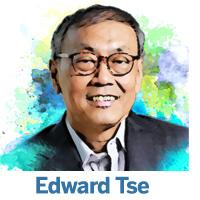
The author is the founder and CEO of Gao Feng Advisory Co, a strategy and management consulting firm with Chinese roots.
The views do not necessarily reflect those of China Daily.