– Wits University
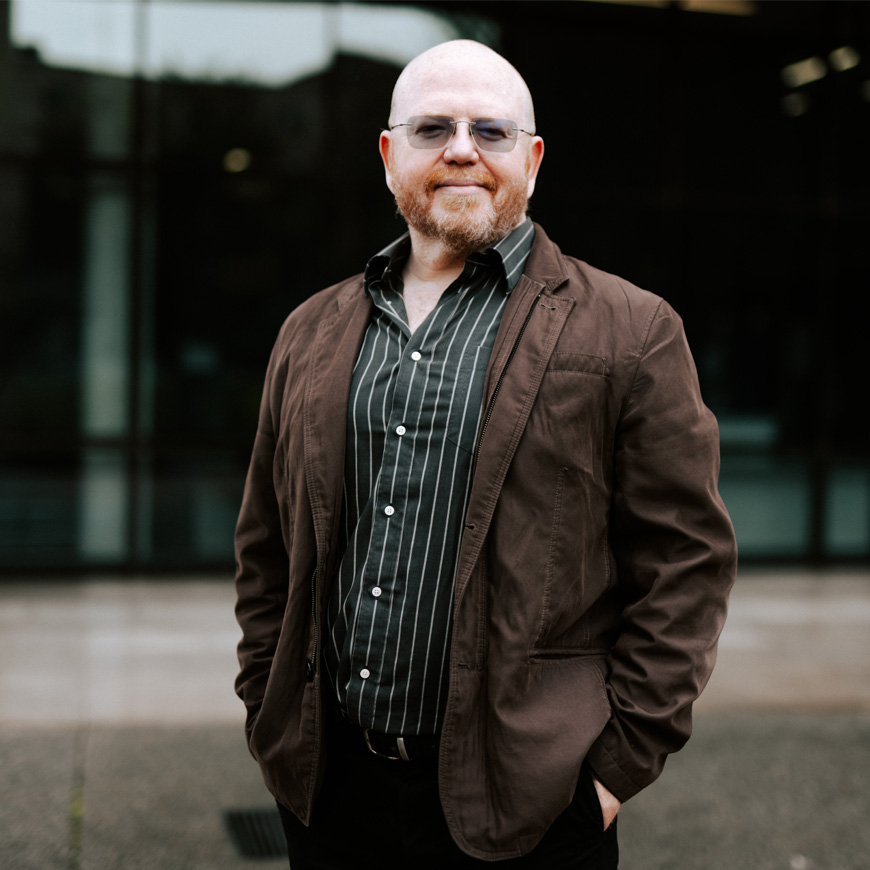
Distinguished Professor Bruce Bassett traveled to Wits to join “one of the country’s leading AI research groups”.
It’s just after 10.30am and the Wits Club at Wits University is buzzing with activity. The robot is not in sight (yet) as the waiters hurriedly prepare for the lunch rush. The last stronghold? Probably not.
When we sit, there is always something uniquely human about us: surprise.
Physicists, cosmologists, mathematicians, statisticians, data scientists, artificial intelligence researchers, and…ceramists. Just seven of the many ways to describe Distinguished Professor Bruce Bassett.
He opened his Instagram profile as requested and smiled shyly. check out cosmo blues That would settle the argument that AI is not stealing creativity. The scrolling fun continues, showcasing wonderfully intricate pottery and woodwork artwork, alluding to his insatiable love of “wonder.”
Although he is highly regarded as a scientist, he quipped that the artistry within him still “lives for fun.”
“My sanity is pottery. I just love making things. I don’t take it too seriously. I keep it intentionally amateurish. Academics spend so much time just thinking, and everything is abstract. Doing something physical with your hands is very grounding.”
Bassett, who joined Wits University last year as a Distinguished Professor in the School of Computer Science and Applied Mathematics (Faculty of Science), continues to keep his childhood passion alive. At an early age, he aspired to major in art. And at the age of 15, his father took out a book in his hands. physics and philosophy Written by Sir James Jeans, And Basset was hooked. Physics brought a whole new dimension to his creativity.
“This was a pivotal moment. That book was really transformative for me. Looking at the universe and trying to really understand it, but not shying away from philosophical questions. That was a real niche for me. I was just fascinated by all of it,” Bassett recalls.
up in the sky
His path to artificial intelligence is a cosmic journey that charts his own academic path.
He holds a BA in Applied Mathematics, Physics and Mathematics and an Honors and MSc in Applied Mathematics from the University of Cape Town, where he remains Full Professor of Mathematics and Applied Mathematics, spending half of his time at the University and half of his time at Wits.
He then earned a Ph.D. in astrophysics After studying at the International School of Advanced Studies (SISSA) in Trieste, Italy, he did postdoctoral research at the University of Oxford, UK. After several years working in the UK and Japan, he returned to South Africa in the early 2000s to work as a data scientist at the South African Large Telescope (SALT) and UCT.
“It was an exciting time in South Africa as astronomy was really taking shape and for the first time the country had a new, world-class telescope. I flew out in 2017 and joined the new Square Kilometer Array (SKA), where I started the data science team,” he says.
down on earth
In 2012, Bassett began noticing seismic shifts occurring in artificial intelligence. Artificial intelligence has existed in the shadow of technological evolution since the mid-20s.th Century and its generative AI application revolution will be the biggest disruptor of our generation.
“As a cosmologist, I had been using machine learning, a branch of AI, for many years, but when I realized that AI was going to take over everything, I needed to move my career further into computer science while still having the freedom to work on applications of AI.
“Wits has one of the best AI research groups in the country, so joining the Department of Computer Science and Applied Mathematics made a lot of sense,” he says.
Find microbes and bugs using AI
Bassett is also currently a professor in the science department of the new Wits Machine Intelligence and Neural Discovery (MIND) Institute. The Institute works closely with the Faculty of Health Sciences and cross-faculty collaborations to deploy AI to support innovation in faculty research projects.
One example is a project within the Infectious Disease and Oncology Research Institute (IDORI). He is collaborating with Professor Robert Bryman to use AI to discover cancer-causing microorganisms.
“Rob came up with this idea: Africa would have a hard time affording expensive gene therapies, such as sequencing tumors and designing drugs that target the tumors themselves. So how could we help Africa? If we could find the microorganism or bug that causes cancer, we could develop a vaccine against that bug and vaccinate people to protect them from cancer.” That was a great idea and could save millions of lives.
“We are currently building an AI that scans all of the more than 30 million papers published to date, looking for clues that might link cancer to these microbes,” Bassett says.
Another project being carried out with Wits’ health and medical collaborators is to test how accurately AI can diagnose patients, using in-hospital text data as well as CT scans, MRIs, chest X-rays, blood test results and more. “We can then compare the AI diagnoses with experts, assess how ‘mature’ the AI is, and start thinking about real-world applications. This could be a great support for doctors in overburdened health systems to add a safety net or allow them to see more patients.”
“I’m really excited about this. It’s great to work on a project that really has an impact and makes a difference,” he says.
Mr Bassett is also working with the Wits Diagnostic Innovation Hub and clinical partners.
“One of the absolutely terrifying things that is emerging is antibiotic resistance. We now have antibiotic-resistant superbugs in our hospitals, especially in the public health system. If you get infected with these superbugs, your chances of survival are shockingly low. We do have super antibiotics, but we can’t overuse them, because otherwise we’ll develop resistance as these bacteria learn to adapt.”
“The balancing act is when to use these super antibiotics. To diagnose a superbug, a doctor who has a patient with sepsis can do a culture test to determine if it’s a superbug, and if so, they can give these super antibiotics. But the problem is, that takes several days, and by the time the results come back the patient is dead and can’t give the super antibiotics.”
“The faster we can identify bugs using AI, the faster doctors can treat them,” he explains.
balancing act
Whether it’s a bug, a coffee mug, a bowl, a lampshade, an algorithm, or an equation, Basset demonstrates the balance essential to a balanced life: between the personal and the professional, between humans, AI, and creativity.
“The world will change incredibly over the next decade, and it will be a challenge for all of us to find ways that that change can benefit everyone while remaining authentic and true to ourselves.” – Distinguished Professor Bruce Bassett.