
Low-power wide area networks are changing operational economics. (Image: Sigfox South Africa)
Every boardroom is talking about AI.
First of all, few people are discussing whether AI actually has enough visibility into its operations to make smart decisions.
That’s the real problem.
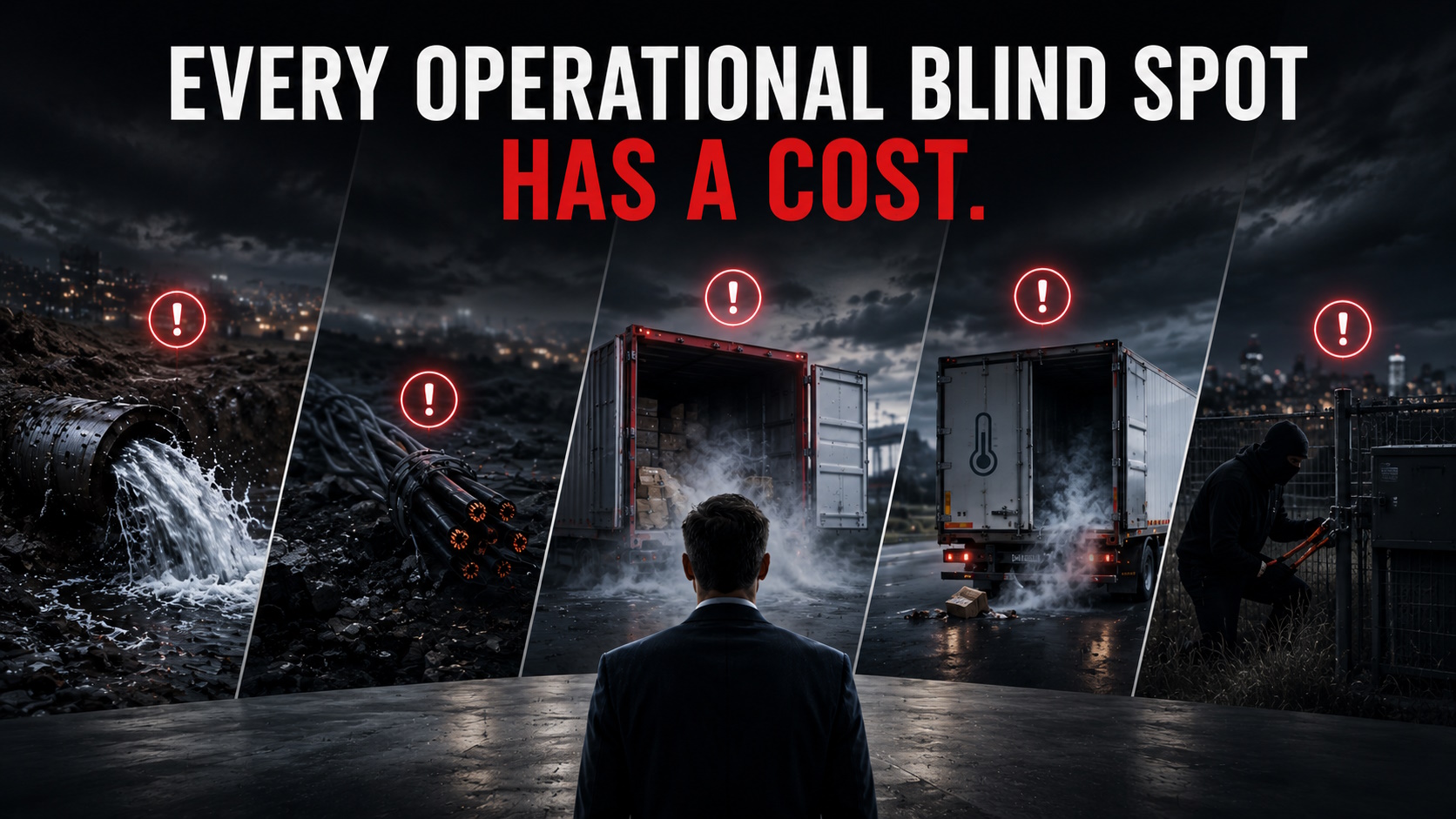
Most organizations still operate with significant blind spots.
- Infrastructure failure was discovered too late
- Water leak discovered after a few weeks
- disconnected field assets
- Delay in maintenance response
- Logistics visualization is incomplete
- Production environments that still rely heavily on manual recognition
AI does not solve operational blindness.
It just processes the operational signals that the business is already getting.
“If the operational visibility layer is incomplete, the intelligence layer is compromised before it even begins,” said Gregory Rood, CEO of Sigfox South Africa.
The problem is that many companies still think telemetry means:
- Constant communication
- expensive infrastructure
- Continuous GPS tracking
- large amount of data
- complex development
However, modern operational intelligence is evolving in a completely different direction.
Increasingly, a single operational event can deliver greater business value than millions of unnecessary data points.
Consider a high-value logistics container.
Most companies assume that continuous tracking is required.
In reality, the most valuable operational events may be:
“This container was opened unexpectedly.”
I have one message.
Potential savings of millions of dollars.
It changes to:
- insurance exposure
- response time
- accountability
- operational risk
The same principle applies to any industry.
Municipalities may not need endless infrastructure telemetry. You may simply need: Immediately notice the moment an abnormal water flow starts.
Pharmaceutical distributors may not require constant cold chain streaming. All you may need is: “Temperature threshold exceeded.”
Utilities may not require continuous reporting.
You may simply need: “Someone is cutting this cable right now.”
This is where low power wide area networks (LPWANs) are fundamentally changing the economics of operation.
In the past, companies only connected assets that were critical enough to justify expensive communications infrastructure.
That model has changed.
Low-power telemetry now allows enterprises to economically connect operational environments that were previously considered impossible to monitor.
- storm drain
- cable infrastructure
- water network
- returnable packaging
- temporary infrastructure
- remote assets
- Large-scale logistics environment
Globally, this is already reshaping operations.
Japanese power company uses low-power telemetry to optimize gas delivery routes.
European municipalities are implementing intelligent storm drain monitoring systems that only communicate when intervention is required.
Airports have been using battery-powered telemetry for a decade to monitor support equipment and baggage infrastructure.
Unlike Europe, where IOT often optimizes convenience, South African businesses increasingly require operational resilience.
That’s a completely different strategic requirement.
“A single operational event detected at the right time can add more value than millions of unnecessary data points,” says Rood.
This change is also driving new innovations such as Sigfox Bloodhound, an AI-assisted geolocation platform that can derive location information from the behavior of network signals, rather than relying entirely on GPS infrastructure.
“The future of telemetry is not necessarily about increased communications,” said Sean Laval, Head of Products and Solutions at Sigfox South Africa.
“In many production environments, it enables smarter communication.”
It could be one of the defining technology changes of the next decade.
Because the best-performing companies may not be the ones collecting the most data.
They may just be companies that have finally learned which operational signals actually matter.
Are you ready to eliminate operational blind spots?
Whether you are an end user looking to improve visibility across your critical assets and infrastructure, or a channel partner seeking innovative IoT solutions that deliver greater value to your customers, Sigfox South Africa can help.
See how low-power telemetry, intelligent event monitoring, and scalable IoT connectivity can transform operational resiliency, reduce risk, and unlock new business opportunities.
For more information, please visit: www.sigfox.co.za.