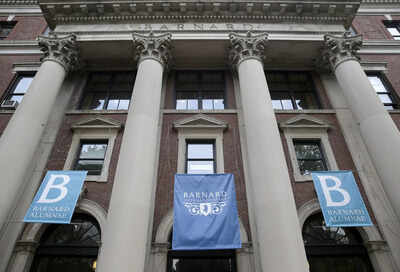
Bernard College has joined the growth group of institutions that embed artificial intelligence directly into student life. Starting August 1st, students will be able to access Google's Gemini and Notebooklm via Bernard's email account, following the announcement on July 29th. The deployment was part of an expansion agreement with Google and was framed as a step towards giving all students “basic AI literacy.”This movement is not happening on its own. Across the United States, universities compete to integrate AI tools, professional development pathways and ethical training into academic products, indicating that AI proficiency is becoming a core graduate skill.
A structured AI literacy framework at Bernard College
Bernard's approach doesn't just provide access to AI platforms. The college has developed a four-level AI literacy framework, outlined in official publications and used throughout student and faculty training. This framework advances from basic recognition of the concept of AI to highly discipline-specific applications, reaching its peak in critical evaluation and ethical use. Workshops, AI studios and collaborative learning sessions planned for the fall are consistent with this structure and ensure that students build layered capabilities.
Columbia University: Professional Routes to AI Leadership
Columbia University's AI initiative ranges from campus tools to industry-centric training. The university offers professional certificate programs for artificial intelligence confirmed through its official course portal and partner sites. The program covers machine learning, robotics and intelligent systems and is designed for professionals and technical leaders. Learners can complete the program online or in an executive format, allowing both working professionals and on-campus participants to deepen their AI expertise.In addition to this, Columbia continues to provide access to CHATGPT education, as well as AI resources for campus development, such as CU-GPT and chat. The Center for Teaching and Learning supports teachers in creating assignments that combine AI tools with critical reflection.
New York University: AI access across age and disciplines
NYU pursues AI literacy at multiple educational levels. Nyu Shanghai is running an AI Pre-College Summer program that combines coding instructions for Python, Numpy, and Pytorch with discussions about AI Ethics and practical project work. The program is aimed at high school students seeking early exposure to AI.Additionally, NYU's Tandon School of Engineering and other departments offer high school summer programs, undergraduate research opportunities, and interdisciplinary workshops designed to integrate AI into a diverse range of fields, including healthcare, media and public policy. The university also provides the community with access to Gemini and Notebooklm combined with guidance on responsible use.
Massachusetts Institute of Technology: Multiple Routes to AI Mastery
MIT has created an AI learning ecosystem that is useful for both technical and non-technical learners. Professional Certificate Programs in Machine Learning and Artificial Intelligence award advanced topics and formal accreditation to graduates. For those who don't have a background in coding, MIT offers low-code or no-code AI training routes, allowing non-technical experts to access technology.MIT's commitment to accessibility is expanded globally, with basic AI courses offered online to learners around the world. On campus, approved tools such as Adobe Firefly, AWS Bedrock, Azure Openai, and Google Gemini are available under strict governance and security guidelines. Responsible AI for Social Empowerment and Education (Raise) initiatives, including global outreach programs such as FutureMakers and Day of AI, has reached over 1 million K-12 students.
Why races are accelerating
Technology companies are driving trends. Google has committed $1 billion over three years to deliver AI tools, cloud resources and training to over 100 US universities. Openai and Anthropic compete for partnerships, providing a free platform to campus and supporting research initiatives.Academic debate on AI is also becoming stronger. Although well-designed AI tutors have been shown to improve student performance in certain fields, educators continue to tackle questions about plagiarism, overreliance, and erosion of independent thinking.
The road ahead
Bernard's adoption of AI tools and its structured literacy framework are located alongside institutions such as Columbia, NYU, and MIT in redefine what it means to graduate from “career-enabled” in the age of AI. Although their strategies differ, Bernard has a layered literacy model, Columbia, professional accreditation, and early pipeline education with NYU, with MIT in both technical acquisition and global outreach. They share a common goal. It is to help students leave campus not only with access to AI, but also with their ability to use it critically, ethically and effectively.TOI Education is currently available on WhatsApp. Follow us here.