
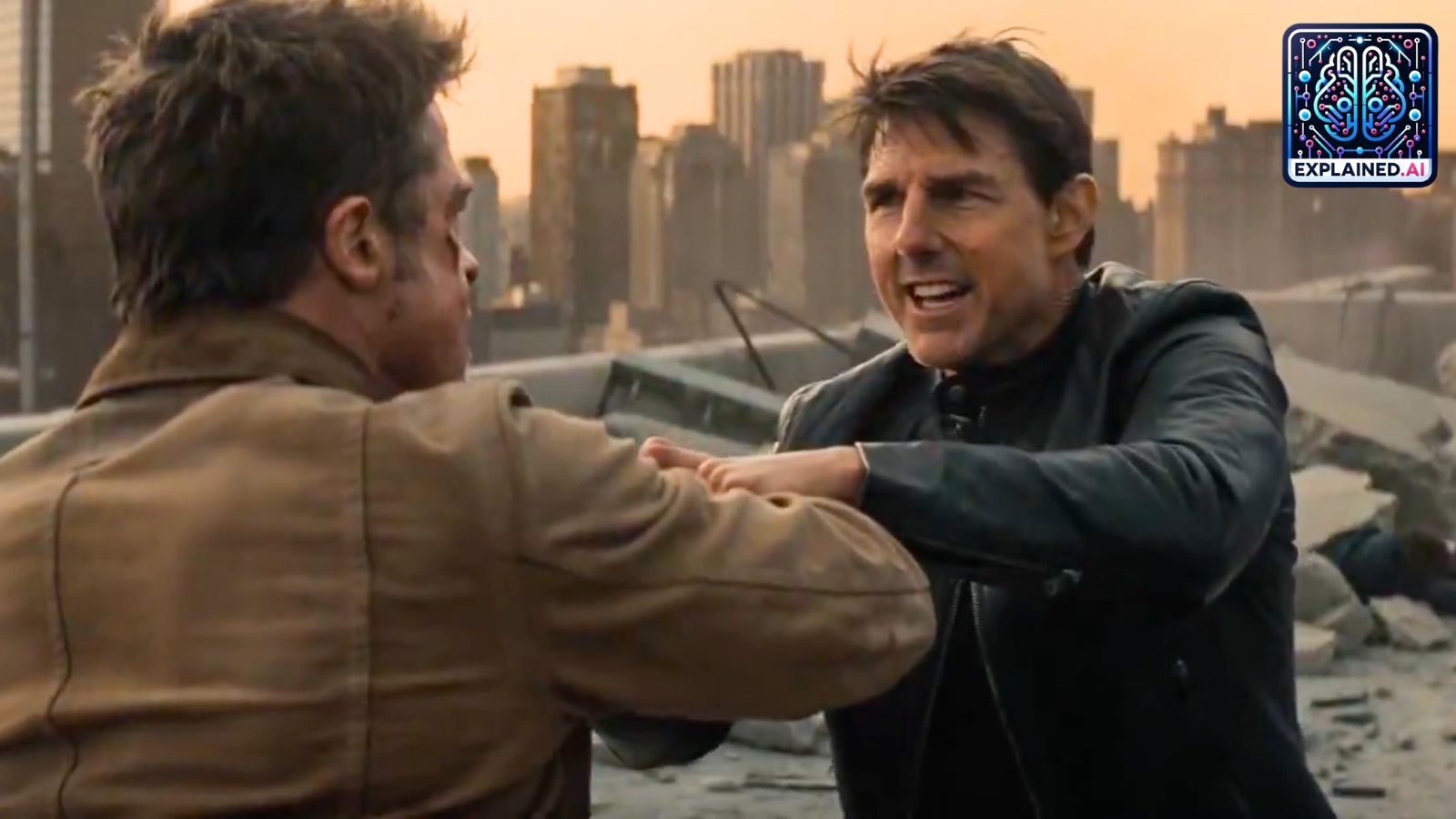
Now you can create a video in minutes, without any prior knowledge of video editing, by simply entering a line or two of text to describe an intense action scene starring Hollywood legends Tom Cruise and Brad Pitt. And unlike previous versions of artificial intelligence-powered text-to-video generators, it’s increasingly difficult to dismiss new videos as clearly fake or synthetic-looking.
ByteDance, the Chinese company best known for its short video app TikTok, has confirmed that its AI video generator, Seedance 2.0, has advanced to this level of technological capability. This put them in direct conflict with Hollywood studios.
Hollywood trade group Motion Picture Association (MPA) reported on Friday that it has sent a “strongly worded cease and desist letter” to the Chinese tech giant alleging “systematic infringement” by the tool. hollywood reporter. MPA members include industry giants such as Disney, Netflix, Warner Bros., Prime Video and Amazon, MGM, and Universal Studios.
Seedance is the latest in a battle between companies deploying AI in creative fields and a backlash from creators of training materials that train the AI, citing compensation and copyright infringement.
What can I do with Seedance 2.0?
Like other text-to-video generators, Seedance can create everything from animated videos to realistic documentary-like scenes. The video was released on February 12th and featured many of the video’s familiar actors and settings, and caught the attention of Hollywood studios.
Seedance 2.0 is not the first model of its kind. OpenAI introduced Sora, a video generator, in February 2024 that similarly took the internet by storm. However, when compared to some past models, the Seedance’s unnatural appearance is a clear improvement. Its output began to cause concern shortly after its release.
“In a single day, Chinese AI service Seadance 2.0 has committed massive misappropriation of U.S. copyrighted material,” MPA CEO Charles Rivkin said in a statement. “By launching its service without meaningful protections against copyright infringement, ByteDance is ignoring established copyright law that protects the rights of creators and supports millions of U.S. jobs. ByteDance must immediately cease its infringing activities.”
Story continues below this ad
According to the report, Global TimesThe Chinese Communist Party’s English-language paper, Seadance, is similarly used in China: “In a traditional Chinese courtyard, a young Jackie Chan, dressed in black, engages in a high-speed chase with Jet Li, dressed in white. To the stirring theme of ‘A man should toughen himself up,’ the pair leap from the courtyard wall into an indoor hall and begin a carefully choreographed battle packed with close quarters combat and technical precision.”
A ByteDance spokesperson said: CNBC They said they have heard the concerns and are “taking steps to strengthen our current safeguards to prevent unauthorized use of our intellectual property and likeness by our users.”
Is this exclusive to Hollywood?
Currently, there are no clear guidelines at the global or even national level regarding the discussion of AI and copyright. This includes both the content that an AI product is trained to produce results for a user’s query, and the lack of clear labeling to distinguish that the final product was generated by an AI when it is released into the world.
Without regulation, companies developing new AI tools continue to emerge as specific industries target one AI tool after another and struggle to keep up. For example, the New York Times’ lawsuit against OpenAI touches on similar concerns. The American newspaper claimed to have accessed copyrighted material to train the company’s large-scale language model (LLM) ChatGPT.
Story continues below this ad
“Defendants seek to free ride on the Times’ massive investment in journalism,” the complaint said, adding that OpenAI and Microsoft used its content “free of charge to create an alternative product to the Times and to take audience away from the Times.” The trend of news websites losing their online audience further accelerated after the launch of AI Overview in Google Search, which removed the need for users to click on news links and reduced the reach of websites.
A similar lawsuit was filed The judgment was handed down in the Delhi High Court by the Digital News Publishers Association (DNPA) and some of its members, including The Indian Express, Hindustan Times and NDTV.
Two cases with known outcomes involved US authors and AI companies last year. The court ruled in favor of Anthropic and Meta, arguing that they did not seriously harm the authors by shrinking the market. One judge said that AI training on data is similar to “aspiring writers” in that it learns from it, not plagiarizes it. Another said compensation for copyright holders should be considered, given that AI companies make billions of dollars in profits.
The Walt Disney Company also filed a cease and desist order against Character.AI in September 2025 over copyright. Character.AI is known for creating AI versions of fictional characters and celebrities and allowing users to chat with them.
What’s next for Hollywood?
Story continues below this ad
There is still no consensus within Hollywood about the scale of the problem or how to deal with it. Producer and writer who has worked on projects such as Rhett Reese and Marvel films. dead pool In the movie X, he said, “I’m not at all excited about AI invading creative endeavors. In fact, I’m horrified. So many people I love are facing the loss of their beloved careers. I myself am at risk.”
“I was surprised by the Pitt vs. Cruise video because it was so professional…My glass-half-empty view is that Hollywood is about to undergo a revolution/go down. If you really thought the Pitt vs. Cruise video was unimpressive and vulgar, you have nothing to worry about. But I’m upset,” he added.
Oscar-winning actor Matthew McConaughey also recently spoke out, emphasizing the importance of actors relying on their moral rights. “It’s not enough to stand by and make moral appeals…There’s too much money to be made, too much productivity…So I say, let’s own ourselves, including our voice and likeness.”Ownership. moral rights He argued for requiring companies to ask for permission before use, ensuring actors can control their portrayals and profit financially from their use.
But the lack of consensus means it may only be a matter of time before major companies try to strike a deal, even though people in the creative industries are widely opposed to many AI tools at the moment. In December 2025, Disney and OpenAI signed an agreement in which Disney agreed to invest $1 billion in equity in the company as the company’s first “major content licensing partner in Sora.”
Story continues below this ad
“Sora will be able to generate short, user-directed social videos that fans can watch and share from a set of over 200 animated, masked, and creature characters from Disney, Marvel, Pixar, and Star Wars, including costumes, props, vehicles, and iconic environments. The deal does not include the likeness or voice of any talent,” the statement reads. While this resolves the legal side of the issue, questions remain about the future of entertainment itself and the fate of a profession that doesn’t have the same influence as Disney.


