

The winners of the 2026 Swift Student Challenge have been announced.
Apple selected 350 Swift Student Challenge winners from around the world and detailed four notable winners and their apps.
Apple has announced that people from 37 different countries and regions have been selected as winners of its annual Swift Student Challenge. Of these 350 people, 50 have been invited to the company’s WWDC event in June 2026.
But while there are dozens of winners this year, Apple took the time to choose four in particular. Four young app developers used the app to solve real-world problems, from creating shaky artwork to escaping flood zones. Apple also mentioned the use of AI in development.
“The breadth of creativity we see in the Swift Student Challenge never ceases to amaze us,” said Susan Prescott, Apple’s vice president of Worldwide Developer Relations, in an Apple press release. “This year’s winners have discovered amazing ways to harness the power of the Apple platform, Swift, and AI tools to build app playgrounds that are not only technically brilliant but also meaningful.”
Steady Hands — Gayatri Goundakar
Created by 20-year-old Gayatri Goundadkar, Steady Hands was created to help her grandmother, who suffers from tremors in her hands, use her iPad to create artwork.
Using Apple accessory features like Touch Accommodations, Goundadkar learned SwiftUI concepts and leveraged Anthropic’s Claude AI to find a solution.
The result is an app that uses Apple’s PencilKit and Accelerate frameworks to monitor Apple Pencil movement and identify tremors. Then you will be able to deal with those tremors.
Pitch coach — Anton Baranov
Anton Baranov, 22, is a computer science student at Mittelhessen University of Applied Sciences in Germany. He developed Pitch Coach after hearing his mother, a linguistics and literature professor, explain that her students sometimes struggled with pressure during class.
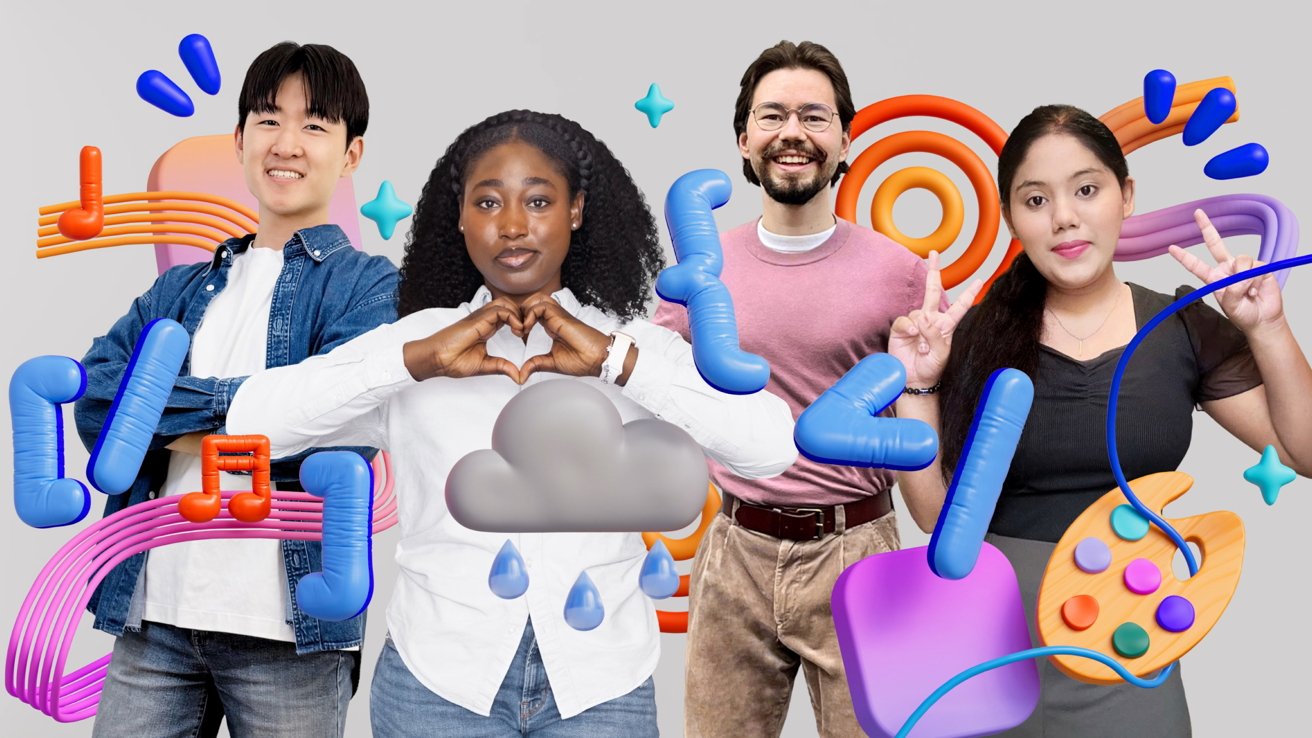
4 of the 2026 Swift Student Challenge winners
Pitch Coach is designed to help users overcome presentation anxiety. The app uses Apple’s Foundation Models framework to generate feedback and help users avoid filler words like “like” and “umm.” Today, pitch coaches help everything from students presenting in class to stand-up comedians.
Asuo — Karen Hapchi Peprah Hene
Henneh, who just learned Swift earlier this year, created Asuo to help people in flood-prone areas stay safe in times of need. The app provides real-time routing in flood zones and features VoiceOver support to assist visually impaired users.
At its core, Asuo calculates rainfall intensity and uses pathfinding algorithms based on historical flood data. Henneh used Figma to create the app’s interface before asking Claude for help building the rain simulator.
Leviola — Yoonjae Jeong
Yoonjae Joung came up with the idea for the app after realizing she missed playing the instruments she had to leave at home. While preparing for an exchange program to New York University, he realized he didn’t have room for his viola.
He was inspired to create LeViola, an app designed to make it easy to learn and play the viola, even if you don’t own a viola.
Joung used Apple’s on-device machine learning framework to analyze left hand movements to determine which notes were being pressed. Tracking the angle of your right arm means the app can differentiate between strings.
Although it’s still early days for LeViola, Joung says similar apps could be created for other instruments.


