
As AI rapidly reshapes the workplace, organizations are moving beyond conversations about automation and beginning to face more fundamental questions. The question is: Are companies truly ready for continuous transformation?
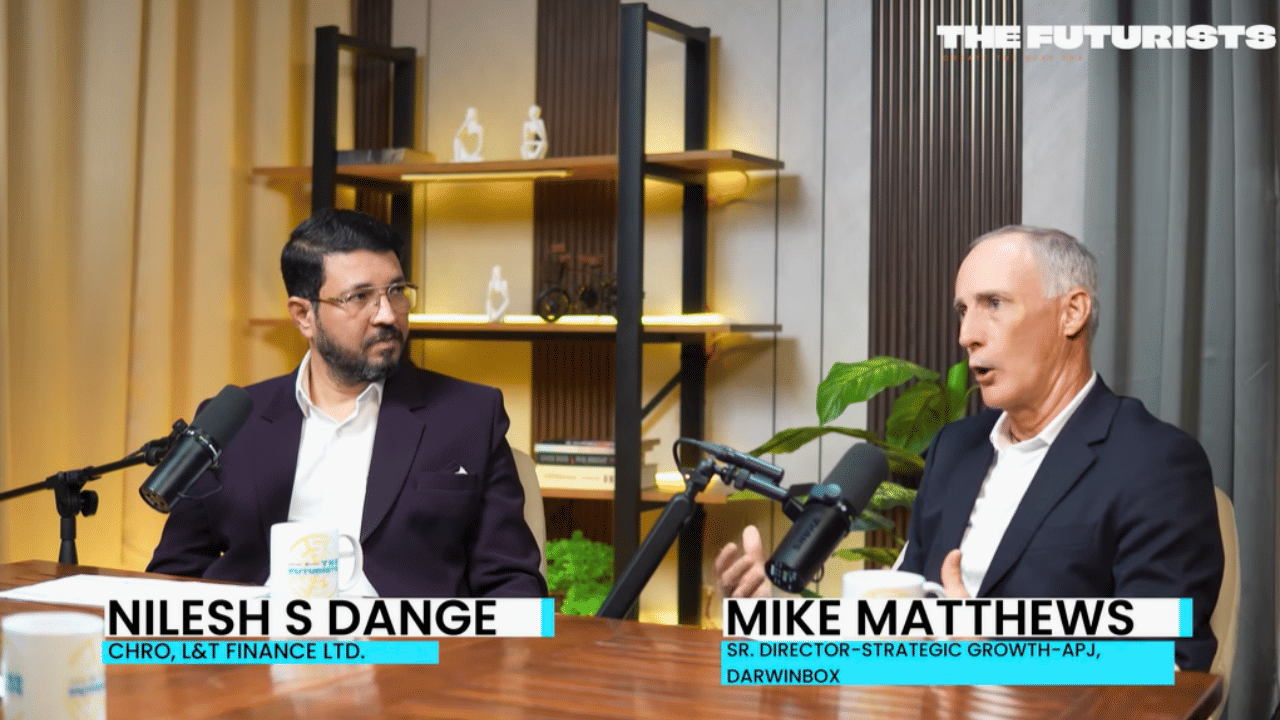
This was the focus of a recent episode futurist podcastwhere Varun Jain, People Matters Senior EditorI talked to Nilesh S. Dhanji, CHRO in L&T Finance Co., Ltd.and Mike Matthews, Senior Director, Strategic Growth (APJ), Darwin Box.
The discussion explored how AI is changing not just technology systems, but organizational behavior itself. From L&T Finance’s ‘3A’ framework for technology adoption to progress in moving from systems of record to systems of intelligence, speakers reflected on what organizations must do to build adaptability at scale.
Building a continuously adaptable organization
A recurring theme throughout the conversation was that AI transformation is ultimately about organizational readiness. Speakers emphasized that companies need to create a culture where employees are comfortable experimenting, learning, and evolving with technology, rather than resisting it.
Why democratizing technology matters
The discussion also looked at how organizations are focusing on making AI capabilities available across teams, rather than just limiting them to technology capabilities. According to speakers, broader participation is essential to build confidence, capacity and long-term adoption.
Transitioning from a system of record to an intelligence system
As AI becomes more integrated into workflows, organizations are beginning to move beyond static HR and enterprise systems to platforms that can generate insights, enable faster decision-making, and support more personalized employee experiences.
Learning agility could be your most valuable skill
Speakers argued that as technology cycles accelerate, employees and leaders alike will need greater adaptability, curiosity, and openness to change. They suggested that continuous learning could become one of the signature capabilities of future-ready organizations.
Why leadership and trust still matter most
Despite rapid advances in technology, this conversation emphasized that trust, empathy, and leadership authenticity remain the cornerstones of successful transformation. Technology may improve productivity, but culture and employee trust will continue to shape long-term organizational outcomes.


