
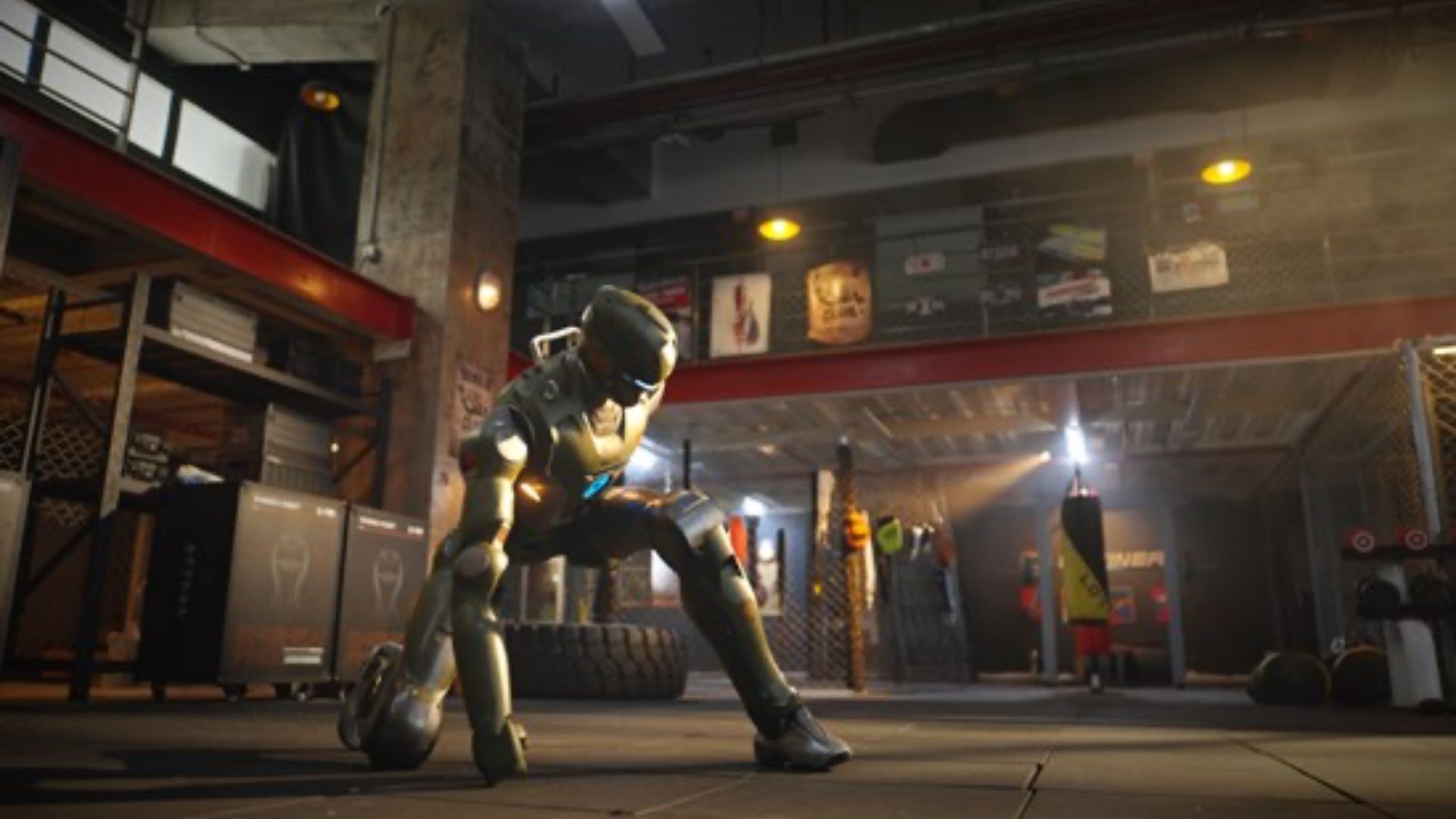
Chinese robotics company Engine AI is grappling with questions about its new humanoid robot after a dramatic announcement video sparked skepticism online.
The company unveiled its T800 robot just one day ago, but the dramatic clip, which featured powerful kicks and quick movements, immediately left many viewers wondering if they were seeing a computer-generated character rather than a real machine.
This rapid skepticism highlights the broader challenges facing the field of humanoid robotics. Advanced motion and film marketing make it difficult to determine authenticity.
Fresh footage that answers CGI claims
The original T800 video showed the robot breaking down a door in a darkened studio and delivering a swift roundhouse kick.
The company said at the time of its release that the clip “does not use any CGI, AI or video speeding up,” but viewers noted that the lighting and stylized editing were signs of digital effects. Many users on social media claimed that without digital enhancements, the robot would not be able to move with such precision.
To address questions about digital enhancements, the Shenzhen company released new behind-the-scenes footage at X. The post, titled “EngineAI T800 BTS footage: Accurately documenting the CGI rumors,” shows the robot in a modest studio, intended to provide evidence that the movements are real.
In this video, the color grading and dramatic editing are removed to reveal the T800 performing the same action with visible mechanical details.
The robotics company explains that its motion is driven by physical specifications such as joint torque of 450 Newton meters and 29 degrees of freedom. The goal is to show that performance relies on engineering rather than digital artistry.
Increasing need to prove authenticity
EngineAI is not the only Chinese robot company facing questions about its practicality. Xpeng faced similar criticism earlier this month after its Iron robot demonstrated an unusually natural gait at its AI Day 2025 event.
Viewers suggested that someone in a suit might be demonstrating. He later released additional clips of the mechanical frame and actuator system to calm the debate.
UBTECH Robotics faced an even bigger backlash when it unveiled a warehouse sequence with hundreds of Walker S2 robots working in perfect synchronization. Figure CEO Brett Adcock publicly questioned the video, noting that the reflections were inconsistent and suggesting that most of the robots in the scene appeared to have been digitally inserted.
It responded with a drone-shot video that included the original audio. The company said: Global Times It claims the footage is “100 percent authentic footage filmed on location,” and released an unedited one-take clip to support that claim.
Tan Ming, the company's chief brand officer, said critics underestimated China's manufacturing capabilities and people should visit China to see the development of humanoid robots firsthand.
These controversies demonstrate how rapidly the humanoid movement is evolving. Movements once considered far beyond modern engineering are now so realistic that viewers doubt computer graphics.
The engineering ambition behind the robot
EngineAI is using eye-catching videos to promote the T800, but the company said its plans go beyond viral attention. A statement released alongside a behind-the-scenes clip outlines the next stage of development.
According to the company, “In 2026, the Zhongqing team will seriously promote scenario-based verification and large-scale product deployment, and continuously unlock diverse application scenarios such as industrial production, commercial services, and family interaction.”
We describe this as a dual-track approach. One track focuses on entertainment, including a robot boxer event scheduled for December 24th. The other track focuses on real-world use cases. The company has already stationed some troops as “cyber staff” at retail stores in Shenzhen.
BTS' new footage may alleviate doubts about the T800's authenticity, but it also highlights deeper changes. As robots become more agile, persuasive, and visually impressive, companies may need to provide live evidence more frequently.
The company now faces a second challenge. It's about proving not only that the T800 is genuine, but that it can deliver reliable performance as deployment expands in 2026.


