
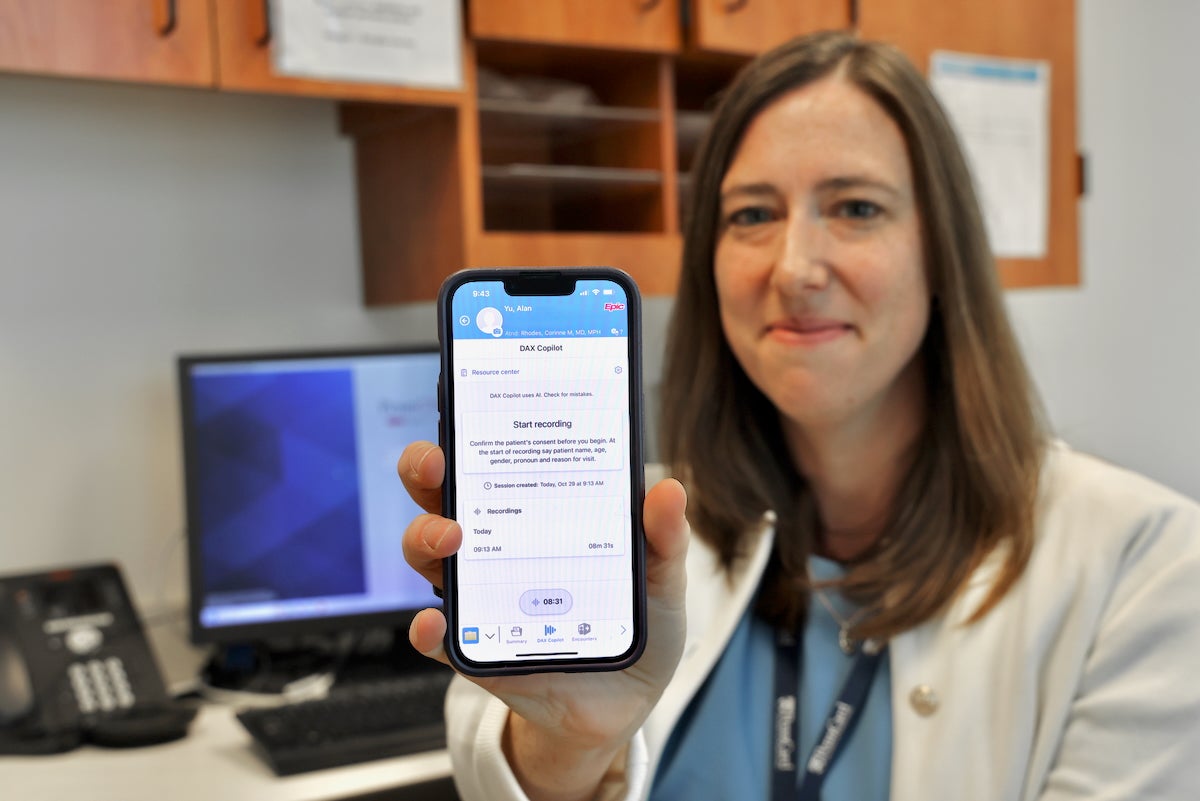
After the University of California, San Francisco health system introduced a similar technology for doctors, the response was “overjoyed,” said Dr. Robert Wachter, medical director and author of the forthcoming book “Giant Leap: How AI is Transforming Healthcare and What It Means for Our Future.”
“This comment is different from anything I’ve seen in the technology or medical fields, where people usually complain about technology,” he said. “The comment was, ‘I was thinking of retiring until this came out.'”
The health system says the technology will become a routine part of clinics in the future.
But the tools can still make mistakes, and some doctors have mixed feelings about them.
Penn Medicine researchers recently published a journal article describing how 46 physicians in 17 specialties felt about AI tools after using them for several weeks late last year. When the researchers asked doctors if they would recommend it to their colleagues, half of the group said yes and half said no. Some say automatic note-taking increases efficiency. Others say they need to spend time editing AI-generated notes to fit their usual style.

Dr. Colin Rose, a primary care physician at Penn Medicine, agrees. She used an AI listening program during a recent patient visit.
She explained that after years of experience, she developed a system for writing concise notes, but that some of the content generated by the AI needed to be heavily edited. But she wants to start learning now because she expects the program to improve in the future and save her time on an ongoing basis.

Kevin Johnson, a professor of biomedical informatics at the University of Pennsylvania, said some doctors are already looking forward to the availability of such tools.
“We already know that there are health care providers who are requiring it as a condition of employment,” he said. “They’re saying, ‘If I come, I’d love to use ambient scribing,’ because they already know what the downside of not using ambient scribing is.”
He was part of a research team that found that doctors had mixed reactions to using AI note-taking programs, and noted that since the time of the study, program developers have released several updates to improve the software.


