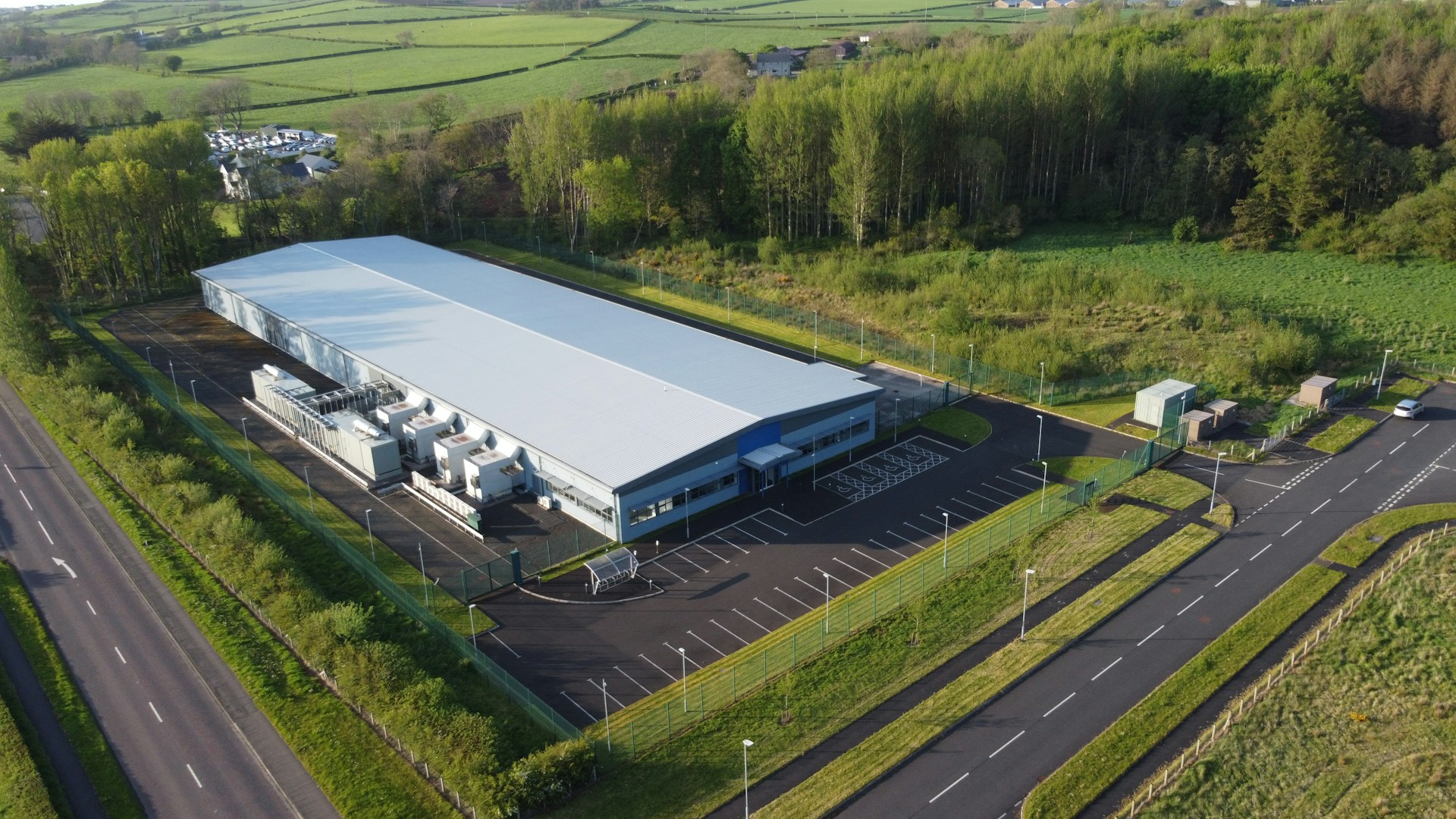
Lawsuits surrounding data centers are no longer about servers or buildings. They concern water, electricity, carbon budgets, and ultimately who bears the environmental costs of the digital economy. From Chile to Ireland, courts are beginning to redefine the legal limits of AI infrastructure. Central Europe should pay close attention.
The Emergence of Data Center Litigation: A New Area of Environmental Law?
Artificial intelligence has transformed data centers from nearly invisible digital infrastructure to some of the world’s most resource-intensive industrial facilities. Large hyperscale campuses require enormous amounts of power, adequate cooling infrastructure, and in many jurisdictions large amounts of land and water resources. Not surprisingly, these facilities are beginning to generate legal challenges that would have been unimaginable just five years ago.
The question is whether these disputes constitute simply a separate category of environmental permit litigation or whether they represent the emergence of a separate field of environmental litigation.
There is no consensus among legal scholars.
One school of thought argues that “data center litigation” merely applies established environmental law principles to a new industry sector. This view reflects the classic position of environmental legal scholars such as Daniel A. Farber, who has long argued that environmental law evolves primarily by adapting existing legal doctrine to new technologies, rather than by creating entirely new legal fields. Environmental impact assessment, precautionary measures, cumulative impact analysis, and public participation will continue to be the legal basis. Only regulated activities have changed.
A more expansive interpretation has emerged from climate litigation scholars. Joanna Setzer and Katherine Higham (Grantham Institute, London School of Economics) have documented how climate litigation is increasingly targeting the infrastructure that enables carbon-intensive economic systems, rather than just direct emitters. Recent analysis suggests that data centers represent just this next frontier. Although data centers themselves are not major emitters, they drive significant electricity demand, influence grid investment decisions, and increasingly shape the country’s path to decarbonization.
An even stronger position has recently been asserted by practitioners and academics observing these cases. According to this new perspective, data center litigation differs from traditional environmental disputes because courts are no longer solely evaluating the environmental impact of a single project. Instead, they are increasingly being asked to assess whether digital infrastructure is compatible with broader societal goals, such as national climate goals, power system resilience, long-term water security, and equitable access to critical resources.
This reflects the fact that data centers are not just technical facilities, but also complex socio-economic-environmental systems embedded in broader issues such as digitalisation, economic development and sustainability. As highlighted in a recent study by the United Nations University, the expansion of digital infrastructure requires a balance between technological advances and environmental limitations and social considerations. Data center litigation thus represents more than a new category of environmental considerations, but signals the emergence of broader governance debates about how societies manage the physical infrastructure of the digital economy.
Regardless of terminology, it seems increasingly difficult to dispute the conclusion that environmental litigation is entering the digital economy. Data centers have become the physical manifestation of AI, cloud computing, and digital sovereignty, making the environmental costs of digitalization a judicial issue.
Two continents, two legal strategies: Chile and Ireland
The Chilean lawsuit over Google’s proposed Cerrillos data center has become one of the world’s most influential examples of climate-conscious environmental overhaul.
The project, originally approved in 2020, ran into opposition from local residents and the city of Cerrillos because it planned to pump groundwater to cool the already water-stressed Santiago aquifer. During the legal proceedings, Google amended the project and proposed air cooling instead of water cooling, causing most claimants to withdraw. Nevertheless, one of the residents continued with the lawsuit.
In September 2024, Chile’s Second Environmental Court issued a judgment with implications far beyond this individual project. Rather than permanently block development, the court ordered environmental authorities to reconsider their evaluation of the project, explicitly incorporating the effects of climate change on water availability. In other words, climate change itself has become a legally relevant variable in environmental impact assessments, rather than just a contextual background.
The Chilean ruling is important because it effectively required regulators to assess future hydrological conditions, rather than relying solely on historical data. It also demonstrated that changing the project technology (in this case replacing water cooling with air cooling) does not automatically resolve the flaws in the original environmental assessment.
The legal situation in Ireland is markedly different. Here, the lawsuit focuses more on electricity than water. Data centers already account for more than a fifth of the country’s electricity demand, increasing pressure on grid capacity and Ireland’s legally binding carbon budget. Environmental groups such as Friends of the Irish Environment and ClientEarth challenged the regulatory and planning decisions, arguing that further expansion risked undermining both domestic climate law and the EU’s climate change obligations, while locking the country into long-term fossil fuel dependence.
The legal basis is fundamentally different from that in Chile. The Irish case does not ask whether a particular facility adequately protects local environmental resources, but rather whether the cumulative growth of an entire economic sector is compatible with the country’s climate governance.
This distinction points to two complementary models of data center litigation. Chile’s approach focuses on regional environmental resilience, particularly water security under climate change. Ireland’s approach requires data centers to be treated as systemic energy consumers and their cumulative electricity demand valued within the country’s decarbonization strategy.
Both approaches show the same conclusion: Courts are increasingly rejecting the assumption that digital infrastructure deserves exceptional regulatory treatment simply because it supports innovation.
What Central Europe really needs to learn
The most important lesson from Chile and Ireland is not that data centers consume electricity or water. That was never a question. What is changing is who ultimately decides whether those resources can be allocated to digital infrastructure.
Traditionally, these choices have belonged to governments, regulators, and transmission system operators. Courts examined whether procedures were followed correctly, but rarely questioned broader policy assumptions. A new wave of data center lawsuits suggests that this division of responsibility is beginning to change.
In both Chile and Ireland, judges were effectively asked to answer questions that were only partially legal. Should scarce groundwater be reserved for digital infrastructure during climate change? Can one country’s power system accommodate another hyperscale data center while remaining consistent with decarbonization efforts? These are resource allocation decisions with serious economic implications.
For Central Europe, this development may prove more important than individual cases. The region is actively competing for mega-scale investments, simultaneously pursuing the electrification of industry, transportation, and heating. As power grids become increasingly constrained, environmental litigation may evolve into a mechanism through which courts indirectly influence national infrastructure priorities.
This has practical implications for policy makers. Future permits cannot rely solely on project-level environmental impact assessments. Authorities will increasingly need to demonstrate how individual developments fit into broader energy system plans, climate targets and resource allocation strategies. Otherwise, these strategic choices may gradually migrate from ministries to courts.