
Fears about China’s latest AI models miss important business facts. That said, “open weight” AI is not the same thing as open source software.
Open source software, where code is freely shared, can be a great business. Consider Red Hat, which IBM acquired for $34 billion. Openweight AI models are different. And so far, they’ve proven to be a terrible business.
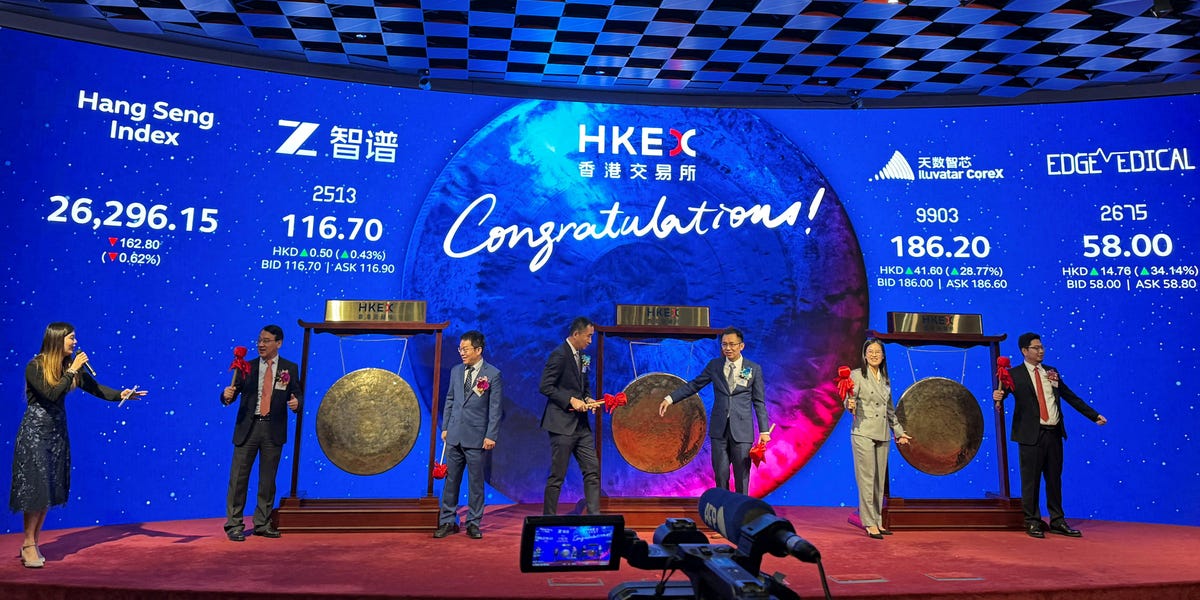
Z.ai is also known as Zhipu. Since the company is listed on the stock market, you can see its financial status. Last year, the Chinese company lost about $500 million on revenue of about $107 million.
Zhipu is the lab behind GLM 5.2, an open-weight AI model that took the industry by surprise when it was released last month. We may be able to expect the stock price to soar. Instead, Zhipu stock has plummeted more than 40% over the past month.
MiniMax is one of the few publicly traded independent AI labs in China, but it posted a loss of $250 million on revenue of just $79 million last year. The company’s stock price has fallen more than 50% in the past month.
In a recent note to investors, William Blair analyst Arjun Bhatia wrote, understatedly, that “open-weight models have a difficult path to profitability this year.”
Openweight AI is not open source software
The main difference is economics.
Software can be distributed almost free of charge. Once you create a copy and send it to another customer, there is virtually no cost. As software companies grow, so do their profit margins.
AI doesn’t work like that. All answers require expensive chips, power, and data center capacity. The next unit of software is almost free. The next intelligence unit is not.
Another Chinese research institute, Moonshot AI, disclosed this issue last week. The new Kimi K3 open weight model shocked the industry with its frontier level performance. However, a few days after launch, the company had to stop signing up new customers because it didn’t have enough computing power to run the models.
If Moonshot sold traditional software, it would be relatively easy to add millions of users. Instead, each new customer increases your company’s infrastructure fees, limiting your company’s growth.
others take profits
The way open-weight AI models run, a process called inference, makes business worse.
Openweight AI Lab provides the trained numerical parameters of the model to outsiders and allows them to download and run the model. (Parameters are like little numerical dials in a model’s brain that determine how these systems learn from data and what output they produce.)
These models are then typically implemented by other companies such as cloud giants Amazon, Microsoft, Google, Oracle, and Alibaba. There are also specialist providers such as Fireworks AI and Baseten, but these primarily rent capacity from large cloud companies.
Companies can also download these open weights and run the models themselves. Alternatively, you could use a Chinese model maker’s own inference service, but in the Western world, most business customers don’t use that for data security reasons.
Only the last option is guaranteed to generate real revenue for the modeler. In three other cases, AI labs that have spent hundreds of millions of dollars building models may receive little or no recurring revenue.
This puts model makers in a difficult position. They paid a lot of money to train on the system and then transferred their major assets.
No wonder Alibaba’s stock price has risen about 13% in the past month while AI research institutes Zhipu and MiniMax have collapsed.
not red hat
“Unlike open-source software, the open-weight model does not generate significant revenue by selling support, services, or enterprise editions around free offerings (Red Hat Playbooks),” writes William Blair’s Bhatia.
“Instead, they primarily make money by hosting models and selling inference computing. However, the inference workload ends up flowing to whoever can operate the inference infrastructure most efficiently, and this is typically not the model provider,” the analyst added.
Barclays analyst Raimo Renshaw recently returned from China after researching China’s AI sector. He came to a similar conclusion.
“Due to intensifying domestic competition, price competition is also becoming more intense,” the analyst told investors. “Some key models remain open source or open weight, accelerating pricing pressures across the system. While this facilitates faster commercialization, it also adds uncertainty to the long-term profitability of these AI labs.”
So why let go of the model?
Open technology has long been a strategy for challengers trying to capture market leaders. Latecomers may not be able to match the leader’s customers or distribution, but they can make it more difficult to popularize the technology, attract developers, and sell the leader’s products at premium prices.
That may be exactly what China and its AI research institute are trying to do. The open weight model puts pressure on OpenAI, Anthropic, and other US leaders by offering a competent alternative at a lower price. Even if the Chinese lab itself makes little profit, it could force U.S. competitors to lower prices and make it difficult to recoup the billions spent training new models.
Bhatia said Chinese labs may be launching indiscriminate weight models with “little regard for short-term profitability.” In his view, opening up could commoditize advanced AI and undermine the business models of U.S. companies that keep the technology closed.
Economic rewards for China’s research labs may come much later, or may outweigh broader strategic benefits for China.
China’s leadership is now openly encouraging that strategy. In a recent speech in Shanghai, President Xi Jinping said countries should seize the opportunity to promote “open source, openness, cooperation and sharing.”
Such statements are more than just policy proposals. Chinese technology companies are expected to follow the government’s strategic priorities.
With Mr. Xi putting openness at the center of China’s AI strategy, companies like Moonshot, Zhipu, and MiniMax are likely to come under intense pressure to follow that direction, even if it makes their path to profit more difficult.
Sign up for BI’s Tech Memo newsletter here. Please contact us by email. abarr@businessinsider.com.