In the past, governments communicated about war through formal speeches, press conferences, and public statements.
Now they post video game clips, AI animations, and meme-like propaganda.
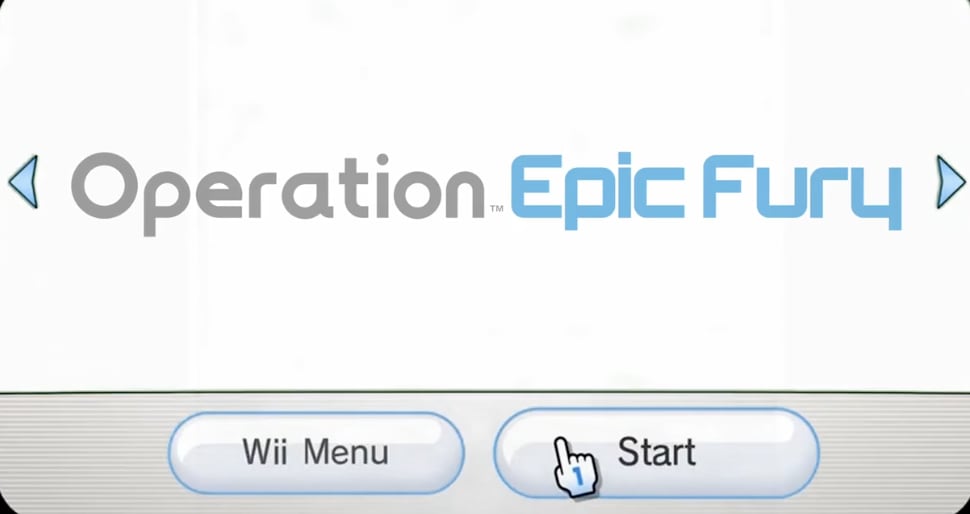
One of the strangest examples of this shift was when the White House released a video depicting war with Iran using images from Nintendo’s Wii Sports, upbeat music and video game metaphors of real military attacks.
The reaction online was immediate.
Many viewers said the video was in bad taste, disturbing and highly inappropriate, especially since it was posted at the same time as actual bombings and casualties were being reported.
And that wasn’t all.
Iran responded with its own AI-generated propaganda video that mocked the United States and directly targeted Donald Trump.
Taken together, these clips reveal something disturbing about modern geopolitics. Countries communicate their wars through social media content.
White House Wii Sports Video
The White House video quickly went viral after showing edited war images alongside footage in the style of Nintendo’s classic game Wii Sports.
The structure of the video was simple but shocking.
As video game characters scored bowling strikes or golfed holes-in-one, the footage cut to real explosions from U.S. attacks on Iranian targets.
His tone was almost playful.
The soundtrack was light.
Visual metaphors suggested that war functions like a sports match or a video game.
Critics were stunned.
Political commentators and analysts said the video “gamified war” and trivialized the human impact of bombing campaigns and military expansion.
One critic described the footage as “childish propaganda” that made real war seem like entertainment rather than deadly conflict.
And the timing made things even worse.
The video was posted as news outlets reported on civilian deaths and rising tensions across the Middle East.
For many viewers, that contrast made the post feel not only bizarre, but morally grotesque.
Iran counters with AI propaganda
If the White House video seemed bizarre, Iran’s response pushed the scene even further.
Iranian state media released an AI-generated propaganda video mocking the United States and its leaders.
One widely shared clip used a toy-like animation style and exaggerated characters to depict Iranian retaliation against Western forces.
The video also references accusations against Jeffrey Epstein and Donald Trump and attempts to frame the war as a distraction from domestic scandals.
Other propaganda videos produced by Iranian media simulated the destruction of an American aircraft carrier and portrayed Trump and other Western leaders as villains.
These videos are designed to go viral.
And many of them did.
Experts say the clips are part of a broader AI-driven disinformation campaign that flooded social media during the conflict.
meme war between governments
Such interactions have led analysts to describe the situation as unprecedented.
Memetic warfare between governments.
Instead of carefully crafted diplomatic messages, both sides are producing content such as:
- video game trailer
- TikTokEdit
- AI manga
- viral internet meme
The goal is attention.
In today’s internet environment, virality is power.
And both governments appear to be trying to shape the narrative through content that goes viral online.
this is not the first time
Wii Sports videos also fit into the larger pattern.
In recent years, politicians have increasingly experimented with propaganda in the form of AI-generated videos and memes.
For example, in 2025, Donald Trump shared an AI-generated video of himself piloting a fighter jet dumping brown sludge that resembles feces on political protesters, an incident that sparked widespread backlash and criticism.
The episode sparked a debate about how far political messages have drifted into the internet spectacle.
The current wave of war videos suggests that trend is accelerating.
Comments online after watching are as follows:
“Stupidity was too optimistic”
Refers to the 2006 dystopian comedy starring Luke Wilson and Maya Rudolph.
Why is this so worrying?
War always involves propaganda.
But the difference today is speed and tone.
AI tools have enabled governments and their allies to generate large amounts of content almost instantly.
That content spreads across social media platforms and competes with entertainment, memes, and influencer content.
The result is a strange hybrid world that looks like this:
- Missile attacks are compiled like game highlights
- Mocking geopolitical conflicts with cartoon animation
- World leaders become characters in AI-generated memes
For many observers, the overall impact is alarming.
Because the underlying reality remains the same.
Wars still involve real people dying, real cities being bombed, and real geopolitical consequences.
Turning it into internet content risks trivializing that reality.
A new era of digital propaganda
Analysts increasingly believe that the Iran conflict could be the first major war in which generative AI propaganda is used on a large scale.
Experts have warned that the flood of AI images and videos is making it difficult for the public to distinguish fact from manipulation.
In other words, the information battlefield may now be almost as important as the physical battlefield.
And if current trends continue, future wars may look less like traditional diplomacy and more like an endless stream of viral videos.
This raises some troubling questions:
If governments communicated war through memes, what would happen to the seriousness of the war itself?