- Expanding hyperscale AI infrastructure in western desert states is increasingly constrained by access to water rather than land, with projects facing redesigns, delays, and political challenges due to cooling water demands and wastewater capacity constraints.
- Data centers at major tech companies consumed large amounts of water in 2024. Meth pulled more than 35 million gallons in Utah, and Google used more than 352 million gallons in Nevada. This has triggered new public reporting requirements and permit restrictions across water-stressed states.
- Explosive capital spending in AI infrastructure ($52.5 billion for Alphabet and $77.7 billion for Amazon) risks becoming a stranded asset as water shortages, tolerance for delays, and forced redesign of cooling systems undermine profit margin assumptions and create potential bubble conditions.
Hyperscale AI infrastructure is rapidly expanding across western desert states where land, tax incentives, and grid interconnections are readily available. But water, rather than land, is emerging as the binding constraint. Permits, ordinances, and public records now show that projects are being redesigned, delayed, or faced political challenges because cooling water access and drainage capacity can no longer be assumed.
This is no longer a footnote on sustainability. Has it emerged as a capital allocation risk?
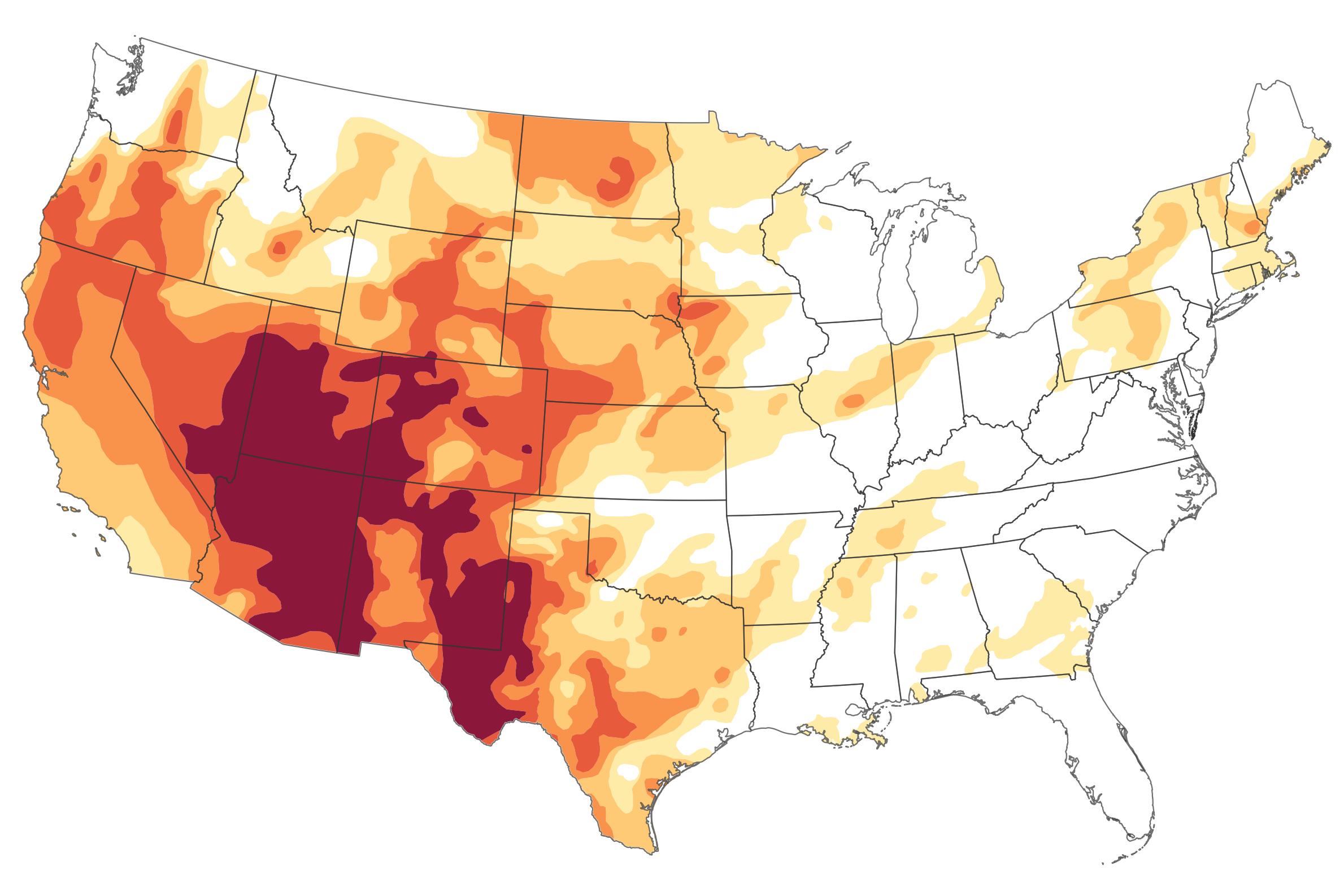
Source: NASA
desert flashpoint
Utah. Report from salt lake tribune indicates (Opens in new tab) Meta’s Eagle Mountain campus collected more than 35 million gallons in 2024. Monthly water usage data was reportedly kept confidential by prior agreement. Meanwhile, Utah lawmakers are moving ahead with a proposal that would require public reporting of data centers’ high water consumption, signaling increased political scrutiny.
Arizona. Business report shows original design of Microsoft’s Goodyear campus (Opens in new tab) https://www.goodyearaz.gov/Home/Components/News/News/9847/1549?arch=1 (Opens in new tab) Approximately 1 million gallons per day per planned building were being considered before the redesign moved to mechanical air cooling and expanded wastewater infrastructure at a later stage. In Tucson, controversial ‘Project Blue’ proposal sparks new ordinance (Opens in new tab) Require very large water users to submit conservation plans before accessing municipal supplies. Public records reports link the project to Amazon Web Services.
Nevada. of Las Vegas Review Journal Reported by Google’s Henderson facility (Opens in new tab) More than 352 million gallons were withdrawn in 2024. Twenty-three facilities across Southern Nevada reportedly consumed more than 716 million gallons, much of it tied to the Colorado River allotment through Lake Mead. The area has since introduced permitting restrictions restricting new development that relies on evaporative cooling systems.
The pattern is clear. Access to water has become a political variable in AI siting decisions.
mechanism of thirst
Cooling increases water consumption.
Evaporation tower systems and cooling tower systems dissipate heat by evaporating water. Dry air or refrigerant-based systems reduce on-site water usage, but typically increase electricity demand and shift the burden upstream.
Water usage efficiency (WUE), an industry metric, measures liters of water per kilowatt-hour (kWh) of IT load.
Of course, rare earth elements (REEs) are widely used in modern data center cooling systems, especially to increase the efficiency of AI-driven dense infrastructure. They are primarily used to create high-performance permanent magnets for motors, fans, and pumps that move air and coolant. We will discuss this in another article.
2024 Lawrence Berkeley National Laboratory U.S. Data Center Energy Usage Report (Opens in new tab) Estimated value:
- Average direct onsite WUE across US data centers: ~0.36 L/kWh by 2023
- Increased to approximately 0.45 to 0.48 L/kWh with expansion of water-cooled AI servers
- Approximately 0.8 to 1.1 million gallons/MW of IT load per year when running continuously
- Indirect water consumption associated with power generation: up to 4.5 L/kWh in 2023, often exceeding direct use on site depending on grid configuration
So cooling water is only part of the story. Water for power generation often dwarfs facility-level usage.
Note that this topic resonates locally in Utah. Indeed, the Salt Lake City and Utah regional power grids are facing increasing energy stress as the explosive growth of data centers, tech campuses, and electrification (all of which require rare earth elements, of course) collide with the steady retirement of coal-fired baseload power plants that once provided around-the-clock reliability.
Rocky Mountain Power has struggled to keep pace, leading to interconnect delays, reliability concerns and even slowing down high-profile projects like Google’s delayed Eagle Mountain campus. Coal’s share of Utah’s electricity mix has plummeted from about 75% in 2015 to 45% in 2024, and roughly two-thirds of traditional baseload capacity could be offline within 20 years. At the same time, transmission bottlenecks prevent low-cost electricity from reaching the Salt Lake region, and prolonged severe drought conditions undermine the reliability of hydropower generation and increase water-related energy demand.
In response, state leaders launched “Operation Gigawatt.” (Opens in new tab) The effort is to double power generation capacity, expand transmission infrastructure (including projects like Gateway South), and diversify supply with natural gas, solar, geothermal, and potentially small modular nuclear reactors. The strategy aims to restore confidence and boost economic growth, but it highlights broader tensions between rapid electrification, environmental constraints and the pace of infrastructure development.
structural water stress
The Arizona Department of Water Resources projects 4.86 million acre-feet of long-term unmet groundwater demand over 100 years under current conditions in the Phoenix Active Management Area. Discussions about security of supply, which once focused on housing, are now spilling over into increasingly large industrial sites.
In the West, at least eight states introduced legislation last year requiring data center water reporting. NDAs and appropriation claims are in conflict with urban planning needs.
Transparency is becoming the law.
From infrastructure boom to bubble risk?
Capital investment is increasing explosively. Alphabet reported 2024 capital expenditures of $52.5 billion. Amazon revealed $77.7 billion in cash capital expenditures in 2024, largely related to technology infrastructure. Microsoft has indicated that cloud and AI-related investments currently account for the majority of capital expenditures.
Water scarcity translates that surge in capital investment into potential stranded asset risk.
Allowing delays, mandating redesigns, wastewater constraints, and moving cooling systems to high-power dry configurations all undermine margin assumptions. In water-stressed basins, utilization models can break down.
When capital investment exceeds physical resource constraints, a bubble forms around optimism rather than throughput.
china contrast
China’s “Data in the East, Computing in the West” initiative uses centralized coordination to adjust the geography of data centers based on climate and energy profiles, but some western provinces face unique water stresses.
At the same time, China’s digital economy has focused on app-based revenue systems. OECD estimates suggest that Ant Group and Tencent dominate China’s mobile payments ecosystem, a reminder that data monetization can be expanded without proportionately duplicating infrastructure.
Meanwhile, upstream influence continues to exist. as rare earth exchange As the community is well aware, the U.S. Geological Survey reports that approximately 72% of U.S. imports of rare earth compounds and metals (2019-2022) came from China. And of course, about 80+ of the rare earth refined production comes from China. Export restrictions on medium and heavy rare earths are putting further pressure on the electrification and grid reinforcement needed to support AI expansion.
The US is building hardware scale. China is proceeding with system scale optimization.
Risk outlook and mitigation
risk assessment:
- High local operational risks in water-stressed basins
- Moderate to high systemic risk if infrastructure investment continues to exceed permitting, water, and grid constraints.
Mitigation essentials:
- Require auditable reporting of both direct (on-site) and indirect (source) water footprints
- Conditional approval for use of reclaimed water or closed loop/dry cooling in high stress basins
- Added “Water + Grid” diligence screen to AI infrastructure investment model
- Treat water as a primary engineering constraint rather than a PR afterthought
The AI boom is real. But so are the limits of aquifers.
Silicon may be plentiful in the West. Water is different.