China now has a word for token. Jigen.
Liu Lihong, administrator of China’s main data regulator, the National Data Administration, announced the term at a State Council press conference in March, explaining that tokens have now become “a unit of payment that connects technology supply and commercial demand.”
The National Data Agency revealed that China now processes 140 trillion tokens every day, up from just 100 billion in early 2024. Currently, Chinese AI models are outperforming US models on OpenRouter, a popular marketplace for AI models.
Investors are buying into the AI boom. The number of IPOs in Hong Kong is at a five-year high, thanks to a steady rise in the number of Chinese AI and technology startups, including AI labs MiniMax and Zhipu AI and chip designer Biren.
“We believe China is the big winner in this technology war for a variety of reasons, including valuation, growing adoption of AI, and power generation advantages,” said Mohit Kumar, global macro strategist at Jefferies. luck At the bank’s Asia Forum held in Hong Kong in mid-March.
China’s current goal is to create a “token economy” backed by the spread of an efficient open source model and expansion into real-world AI applications. But like their U.S. peers, Chinese companies are grappling with high research costs and big capital investment commitments, while also dodging U.S. government export restrictions aimed at staying one step behind in the chip race.
The AI boom has rescued China’s big tech companies from years of regulatory purgatory.
E-commerce giant Alibaba is investing in an open source model that developers can freely download and modify. This low barrier to entry makes the Qwen model an attractive option for startups that don’t want to pay for OpenAI or Anthropic’s proprietary models. Qwen has attracted developers from Southeast Asia to the Middle East, and has also convinced users in the West. Meta’s latest model, Muse Spark, is partially trained from Qwen.
Unlike Alibaba, ByteDance has largely proprietary its AI models, instead leveraging its strengths in product design and consumer experience to acquire users. The company’s chatbot, also known as Doubao, is the most used AI app in China, with 100 million daily active users during the Lunar New Year holiday in February.
Tencent, which runs the ubiquitous messaging platform WeChat, has been lagging behind its rivals when it comes to AI. The company launched ClawBot in March. This appears as a contact within WeChat, allowing over 1 billion monthly active users to connect directly to OpenClaw and perform tasks through the messaging interface.
Competition in China’s high-tech field is extremely fierce. Alibaba last week unveiled its latest video generation model, Happy Horse, which some analyzes say outperforms the current leader, ByteDance’s SeaDance.
And it’s still possible that another big tech company could shake things up. Xiaomi and Meituan, best known for their smartphones and food delivery respectively, have launched their own larger models.
A new generation of Chinese AI startups is also gaining converts in Silicon Valley.
When vibe coding startup Cursor launched its latest coding service, Composer 2, eagle-eyed users discovered that the model was built on Beijing-based Moonshot AI’s open-source model Kim K2.5. Cursor’s co-founder later admitted, “I made a mistake not mentioning Kimi Base from the beginning.”
Two other startups, Knowledge Atlas (better known as Z.ai) and MiniMax, are already listed in Hong Kong, providing rare visibility into the economics of Frontier AI Labs.
MiniMax reported 2025 sales of $79 million, a 159% increase from the previous year, 70% of which came from overseas markets, an early sign of global demand for Chinese foundation models. However, its adjusted net loss was $250 million. Zhipu AI posted revenue of 724 million yuan ($104.8 million), up 132% year-on-year, but its total loss ballooned to 4.7 billion yuan ($680 million) as research and development costs soared 45%.
Investors don’t seem to mind the huge losses. Zhipu stock is up more than 570% from its IPO price. MiniMax rose more than 470% and at one point exceeded Baidu’s market capitalization. Still, both stocks have been volatile, rising and falling by double-digit percentages in a single session.
Moonshot AI, backed by Alibaba and Hongshan, is reportedly considering an IPO in Hong Kong, just months after a January funding round that valued the company at $10 billion.
One startup that has been particularly quiet this year is DeepSeek, a Hangzhou-based institute that reset the entire AI conversation last year with its V3 and R1 models. Developers are looking forward to the general release of the latest version of the model, V4.
China is also rapidly advancing in physical AI, backed by a supply chain that allows it to manufacture advanced technology at low cost.
Unitree Robotics, perhaps China’s best-known humanoid robot startup, has filed for a 4.2 billion yuan ($610 million) IPO on Shanghai’s STAR market. Unlike many of its robotics peers in China and abroad, Unitree has not lost money, with adjusted net profit of about 600 million yuan ($87 million). Other major Chinese robot startups include Agibot and UBTech.
Chinese companies are also focusing on autonomous driving. Pony AI partnered with Uber and Croatian operator Verne to launch Europe’s first commercial robotaxi service in Zagreb, Croatia, in early April. WeRide has also partnered with Uber to offer fully commercial robotaxis in Dubai.
Chinese users are much more familiar with AI than their Western counterparts. An October Edelman survey found that 87% of Chinese respondents trust AI, compared to 32% of U.S. respondents.
The country’s short-form drama industry is just one example of consumer comfort brought on by AI. With production costs plummeting, video platforms released about 470 new dramas every day in January. Using AI tools, short dramas can now be produced for about 100,000 yuan ($14,600), about 10% of the traditional cost, and the production time has been shortened from 15 to 30 days to less than five days.
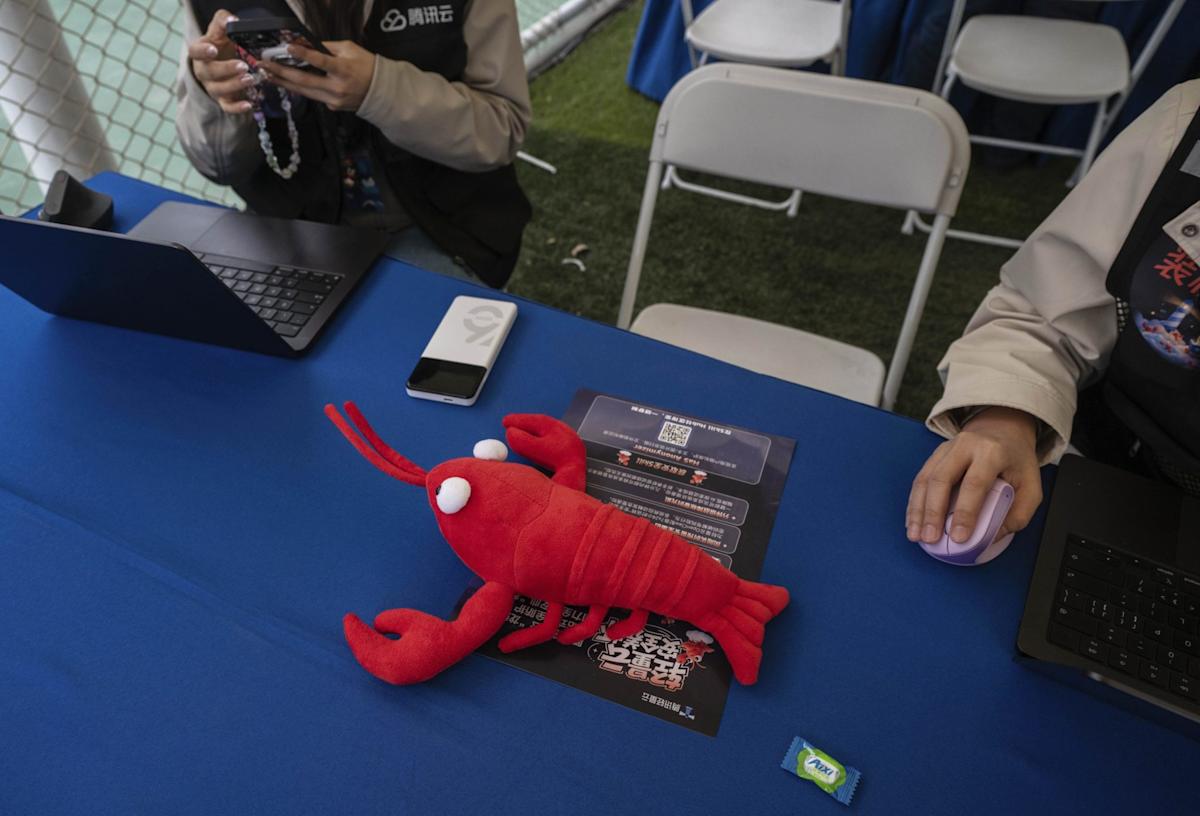
Chinese consumers are also embracing AI agents, with a series of big tech companies hosting workshops to walk potential users through the process of installing OpenClaw on their personal devices.
Local governments are stepping up these efforts, providing subsidies to “individual enterprises” – individual entrepreneurs who build AI agent businesses.
The Chinese government’s approach has been more cautious, pushing AI as a strategic priority while also proactively working to head off some potential risks, such as warnings about security vulnerabilities in OpenClaw-based agents and proposed regulation of AI companion apps.
But the most important policy benefits may not be directly related to AI at all. China has been actively expanding its power generation and transmission capacity in recent years. Goldman Sachs estimates that China will have approximately 400 gigawatts of excess power capacity by 2030, roughly three times the projected global data center demand.
Still, Chinese AI companies face a number of headwinds that limit what they can do, especially compared to big U.S. AI developers.
U.S. export controls have restricted the sale of cutting-edge AI chips to China, forcing domestic companies to rely on domestically produced chips, mainly made by Huawei. Overseas data center. or use U.S. hardware sourced through the gray market. Chinese chips are getting better and better, and on April 8th Alibaba announced a new data center powered entirely by its own designed Zhenwu chips. However, production yield and performance are still far behind the US chip supply chain.
China’s venture capital ecosystem is also thinner than Silicon Valley. Fears about Beijing’s high-tech regulations and U.S. regulatory pressure have led many global investors to avoid Chinese startups. Moonshot AI is valued at $18 billion and is primarily backed by China-based investors. In contrast, Anthropic raised $30 billion in a Series G round in February 2026, backed by a global consortium of deep-pocketed institutional investors including GIC, Coatue, Founders Fund, and ICONIQ, giving it a post-money valuation of $380 billion.
This financial pressure has forced some founders to take radical actions, some abandoning the Chinese market altogether. Manus AI, which launched the much-talked-about AI agent last year, has been re-incorporated as a Singapore corporation. Meta then acquired the agent AI startup in late 2025 for about $2 billion.
The Chinese government takes a gloomy view of the deal. Manas’ two co-founders, CEO Xiao Hong and chief scientist Ji Yiqiao, are currently prohibited from leaving the company. financial times.
But the biggest unresolved problem in AI in China is much the same as in the US: how to turn tokens into profits.
Alibaba spent 123 billion yuan ($17 billion) on capital investment in 2025, which contributed to a 66% decline in net profit. Tencent hasn’t spent much money, with capital expenditures of just 79 billion yuan ($11.6 billion).. As a privately held company, ByteDance does not face much pressure from shareholders regarding profitability. financial timesreported late last year that TikTok owners expected to spend $23 billion on AI infrastructure.
This is still far less than what major U.S. companies are spending. Alphabet spent $94 billion on capital expenditures last year. Meta spent $75 billion. Both companies plan to spend even more this year.
But monetization pressures may already be forcing some Chinese tech companies to rethink their strategies. Both Alibaba and Z.ai released some of their latest models in closed format, at least initially. In addition to these two companies, companies such as Baidu have also increased the prices of their models and cloud services.
In the future, Chinese technology companies will put AI at the center of their business. Last month, Alibaba reorganized its entire AI business into an organization called Alibaba Token Hub. The hub brings together five previously separate departments, including Tongyi Laboratory (fundamental modeling research division), Qwen, and an enterprise AI division called Wukong, which is under the direct supervision of CEO Eddie Wu.
“ATH is built around a single organizing mission: token creation, token distribution, and token application,” Wu said in a letter announcing the reorganization.
This article originally appeared on Fortune.com