
Recently hosted roundtable construction news And IFS investigated the key areas where artificial intelligence can boost this sector.
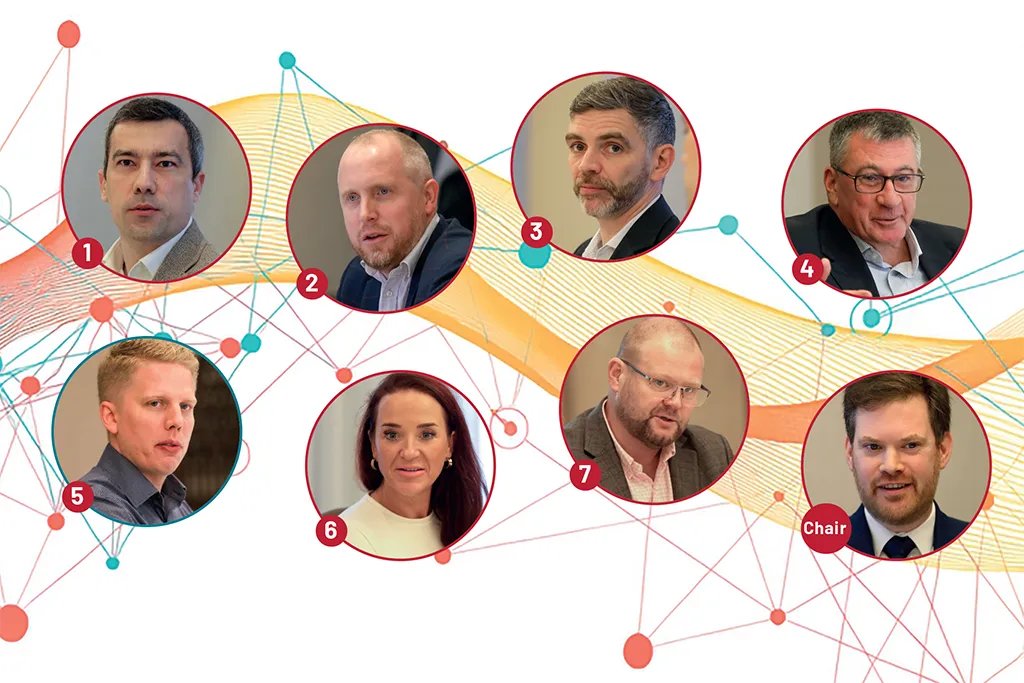
on the panel
- Amador Caballero RuizEnterprise Architect, Willmott Dixon
- Gary DenhamGroup Procurement and Operations Director, Watkin Jones
- thomas flanneryHead of Digital Information Management, McLaren Group
- kenny ingramVice President of Construction Engineering, IFS
- Ben JowettHead of Digital Transformation, SES Engineering Services
- Della McCaugheyEnterprise Account Executive, IFS
- lee ramseyMorgan Sindall Construction, Digital Director
chair: Ian Winefuss, Journalist, Construction News
 ” [construction] The industry is full of ideas about where AI could prove most beneficial. These range from taking notes in meetings to managing procurement, and removing human bias from project management. In a fragmented industry, where knowledge is held narrowly within different projects and different terminology is used even when part of the same company, being able to share information better will yield greater results. ”. He envisions a management and planning system that leverages AI to improve consistency by proactively identifying problems.
“People don’t actively seek out knowledge, so if you can actually provide that… it can really give people a superpower.”
Lee Ramsey, Morgan Sindall
“People don’t actively seek knowledge, so if you can actually provide that and tell them not just what the potential pitfalls are, but what the solutions look like, you can really superpower them,” he says. “Consistency is key in construction.” But despite the enthusiasm and ideas about where to use AI, it’s hard to find examples of the tool being used successfully. So which areas of industry are best suited to adopt artificial intelligence, and what barriers need to be overcome to move them from theory to reality?
Roundtable held in London construction news, The event, sponsored by IFS, brought together key figures in the industry to share their insights on these questions.
Identifying needs
“Each company needs to identify what problems they have and where they think AI can help. For our business, we’ve identified two areas: One is to win more projects.” […] Amador Caballero Ruiz, enterprise architect at Willmott Dixon.
“We’re human, so when we write a report, we sometimes want to imagine a better situation than it actually is,” he says. Machines, on the other hand, are good at telling people that projects are falling behind, even when people are reporting that everything is going well. “We will be able to dig deeper into why there was a delay,” he says.
“As long as you make sure it’s right, it can be used very efficiently.”
Della McCaughey, IFS
Still, human accountability will continue to be a big part of the picture, he added, using the example of an overview of Microsoft Teams Premium meetings used by design managers. Even though this tool can create meeting minutes, the onus is on managers themselves to ensure that the information in the summary is accurate. IFS Enterprise Account Executive Della McCaughey agrees. “It still requires sense checking. As long as you’re checking the right things, you can use it very efficiently.”
human contract
Ben Jowett, head of digital transformation at mechanical and electrical specialist SES Engineering Services, points out that the sector’s widespread contracting model is also very human. “I feel like the environment is not suitable for some of the generative design tools that create models and drawings and things like that,” he says. “That’s because it’s mostly a start-up business.” [developing the tech]you can’t take on the insurance and risk of taking responsibility for the design and holding the AI accountable for the outcome of the design. Even when the technology is capable, there is still a very human element of the contract. ”
He believes an area that could be rapidly transformed by AI is design consulting, where companies typically charge based on hours worked as much as the results produced. “If design consultants are not at the forefront, the entire business model can be completely disrupted. We have seen in other industries where technology-driven businesses come in and completely upend the business model. Uber is a great example.”
“While technology has a lot to offer, there is still a very human element of the contract.
Ben Jowett, SES
“We’re seeing a similar shift in design consulting because of convenience, efficiency and data accuracy,” says Jowett. “You’re going to see technology-driven businesses emerge because they’re not pricing based on labor hours, they’re pricing purely on deliverables and speed to delivery.”
consistent data
For contractors, one of the barriers to using tools is that the data is well organized and accessible. “Before you consider implementing AI within your organization, you need to organize your data, streamline your technology stack as much as possible, and understand what processes are driving data points within your organization. […] AI will be consumed to provide the output that users need,” said Thomas Flannery, head of digital information management at McLaren Group.
Kenny Ingram, vice president of construction and engineering at IFS, said the industry has historically viewed enterprise resource planning as a financial tool rather than an end-to-end project management system. He said that while the situation may now change, companies need to ensure they have strong inputs.
“You have to get a consistent set of data and use of data across projects, otherwise you won’t learn anything from project to project, because the data is completely inconsistent, the coding structures are different, and the way you work is different.To me, AI is forcing the problem.Until now, there hasn’t been a good enough compelling reason to do that. [but] There are compelling reasons for this. Because without getting the data right, you’ll never be able to leverage AI. In that case, you will fall behind your competitors. ” he says.
“You have to get a consistent set of data and use of data across projects, otherwise you won’t learn anything from project to project.”
Kenny Ingram, IFS
Jowett says the construction industry is neither better nor worse in this regard, noting that big tech companies have cited inadequate data collection as a problem with AI implementation across industries.
In the short term, using AI for supplier booking could be a faster success than some other features, even for companies still trying to organize their data, believes Gary Denham, group procurement and operations director at contractor and developer Watkin Jones. “In some cases, we need to consider where the opportunities are. It will take years to fully integrate them.” [because of data issues] However, if you choose a supplier and start a new process, you don’t have to. Because we have human resources, we can train QS. [quantity surveyors]”
Denham believes AI tools could be used to analyze standardized submissions from potential suppliers, such as materials companies, and look at future inflation trends as part of the analysis. If multiple projects are being procured at the same time, it can highlight that the same materials are being purchased at different sites at the same time, potentially allowing managers to tie together better deals, he says. “In a few years, we will be able to see which suppliers have delivered on fixed price contracts.
If the deal was opaque, we would know that,” he added.
long term goals
While many senior directors are driving the push for this technology, the argument is that it’s not always easy to make a business case for purchasing a new AI solution. But while the return on investment (ROI) may not be immediate, some believe that looking at technology over the long term is the right way to go.
“Patience standards are very low in our industry. It’s a cultural trait. When you buy AI, you expect to see an ROI within a month,” Jowett says. “These are long-term strategic decisions. We’re talking about ontology layers, data governance and standards, and enterprise architecture.
“At SES, we have an eight-year strategy that allows us to take a longer-term view and be patient about how we want to get it done and give us a little more leeway to get it done properly.”
“In a few years, we will be able to see which suppliers delivered on fixed-price contracts.”
Gary Denham, Watkin Jones
Ingram also believes a long-term approach is important. “Advances in AI are happening very fast, but I don’t think we’ll wake up in a year and things will be very different. It will take 10 years for this to play out and we need to look at the big picture.
“We need to be here [talking about and planning its use] 5 years later, 10 years later. You won’t see significant benefits in a week or two. This is very early technology and very early adoption. ”
Flannery added that it is important for companies to “think small and big at the same time” to succeed. He added, “The first and most important step for any organization is to develop a strategy. Understand where you want to be in 12 months, 24 months, and five years, work with your existing vendors, talk to your partners, and figure out where they fit in your AI strategy.”
Several panelists called for improved collaboration across industries to ensure everyone can succeed in this space. “Some of these solutions are bigger than any one organization, and they require serious collaboration with market leaders to inform that level of technical capability and capability,” Ramsey says.


