image:
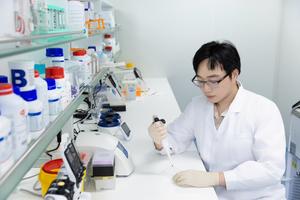
Zeping Mao, a PhD candidate at the University of Waterloo, has developed a machine learning algorithm to detect important changes in proteins in human cells (Zeping Mao).
view more
Credit: Zeping Mao
New algorithms could lead to breakthroughs in understanding cancer, Alzheimer’s disease and other potentially deadly conditions.
Researchers at the University of Waterloo have developed a machine learning algorithm called RNovA to detect protein changes in human cells.
Proteins do most of their work inside cells, and after they are made, our bodies can chemically modify them in a variety of ways. These changes, known as post-translational modifications (PTMs), help regulate many cellular functions. Alterations in PTMs are thought to be associated with multiple serious diseases.
“Identifying PTMs in biological samples is expensive and technically challenging,” said Zeping Mao, a doctoral candidate in computer science and lead author of the study. “This has traditionally been done in the lab using equipment such as mass spectrometers. Using algorithms makes it much faster and cheaper.
Existing methods for identifying PTMs are most effective when researchers already know what they are looking for after consulting either a reference protein database, a predefined list of modifications, or labeled training data.
“If a change is rare, unexpected, or missing from the database, existing methods may miss it,” Mao said. “It’s like trying to solve a puzzle but only seeing a few pieces.”
RNovA can quickly and accurately identify new PTMs that do not already exist in the database. This means that the model can detect unexpected changes without having to retrain for each new PTM or starting from a predefined list of identified PTMs.
The research team hopes this discovery will lead to advances in diagnostics and expand the power of machine learning in basic biological research.
“Expanding the PTM list may help researchers discover new cell modifications and new markers for cancer and other diseases,” Mao said. “This is a very powerful tool to help biologists expand their horizons.”
Research “Zero Shot” de novo Peptide Sequencing with Open Post-Translational Modification Detection” Nature Biotechnology.
journal
nature biotechnology
Research method
Computational simulation/modeling
Research theme
cell
Article title
Zero-shot de novo peptide sequencing with open post-translational modification discovery
Article publication date
May 19, 2026
Disclaimer: AAAS and EurekAlert! We are not responsible for the accuracy of news releases posted on EurekAlert! Use of Information by Contributing Institutions or via the EurekAlert System.