

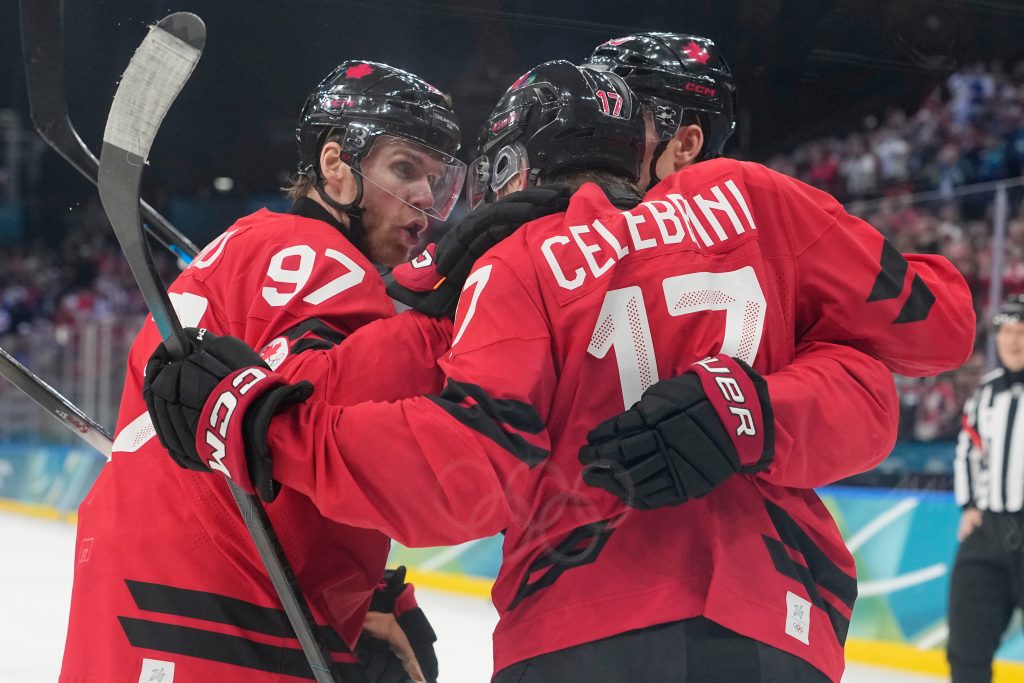
In men’s hockey, Team Canada had big wins against the Czech Republic on Thursday and Switzerland on Friday. Machine learning students at Edmonton’s Norquest University are hoping artificial intelligence will help Team Canada achieve more wins in its bid for an Olympic medal.
Using computers, artificial intelligence and a century’s worth of data, students in the Machine Learning Analyst Diploma Program predicted that the Canadian men’s hockey team had a 97 per cent chance of winning a medal and a 75 per cent chance of winning the gold medal.
“We’re predicting that we’ll win 17 gold medals at the Olympics, the Winter Olympics. That’s our prediction. We’re looking at all the historical data to come up with that number,” said David Barahona, a sophomore at Norquest University.

To achieve this result, students will input publicly available historical data into the software, such as medals won by Canada from 1924 to the 2022 Beijing Olympics.
“If you think about Netflix, for example, it can predict what you’re going to watch next. Netflix looks at all the data on what you’ve watched before, and it can start making predictions about what people just like you have watched before and what their trends are,” said Stephanie Husby, machine learning analyst program chair at Norquest University.
This AI prediction project is intended to increase students’ knowledge in machine learning and is not intended for financial gain.
“This is a project that the students worked on with very narrow data, and it’s for fun and for us to see how it turns out. It’s not worth risking the house or anything like that at all,” Husby said.
Accuracy may still vary as certain factors need to be considered.
“You can add information about the athletes, the condition of each athlete, whether they’re injured, etc., and you can also change the model based on that additional information,” said Nasimeh Asgharian, a machine learning instructor at Norquest University.
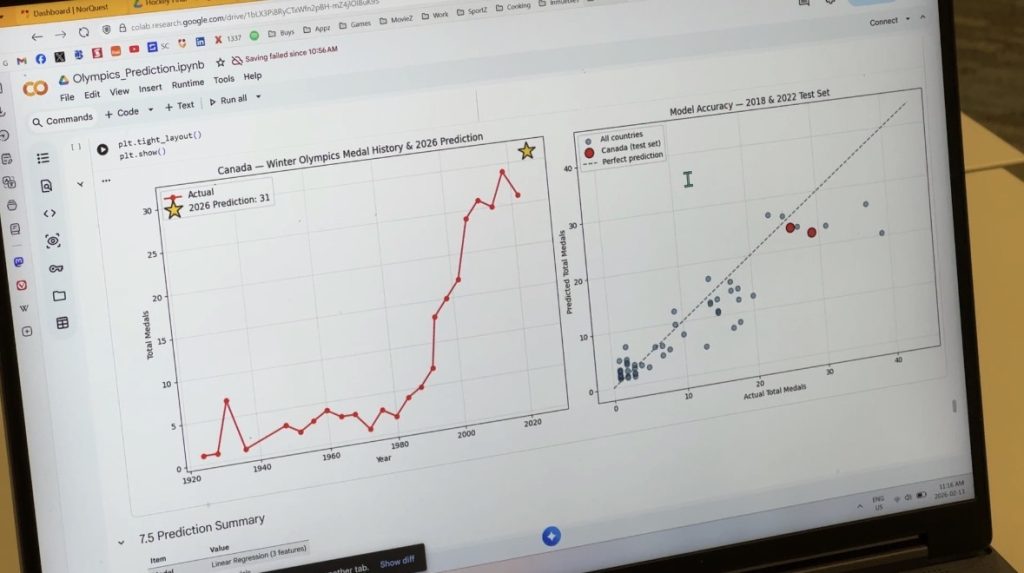
This number is not yet final, and we will need to identify any changes to the AI model and determine whether the numbers are correct by the final day of the Winter Olympics.
“But you can blame the players first and then blame me,” Norquest sophomore David Barahona said.


