

Main findings

- Across the 25 countries surveyed, a median of 53% of adults trust the EU to effectively regulate AI, while 34% do not.
- A median of 54% of the nine EU countries surveyed trust organizations that regulate AI, and 48% of non-EU countries surveyed say the same.
- A median of 37% trust the US to effectively regulate AI, while 48% do not.
- A median of 27% trusts China to effectively regulate AI, while 60% do not.
Trust varies depending on several factors. For example, people who hold favorable views of the EU, US, and China are more likely to trust that they can effectively regulate AI. People who are more excited than concerned about the increasing use of AI also tend to have more trust in these actors regulating AI.
Young adults are more likely than older adults to express higher trust in China and, to a lesser extent, the United States, in regulating AI.
Trust in the EU to regulate the use of AI
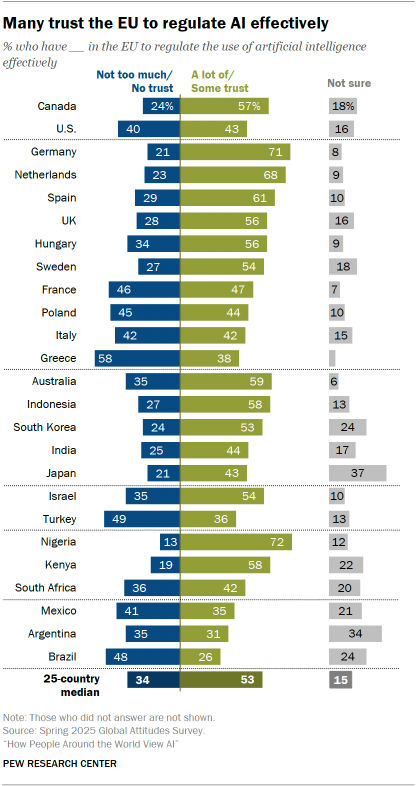
Across the 25 countries surveyed, a median of 53% of adults trust the EU to regulate the use of AI, while a median of 34% do not.
Trust in the EU varies widely across member states. Adults in Germany and the Netherlands are the most trusting, with nearly seven in 10 expressing some or a lot of confidence in the EU to effectively regulate AI. By comparison, only around 4 in 10 people in Greece and Italy share this view.
Non-member countries also have different views. Majorities of adults in Nigeria, Australia, Indonesia, Kenya and Canada trust the EU to effectively regulate AI. By contrast, around a third or less in Mexico, Argentina and Brazil say the same.
In the US, 43% trust the EU on AI regulation and 40% do not.
With the opinion of the EU
In nearly all countries surveyed, people with favorable views of the EU regarding AI regulation are more likely to trust it than those with negative views. For example, in Poland, 61% of adults with a favorable view of the EU trust the EU to regulate AI, compared to just 17% of adults with a negative view of the EU.
by ideology
In some countries, people on the ideological right are less likely than those on the left to trust the EU to regulate AI. The ideological gap is widest in the Netherlands, where 85% of leftists trust the EU on this issue compared to 61% of rightists.
With support from right-wing populist parties
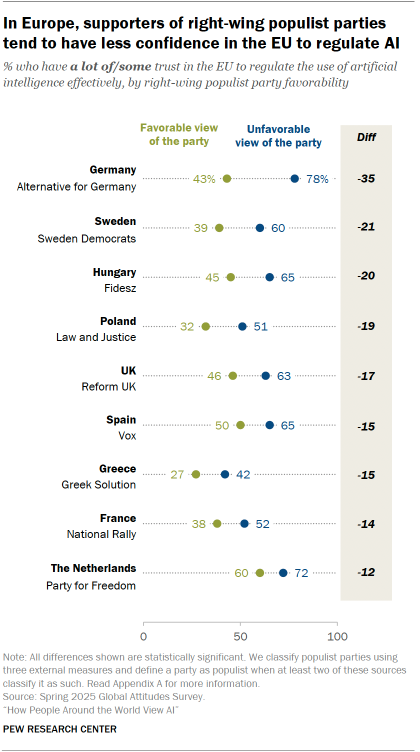
In Europe, people with favorable views of some right-wing populist parties are less likely to trust the EU to effectively regulate AI. For example, 43% of Alternative for Germany (AfD) supporters trust the EU on this issue, compared to 78% of non-supporters. (Please read Appendix A for more information on how populist parties are classified.)
Based on AI’s opinion
People who are more excited than concerned about the growing use of AI in everyday life are generally more likely to trust the EU to effectively regulate the technology than those who are more concerned than excited. In Greece, for example, 62% of those primarily excited about AI trust the EU to regulate it, compared to 30% of those primarily concerned.
by education
In 19 countries, more educated adults are more likely to trust the EU’s regulation of AI than less educated adults. For example, in the UK, 67% of people with post-secondary education have at least some trust in the EU when it comes to regulating AI, compared to 49% of people with less education.
Trust the US to regulate the use of AI
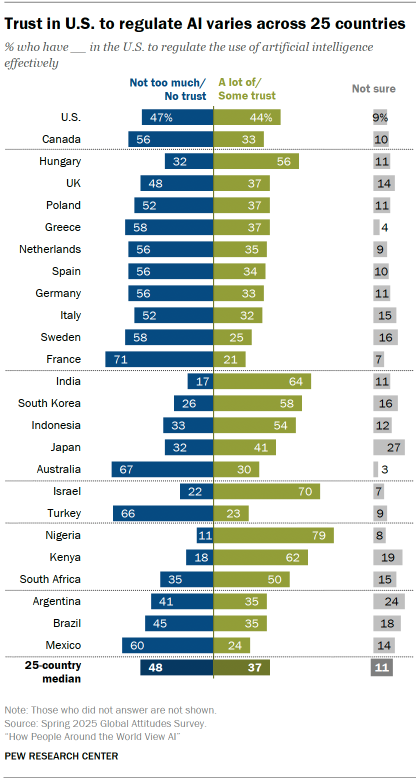
Across the 25 countries surveyed, a median of 37% of adults trust the United States to effectively regulate the use of AI, while a median of 48% do not.
People in Nigeria, Israel, India, and Kenya stand out as more trustworthy, with more than six in 10 adults reporting some or a lot of confidence in the United States to effectively regulate AI. More than half of respondents in South Korea, Hungary, Indonesia and South Africa also trust the US to effectively regulate AI.
Americans themselves are divided, with 44% trusting their country to regulate AI, compared to 47% who don’t. This partly reflects partisan divisions, with Republicans and Republican-leaning independents more likely to express higher levels of trust than Democrats and Democratic-leaning voters (54% vs. 36%).
In the other 14 countries surveyed (including much of Europe), people are widely distrustful of the United States effectively regulating AI.
According to the opinion of the United States
In all countries surveyed other than the United States, people with favorable views of the United States are more likely to trust the United States when it comes to AI regulation than those with negative views. For example, in Turkey, 57% of people with a favorable view of the United States trust the United States to regulate technology, compared to just 12% of those with a negative view.
Based on AI’s opinion
Across 19 countries, people who are more excited than concerned about the increasing use of AI in daily life are more likely to trust the United States to regulate AI compared to those who are more concerned than excited. For example, in Brazil, 58% of those primarily excited about the use of AI trust the US to effectively regulate it, compared to 30% of those primarily concerned.
A similar pattern is seen when respondents are asked about China, the EU, and their country. People who are primarily excited about AI are generally more trusting about regulation.
by ideology
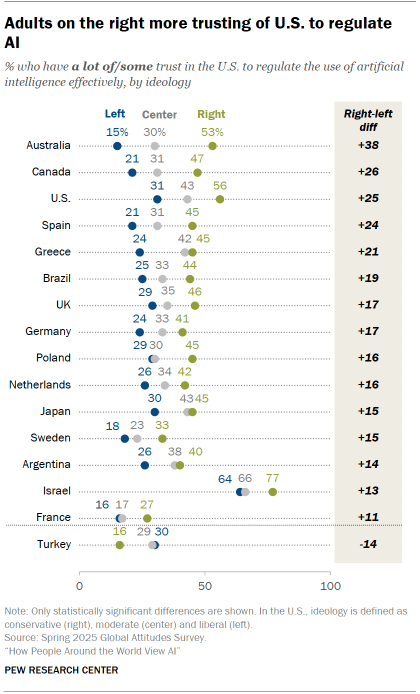
In 15 countries, people on the ideological right have more confidence in the US to effectively regulate AI than those on the left.
This pattern was observed in eight of the ten European countries surveyed, with Spain being one of the countries with the largest gap (45% vs. 21%).
Outside of Europe, eight countries have ideological divisions. In Australia, for example, 53% of those on the right trust the US to regulate AI, compared to 15% of those on the left. (For more information on how we measure ideology in cross-national surveys, read the report’s methodology.)
With support from right-wing populist parties
Supporters of right-wing populist parties in Europe generally have higher trust in US regulation of AI than non-supporters.
On this issue, there is a divide between supporters and non-supporters of Germany’s AfD, Italy’s Brothers and Forza Italia, Hungary’s Fidesz and Jobbik, Poland’s Greek Solution Party, Law and Justice, France’s National Rally, the Netherlands’ Liberal Party, British Reform, and Spain’s Vox.
By age
In 10 countries, adults aged 18 to 34 are more likely to trust the US to regulate AI than adults aged 50 and older. For example, 82% of younger Nigerians trust the United States on this issue, compared to 65% of older Nigerians.
Trust in China to regulate the use of AI
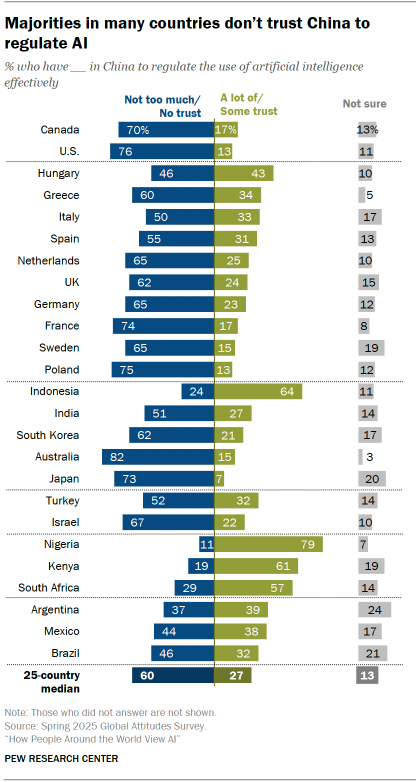
Across the 25 countries surveyed, confidence in China to effectively regulate AI is relatively low. A median of 27% said they trusted China’s technology regulations, while 60% did not.
People in Kenya, Nigeria, and South Africa are unlikely to trust China’s handling of AI regulations. Indonesian adults also express trust rather than distrust.
Elsewhere, the view is much less reliable. With the exception of Hungary and Italy, the majority of adults in all European countries surveyed express little or no confidence in China’s ability to regulate AI.
Americans are the least trusting, with only 13% trusting China to effectively regulate AI, and 76% distrusting it. And only 7% of Japanese adults trust China to regulate AI.
According to China’s opinion
Across all 25 countries surveyed, people with favorable views of China are more likely to express confidence in China’s ability to effectively regulate AI than those with negative views. For example, in Turkey, 55% of adults with a favorable opinion of China trust China to regulate AI, compared to 21% of adults with a negative opinion.
Based on AI’s opinion
In 15 countries, people who are more excited than concerned about the growing use of AI in daily life are more likely to trust China to regulate the technology than those who are more concerned than excited. In Mexico, for example, 56% of those primarily excited about AI trust China on this matter, compared to 32% of those primarily concerned.
By age
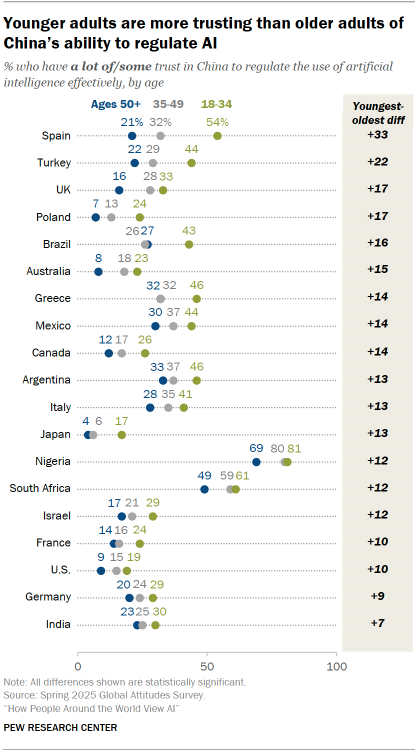
Across the 19 countries surveyed, adults under 35 have slightly more confidence in China’s ability to regulate AI than adults over 50. The biggest age difference is in Spain, where 54% of young people trust China on this issue, compared to 21% of older people.
In some of these countries, adults over 50 are more likely than those under 35 to say they are unsure whether they can trust China to regulate AI.
Beyond AI regulations, the survey also shows that in most countries, young people generally have more favorable views of China than older people.

